Alabama represents the answer to a clarion call. This is a call that
speaks to us in our own voice; clear, loud and urgent. A voice that
speaks to our identity and emanates from the soul, ringing true both
in the head and the heart. Our objective is a collective one,
continuing in that vein, as we gathered fifty people from across the
nation to engage in a conversation about the need to build a Formerly
Incarcerated and Convicted People’s Movement. We understand and
declare very clearly: the criminal justice system does NOT work. It
is no more than a destructive force in our communities now and for
future generations.
Fifty formerly incarcerated and convicted organizers came with a
dedication and commitment stating that this was our time. We were not
deterred by our inability to raise the entire budget to fly, feed and
house people in Alabama for three days, nor were the few dozen
supporters who found their own means to be present for this historic
moment. As activists, we have been to our share of conferences and
rallies, yet before many of us left our homes, we knew this invitation
was different. And we readily subsidized our own fight for
restoration of our own civil and human rights.
The first exercise was to introduce ourselves to each other not simply
by our names or the many great struggles that we were currently
engaged in, but by who we embraced as our heroes. We wrote our names
and the name of our hero on a piece of paper and we taped those to the
front of the table where we sat. We were quickly able to see the
right people were in the room. We participated in designing a
historical time line and this practice drew us closer to discovering
our common history, something uniquely ours as incarcerated, formerly
incarcerated and convicted people. Knowing where we came from made it
easier to find our vision. We agreed to accept as our vision “The
Fight for the Full Restoration of Our Civil and Human Rights.”
The concept and construction of a movement requires a vessel large
enough to hold us all, and steering a vessel of this scale requires a
crew of many navigators and leaders. Agreeing on a vision was an
essential and amazing accomplishment in light of the fact that time
was short, and with so many leaders in the room egos could easily have
gotten in the way. We agreed to maintain the structure that propelled
us to this point. However, we needed to enlarge the steering
committee to seriously consider setting a national agenda. Twenty
people volunteered to join the steering committee, providing us
greater diversity in both geography and gender. We decided we would
do regular conference calls to move forward with the agenda and
coordinating the Los Angeles convening.
The Steering Committee planned to kick off the beginning of this
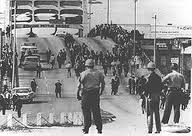
Movement by walking across the Edmund Pettus Bridge, in Selma. Days
before any of us hopped in a plane, bus, train, or car, we were
informed that we would have stay on the sidewalk if we were going to
march across the bridge. Over 247 people called the mayor of Selma
and let him know we were coming to march over the bridge, and not on
the sidewalk. Some of us consciously considered going to jail again,
and some of us even emptied our bank accounts just in case we needed
bail. We didn’t anticipate Mayor George Evans of Selma would ask to
speak with us after our march, or agree to read our statement at the
46-year Jubilee marking Bloody Sunday. Nor did we anticipate that our
march across the bridge would be headlines on one of the largest
papers in Alabama, with over twenty photos online. Our own Tina
Reynolds was photographed carrying a sign proclaiming that “Democracy
Starts At Home.” We should be allowed to vote and exercise our civil
rights regardless of where we live in the United States.
Our visit to the state capital in Montgomery is a testament to the
power of unity. While standing on the stairs of the Capital building
we were introduced to, and had a short conversation with, Alabama
Chief Justice Sue Cobb-Bell. The Chief Justice explained the serious
effort underway to rewrite the criminal code and reduce the prison
population by 3,000. Once inside, we were led into a conference room
where we met Rep. John Rogers, the head of the Alabama Black Caucus.
After a spirited discussion about pressing issues, we were ultimately
promised a community forum of which we would take part in choosing the
community organizations to participate. We were also promised that
key elected officials, including the governor, would be present at the
forum.
We would be remiss if we did not acknowledge the work and support that
our host organization, The Ordinary People Society (TOPS), put into
our initial organizing. On a side note: TOPS was seriously respected
by prominent members of the Alabama legislature, who pledged their
support to this struggle, and prominent officials in both Selma and
Montgomery. Meanwhile, our Allies were honing their own efforts, such
as supporting those organizations on our side (and inspiring those who
should be), and creating more spaces for our voices to be heard. They
are committed to recognizing our priorities and helping us create the
tools for our organizing efforts.
Last but not least, we want to thank everyone who attended and wrapped
their heads around the bigger picture of Movement and a larger
agenda. As a collective we all committed to something bigger than
each of our own organizations or individual work. We took action and
decided to organize through Regions represented by our expanded
Steering Committee. Regional caucuses will facilitate closer
collaboration in our areas, and we will build a movement on one
accord, as a collective committed to “The Fight for Full Restoration
of our Civil and Human Rights”. Let us keep moving forward, and share
this document with people we believe should know and participate in
our common efforts to build a Movement. Let people know about the
goal to meet in Los Angeles- November 2nd, 2011.
On June 23rd-26th is the Allied Media Conference in Detroit. There is
an entire track of workshops focused on the Prison Industrial Complex,
and members of the FICPM will be participating. This is an excellent
opportunity for those who can attend.
Sincerely,
Formerly Incarcerated & Convicted People’s Movement Steering Committee
Ever wonder what happens to all those Lifers? To all those War on Drugs defendants who received 300 years in prison? To the 3 Strikes Your Out folks?
They die, more often than not, in prison. But they don’t just go out like a lightbulb, working fine until one day you flip the switch and its burnt out. No, like most humans, dying is a long drawn-out painful process that can consume everything in the vicinity- including money. Illness is a leading cause of bankruptcy, and one wonders if illness and old age of prisoners will be the bankruptcy of the American prison system.
Filmmaker Edgar Barens (“A Sentence of Their Own”) takes us inside the Iowa prison, where a hospice is staffed primarily by other prisoners. Prison Terminal is a powerful piece that not only forces us to question what we are doing with prison policy, but also to check our preconceived notions about the love and compassion amongst the prison population. I consider myself blessed to have seen a sneak preview of this film, but others can catch previews here.
NEW YORK: A new report will be released on the steps of City Hall on Tuesday, documenting the astronomical financial costs of the over 50,300 arrests for marijuana possession in New York City in 2010, and the cost of the 350,000 marijuana possession arrests made since Bloomberg became mayor.
Low-level marijuana possession offenses are the number one arrest in New York City, and are 15 percent of all arrests. The NYPD makes nearly a thousand arrests and jailings a week for simple marijuana possession. New York City is now the “Marijuana Arrest Capital of the World.” Research finds that most people arrested for marijuana possession were not smoking in public, but simply had a small amount in a pocket and were tricked by the police to reveal it.
How much money does it cost New York taxpayers for the police and courts to make and process all these possession arrests? A lot of money! The Drug Policy Alliance will release a first-of-its-kind report, co-authored by CUNY Sociology professor Harry Levine, showing the police, court and human costs of New York City’s marijuana arrest crusade.
Joining the press conference will be New York City council members, community activists, people stopped, frisked and arrested for marijuana, and others who will describe the economic and human toll of the skyrocking arrests. When: Tuesday, March 15, 2011, 11 am -12 pm Where: The front steps of City Hall Who: NYC Council Members, including Council Member Letitia James, Council Member Jumanne Williams; Dr. Harry Levine and the Marijuana Arrest Research Project, the Institute for Juvenile Justice Reforms and Alternatives, the Drug Policy Alliance, VOCAL, and community members directly impacted by this issue.
Nearly 70% of those arrested for marijuana are younger than 30 years old. Even though young whites use marijuana at higher rates, 87 % of the people arrested and jailed for maijruana possession are Black and Latino. The new report focuses on the costs of these arrests. Community groups will identify how the City could spend these funds differently – on essential services and programs, instead of on counterproductive marijuana arrests.
PROVIDENCE: On Wednesday the House Judiciary Committee will hear public testimony on H5031, a bill to “decriminalize” marijuana (make an ounce or less subject to a $150 fine). This same legislation last year was widely supported by the public, along with dozens of legislative sponsors, yet never came to a vote. With no looming election, it is expected to receive a vote and likely reach the floor of the General Assembly within a month. A review of last year’s hearings indicate that there is substantial pressure building for a new approach on drug policy.
For a snapshot on marijuana arrests, 535 people were scheduled for court today in Rhode Island. 96 were for driving offenses (18%), including Driving on Suspended, without a license, DUI, or otherwise. Two had deaths resulting. 81 were for drug offenses (15%), there were no deaths reported.
Among the drug offenses: 24 were for Marijuana 1st offense (18) or “Subsequent” (6). This is 30% of our drug enforcement, but it could be higher, as 34 are for possession of a Schedule I-V drug (could be marijuana, heroin, cocaine, etc.)
21 Cases are for Manufacturing/Delivery/Possession w/Intent (could include marijuana cases), while there were two accused of the 10z. – 1kg of hard drugs (one each for cocaine and heroin).
Expect to see an update tomorrow and Wednesday, prior to the hearing, for a three day look at police and Judicial resources. Last year, a report on the $12.7 million expense to incarcerate marijuana users in Rhode Island helped open some eyes, along with testimony from Law Enforcement Against Prohibition, Marijuana Policy Project, Direct Action for Rights and Equality, and many interested people across the state.
With activists emerging on the Right, be they religious, or the new political group Right On Crime, can Democrats afford to be outflanked on drug policy reforms? Stay tuned…
At the Rhode Island Statehouse this Tuesday, civil rights and social justice advocates will be making a stand for an anti-discrimination trend that is sweeping the nation: “Ban the Box.” This box on job applications, asking if one has been convicted of a felony, is of little consequence to roughly 75% of Americans, but is no small matter for those other millions who have a criminal conviction. At a time when more people than ever are being released from prisons, with a vast majority being drug or non-violent crimes, it has become harder and harder to find a job.
RI House bill 5101, sponsored by Rep. Scott Slater, is scheduled for a public hearing at 4:30 pm in the House Labor Committee where the Chair (Rep. Anastasia Williams) is a co-sponsor. The bill is being pushed primarily by the grassroots organization Direct Action for Rights & Equality (DARE), with strong support from the RI Coalition for Addiction and Recovery Efforts (RICARES). Considering the overwhelming percentage of people in Recovery who “bottomed out” after court/prison intervention, this is particularly important for those overcoming addiction and needing a paycheck to re-establish their lives.
There is a rally at the Statehouse, and an open mic for people to share their stories, at 3pm in the Rotunda. Supporters include dozens of legislators, from civil rights champion Senator (Deacon) Harold Metts to freshman Republican (and business owner) Michael Chippendale. Re-entry organizations Amos House and Open Doors, labor groups Jobs with Justice and YouthBuild, and national organizations Drug Policy Alliance and National Employment Law Project (NELP) are among the strong supporters. Having a similar measure pass in Massachusetts, Connecticut, New Mexico, New York, and Minnesota over the past two years is a strong indicator that policymakers are hearing the message: “A Working Community is a Safe Community.” The bill does not eliminate background checks altogether, instead it puts off any inquiries (which are not required) until the interview stage. The move exempts state laws that bar certain felonies from certain occupations, but allows for people to explain themselves in the vast majority of scenarios.
The issue spread across the nation after a San Francisco organization, All of Us or None, took up the issue over a decade ago. The organization is composed of formerly incarcerated people, and now has chapters in various parts of the country. They have since partnered with NELP, and other activists who have worked on the campaigns, to provide data and support in other cities and states. DARE has been collecting petitions, online and on paper, and building awareness in Rhode island; themselves being led by formerly incarcerated people.
Recently released and looking for work, Meko Lincoln points out, “This only affects the people who are out pounding the pavement. The people like myself who are willing to take what is sometimes Minimum Wage, because we are willing to work as hard as necessary to get our lives back together.” Lincoln was released shortly before Providence police Detective Joseph Colanduono was sentenced to eight years in prison for his longstanding drug dealing activities. Lincoln went back to prison based on the word of Colanduono, lacking evidence, nearly a decade ago.
Rep. Slater’s bill will also provide an appeal process for erroneous criminal records, stop public viewing of dismissed charges, and stop outright bans on professional licenses and permits. These issues have been impacting a higher percentage of people over the years. Rhode Island’s population has increased by only 10% since 1970, while the number of people in prison in America has gone up nearly six times. There are currently more annual releases in America (700,000) than the entire number of people in prison in 1985, and roughly 25% of America has a conviction.
At current growth rates, people with criminal records will become 50% of the American population. The need for reform has been coming from the Right, the Left, and many points between. Ending employment discrimination is one step in the proper direction.
With three times as many Americans on probation or parole, rather than in prison, it should be understood that this is the the most important place to focus one’s efforts when looking at sentencing guidelines and the costs of prisons. Millions of people are being sent to prison under the very flimsy standards of probation systems (which vary widely from state to state), resulting in a mass of over-sentenced and, at times, innocent people in prison.
Last year Rhode Island amended their laws so that probationers whose new charges were subsequently dismissed would have their violations dismissed. Nobody except the affected could truly believe that people were serving prison time under such conditions, necessitating a four year campaign. This underscores the importance of having affected people (i.e. prisoners, former prisoners, and family members) at the table on these issues. Fortunately for Rhode Island, Direct Action for Rights & Equality (DARE) serves that purpose.
Tomorrow the RI Senate Judiciary Committee will hear two bills, one of which would limit probation violations to the time remaining on probation, instead of being able to give the full sentence on the final day, and potentially violating the legal maximum for the sentence. Read DARE’s report in support of that issue, and another innovative proposal to grant Good Time credits to all probationers and parolees. DARE has also prepared a History of the Probation Violation system in Rhode Island, as they continue efforts to educate people about what is really going on.
Considering that the typical “First Time Nonviolent Offender” becomes someone who is no longer eligible for deferment programs targeted at this group, policy makers and activists need to consider reforms that address all, not merely a slice off the top. The failure of Drug Courts, outlined in a pending report by Drug Policy Alliance, will emphasize this point clearly.
*Tomorrow will also mark the first hearing (also in the Senate Judiciary) on restoration of interest on prisoners’ accounts. A full report linking Keefe Commissary Network to financial chicanery in yet another prison is forthcoming. More on Keefe, the top commissary provider in the nation, and subject to numerous allegations, in a follow-up article.
March 8th, 2011 marks the 40th Anniversary of the anonymous group of activists who broke into a Pennsylvania FBI office and uncovered a counter-intelligence program known as COINTELPRO. This program played an essential role in destroying the American Civil Rights Movement and elevating the prison and criminal record as a major tool of domestic repression. Yet where there is repression, there is resistance. Where there are groups of resisters, there is organizing.
ALABAMA — From February 28–March 2, formerly incarcerated people from around the country will gather in Montgomery and Selma to develop a common platform for restoration of civil rights, stopping prison expansion, eliminating excessive punishments, and protecting the dignity of families and communities. The gathering – called by and for formerly incarcerated people and people with criminal convictions — is the first of its kind in the United States. Representatives from nearly 30 states will gather to establish a national agenda for securing the civil and human rights for the tens of millions people in the U.S. living in prison or jails, on parole or probation, or with a criminal conviction. For some, this comes at the close of Black History Month. Members of this Movement recognize the continuing saga and role of Black Liberation in America, but it is inclusive of other struggles and peoples, such as Latino, Asian, Queer and Transgender, Women, Youth, and Poor Working Class, and beyond.
Having served their sentences and returned home, formerly incarcerated people face circumstances that often seem designed to prevent their full participation in their communities and country. These include stigma for having a criminal conviction, barriers to gaining meaningful employment and decent housing, barriers to constructive educational opportunities, lack of access to healthcare, and denial of voting rights. It is nothing short of Second, or Third Class Citizenship in the United States, and (if unchecked) serves to create a Third World nation within our borders, with entire communities marked by unemployment and poverty. Those communities are no longer confined to a housing project, no longer a certain section of “East ___” or “South _____,” as roughly 25% of America has a criminal record.
This is a widespread problem. Consider that there are 2.4 million people incarcerated in prisons and jails in the U.S. today. Most people currently incarcerated are coming home – according to the Department of Justice, over 700,000 people were released from incarceration in 2006 alone. Across the country, over six million people are under state supervision like parole or probation. There are millions of people who are currently and formerly incarcerated, and millions more who were never incarcerated but have a criminal conviction—all of whom live, every day, without their full civil and human rights.
The gathering takes place in Alabama to re-connect with the rich history of the Civil Rights Movement. March 7 marks the 46th anniversary of the Bloody Sunday March over the Edmund Pettus Bridge in Selma, Alabama, reminding America of the Civil Rights Movement. For nearly 100 years after the end of chattel slavery, Black people were denied their human and civil rights, including the right to vote. People got tired and organized all over the country to win their rights. In Alabama, the movement was especially vibrant. The Ten Million under government control are not waiting for the “Rise of a Messiah” (as J. Edgar Hoover was so adamant about preventing via COINTELPRO). For the same reason the Patriot Act wiretapping is irrelevant, a Movement is successful by being wide open in the sunshine… built on integrity and righteousness rather than infiltration or dirty tricks.
People in the middle of any issue are historically the ones who will solve it. But who is not affected? Taxpayers are spending more on building prisons than colleges. We spend over double incarcerating nearly 2 million non-violent offenders than subsidizing roughly 10 million needy families. In 1950, there were 250,000 prisoners in a nation of 150 million. Sixty years later, the nation’s populace has doubled, while the prisons have grown ten times as large. Watch this innovative video to see the growth of prisons over time and place.
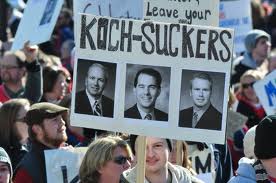
For formerly incarcerated people, the promise of the Civil Rights Movement – full civil rights and an end to Jim Crow – remains unfulfilled, and legitimate concerns that COINTELPRO has essentially returned need to be sidestepped. Consider the over four million formerly incarcerated people who are denied their voting rights, the continuation of a failed drug war, and the expansion of the prison industrial complex. Guided by this history, and inspired by demands for justice in the U.S. and around the world – from the recent prisoner strike in Georgia, to the Egyptian revolution, to the protests in Wisconsin – a vibrant new movement is now being born as formerly incarcerated people join together to secure their full civil and human rights. By incarcerating millions and erecting barriers to regaining actual freedom, the policy-makers themselves have created a massive group that holds a demand.
SCHEDULE:
▪ On Monday, February 28, diverse delegates from over 30 states will hold a day-long meeting in Montgomery, AL to map out a national civil and human rights agenda for formerly incarcerated people in the United States.
▪ At 1 p.m. on Tuesday March 1, the eve of the Bloody Sunday anniversary, and with the blessing of Civil Rights veterans from Alabama and beyond, formerly incarcerated people and their allies will march across the Edmund Pettus Bridge, signaling their intent to fulfill the promise of the Civil Rights Movement.
▪ On Wednesday March2 at 10 a.m., the group will hold a rally at the statehouse in Montgomery, just steps away from Rev. Dr. Martin Luther King’s old church.
Participants are attending from around the country. The Gathering Steering Committee is available for comment or interviews:
Malik Aziz, Men United for a Better Philadelphia: Founder and Chairman of the National Exhoodus Council, with a presence in 24 cities across the nation. He began
organizing while incarcerated in Graterford Prison, and eventually found a role in the Philadelphia mayor’s office developing alternatives to incarceration and recidivism.
Susan Burton, A New Way of Life, Los Angeles: After cycling in an out of the criminal justice system for nearly fifteen years, Susan gained freedom and sobriety and founded A New Way of Life Reentry Project in 1998. Dedicating her life to helping other women break the cycle of incarceration, homelessness, addiction and despair, Susan becoming a recognized leader in the criminal justice reform and reentry rights movements, and was recently nominated as a CNN hero in the category of “community crusader.” She has been a Soros Justice Fellow, a Women’s Policy Institute Fellow, and a former Community Fellow under the Violence Prevention Initiative of The California Wellness Foundation.
Pastor Kenny Glasgow, The Ordinary People Society, Dothan, AL: Since his release from prison, Pastor Glasgow has remained committed to ensuring that redemption is in the lives of those who have served their debts to society. He is Executive Director/Founder of TOPS, an organization providing numerous rehabilitation and prevention programs for youth and adults involved, or at risk of involvement, in the criminal justice system. A longtime leader of state and region-wide voter registration and restoration efforts, Pastor Glasgow led the successful campaign resulting in restoration of voting rights for peoplecurrently incarcerated in Alabama state prisons– a first. In 2008, he was awarded Lyndon B. Johnson Political Freedom Award.
Arthur League, All of Us or None/Legal Services for Prisoners with Children, San Francisco: Arthur has a 40-year history as a community activist involved in social and criminal justice work. In the 70’s & 80’s, during a time of political unrest, Arthur was an active member of the Black Panther Party, and served a seven year prison term for his political beliefs and actions resulted. Arthur is a former Director of the Concord Re-Ed Project, a non-profit organization working with adolescents in a group home setting, and serves on the board of Legal Services for Prisoners with Children. A Journeyman Plumber, he assists many young people coming out of prison to join the building trades unions and apprenticeships.
Aaliyah Muhammed, All of Us or None/LSPC, San Francisco: Aaliyah is a former prisoner and organizer who has worked with diverse groups of people inside prison and in the community. Her organizing abilities have increased the presence of formerly incarcerated people in the State Capitol, allowing her to supervise contingents of students and advocates in legislative arenas. Her efforts have resulted in creating avenues for former prisoners to take part in policy work in a variety of ways, from organizing community summits in Sacramento regarding legal expungement remedies to grassroots fundraising efforts to support the children of incarcerated people. She speaks widely on the conditions and struggles for women inside of prison.
Dorsey Nunn, All of Us or None/ LSPC, San Francisco: Dorsey is a co-founder of All of Us or None, a civil and human rights organization comprised of formerly incarcerated people, prisoners and their allies. He is also formerly incarcerated, and Executive Director for LSPC, a 30 year old San Francisco based organization dedicated to advocating for the human and civil rights of incarcerated parents, children, family members and people at risk for incarceration. Awarded nationally for his work, he was a 1996-1998 California Wellness Fellow and was recently awarded the prestigious Fannie Lou Hamer award from the African American Studies Department at the University of California, Berkeley.
Bruce Reilly, Direct Action for Rights & Equality, Providence, RI: After a decade as a Jailhouse Lawyer, Bruce hit the ground running in 2005. He served as the Volunteer Coordinator for the RI Right to Vote Campaign and drafted the final language of a state constitutional amendment that re-enfranchised felons on probation and parole. He wrote a probation reform bill which became law after four years of organizing. He is a former board member and organizer with DARE, and is preparing to enter Tulane Law School in 2011. A successful writer, Bruce has produced a play of prisoners’ writings and his blog on criminal justice has over 200,000 hits in 2010.
Tina Reynolds, Women On the Rise Telling HerStory, New York City Tina is Co-Founder and Chair of Women on the Rise Telling HerStory (WORTH), an association of formerly and currently incarcerated women. Tina Reynolds has received a Master in Social Work from Hunter College and is currently an adjunct professor at York, CUNY in the Psychology Department teaching the “Impact of Incarceration on Families, Communities and Children”. She has published pieces on the abolition of prisons, the impact of incarceration on women and children, formerly incarcerated women and policy change and is an editor of an anthology “Interrupted Life: Experiences of Incarcerated Women in the United States”.
At the risk of alienating myself from my Left-leaning friends… I’m going to say it anyway: I’m deeply troubled that the Wisconsin state employees labor strife is considered the face of social uprising in America. It must be said that there are two distinct groups that use the phrase “Union.” The first is a group of workers who make a product, and were sick of being exploited for their labor while the owners kept 90% of the proceeds. The NBA Players Association, the most highly paid group of predominantly Black men in the world, keep 51% of all revenues. A very simple formula where each party respects they can’t make money without the other.
The second type of “union” are people who work for the government. There is no material profits to divide up, and thus no real way to assess the monetary value of their work. And their compensation comes from all taxpaying members of society, from the uber-rich (with their off-shore tax havens) to the low paid grunts who lose a quarter of their pay each week to the government. The Wisconsin workers fighting for their jobs and benefits are this second type.
Government workers compose roughly half of the 15 million union workers in America. Consider this again: of over 300 million Americans, under 3% work in a union with a profit, bosses, and all the other components of capitalist dynamics. To put this in perspective, Wal-Mart employs 2.1 million people (1.4m in the U.S.), who are not in a union, whose rank and file earn an average hourly wage of $11.75, while creating $595,000 of profit per employee. And yet the uproar is over public sector workers. After WalMart, the next largest employers in America (other than government) are McDonald’s, Kelly Staffing Temp Agency, UPS, Sears, Home Depot, Target.
Nearly one million of the public employees are police officers, with salaries ranging from 50-100k/year plus overtime and benefits. Over 500,000 work as correctional officers, with a median salary over 40k/year plus overtime- this is about as many people as work in McDonald’s. The annual list of highest paid state employees in RI consistently include some prison guards earning over $100k. There are over 100,000 probation officers and correctional treatment workers (median 46k/year). Over 25% of the public sector union employees are in the field that serves as the arm and face of government oppression. When things are rosy, these cops on the beat are saving lives and promoting peaceful conflict resolution. When things go foul, the image is a police baton, riot gear, pepper spray, and other such tools of destruction. It is not accidental that public safety workers are exempted from the Wisconsin cuts, but loyalty to the state should not come via the mighty dollar.
With over 30,000 members, the California Correctional Officers are one of the largest unions in America. They “find it offensive” that indigent prisoners are allowed to get a free stamp and envelope to write their loved ones… ironic, considering the number of activists, some of whom will be (or have been) arrested for protesting, who are struggling in solidarity with public employee unions.
The shout-out for justice is in reference to “union busting”, using rhetoric from a bonafide Labor Movement that fought against a resistant government to create and enforce workers’ rights. But who are the “Bosses” in Wisconsin? Elected government officials who are not feasting at the trough of their underlings’ labor. The calls for solidarity seem to overlook the reality that “We The People” are paying these salaries, benefits, overtime, and pensions- be they school teachers or sanitation workers. And some of the People, on unemployment or not, are wondering why public workers are getting all the solidarity. State and city jobs are loaded with political patronage and nepotism, and like a kingdom, these royal offices are rewarded with as much as double or triple what the average peasant is earning to support their family.
Where has the public sector been over the past three decades as wages plummeted at the expense of wealthy elites? Where are the government employees when it comes to Living Wage laws? Where are they on universal health care? On enforcing tax breaks for corporations (in exchange for some public benefit)? Or when we consider solidarity with social justice movements in America: where is the public sector when it comes to policies that have prisons bursting with the mentally ill, physically addicted, and systemically impoverished?
It is difficult to see images of crowds across the Middle East and North Africa, demanding equality and democracy, without finding some connection to Madison, Wisconsin. But they are polar opposites. In America, the Left is being asked to support a state apparatus that has not been at the forefront of social movement; a labor sector which actually represents a status quo. The Middle East is deposing the status quo. The true union-busters, be they corporate elites or Tea Party rank and file, are as misguided as those who don’t differentiate between the two types of unions. Those who advocate an increase of police, prisons, and military (at the expense of social improvement programs) will be faced with the same budget crises as those who would like school teachers to remain on the payroll.
Let us not pretend there are no actual budget issues. There is no infinite pie to slice up. If the public sector has to start earning what other folks are making, perhaps that will serve as an impetus for those workers to organize for the massive changes necessary for everyone to earn a living wage. WalMart cannot function without the public sector subsidizing them, particularly when they have employees getting welfare. If the public employees decide to shut down government, with a basic demand for corporations to pay their fair share, it would be a Movement worthy of massive sit-ins. Imagine a world where police were earning the same $28k, without overtime, as the communities they patrol.
When people see earnings like those below, it is no wonder when the government does not seem responsive to the needs of working class people. When half the Households (meaning all earners in the house) are pulling in less than $53,000 in Rhode Island, and over half the individuals earning less than $30,000… there is little sympathy for the plight of the public sector and their $80,000 salary, or a half-pay pension after 20 years ($40k to go live on their yacht).
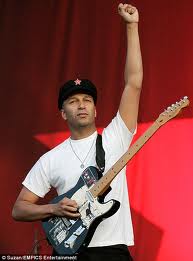
Seeing Tom Morello (legendary guitarist and notable activist from Rage Against the Machine) singing songs on behalf of the Machine seems rather odd. Where is the sit-in at WalMart headquarters? This is not the 1870’s, the 1930’s, nor the 1970’s. With outsourcing and the elimination of manufacturing jobs in America, it is time for a new discussion about “Jobs” and workers’ rights- the discussion many folks missed while Bill Clinton confirmed NAFTA would be great for America, and Ralph Nader (who predicted the next 20 years, almost to perfection) was dismissed.
To see the mass protest demands shift from the local factory to the local government is a clear sign that capitalism as we have known it is in the death throes. Yes, there is money in America. There are vast estates and luxury items and million dollar weddings and large shareholders diverting dividend payments into complex global financial structures. The target should not be the Governor, on behalf of our civil servants. Where were those civil servants when the taxpayers were giving Goldman Sachs, Bank of America, and their kindred the Big Bailout? Why should social justice and economic reform activists take their eye off of J.P. Morgan?
The public sector cannot be the “Labor Movement,” rooted in social justice and overall betterment of the community. If this analysis makes me a pariah, so be it.
Total pay, with benefits, for highest compensated employees, by department
The Providence Journal requested these lists of state employees’ salaries and earnings — which must be made available to the public under the state’s Open Records Law — to take a closer look at the cost of state government as state leaders have been debating issues such as layoffs and the privatizing of some state jobs.
Just in case you felt that judges were above the fray, this Facebook post by West Virginia Circuit Judge John Yoder says it all. This man has a history of flagrant behavior, such as illegally forcing indigents to pay fees, and here he publicizes the plight of an angry father whose teenage son was jailed by the judge. Judge Yoder’s caption for his photo reads, “Disappointed my free advertising is gone. This sign has appeared on Rt. 51 near Inwood for the last 6 months–a man complaining that I confined his son in a facility for breaking the law. Now it is gone. Everyone is asking me why the sign is now gone, and I do not have a clue why it has been taken down, but am disappointed I am no longer getting the free advertising.”
Yoder’s friend, Lauren Bell, replies “I didn’t know 15 year old have constitutional rights.”
As the Prison Industrial Complex doubles, triples, and quadruples in size… so do the number of judges. This inevitably waters down the integrity of a judiciary that is supposed to be the model of moderators. Judges who show blatant antagonism against any party have already violated their oaths. So is Judge Yoder a tool of the prosecution? Or do the prosecutors serve as this judge’s tools for vindictiveness against the accused?
The Judge Yoders are everywhere, and he is properly being reported to the Judicial Investigating Commission. People around the nation should familiarize themselves with their state judicial ethics commissions, and begin the campaigns to ween out those who lack basic integrity required to sit on the Bench.
Where, one might wonder, do judges go for their guidance and role models? The US Supreme Court is, of course, the highest court in the land. Their own integrity has been properly called into question regarding the integrity of Justices Antonin Scalia and Clarence Thomas– both of whom have had extensive political involvement over their careers.
Common Cause has filed a petition with the Department of Justice, calling for an investigation regarding the activities and bias of Scalia and Thomas. In particular, they are calling for their disqualification from the landmark Citizens United case (which granted “free speech” to corporations, especially the carte blanche to fund political activities).
Although family members of lottery workers are not allowed to buy a ticket, Judge Thomas’s wife has a political action committee. Former Monsanto employee Thomas has ruled on Monsanto issues, while he and Scalia have very publicly been linked to Tea Party events and activities. The list goes on.
We shall see what Attorney General Eric Holder (and his boss, Obama) have to say. There is clearly enough information to rightly call for an investigation; a refusal to do so will raise suspicions of the Justice Department themselves.
As we continue this movement to dismantle the Prison Industrial Complex there will always be several demands upon us that need constant attention: the development of new leaders, and the honing of strategy. I will leave leadership development for another day, as I want to weigh in about one particular facet of strategy: Public Speaking.
Public Speaking has long been determined as The Most Dangerous Weapon of freedom fighters throughout time. Although the American government was founded on this principal that radical ideas should be raised freely so public discourse can separate the wheat from the chaff… and although those figures repeatedly warned against the rise of tyranny… they likely could not have predicted the likes of a J. Edgar Hoover who, from a clandestine position in the FBI, could target the most charismatic American public speakers for elimination. Correction: the most charismatic Black, Puerto Rican, Chicano, and Native American public speakers.
Why public speaking? The pen, and the voice that can deliver, are mightier than the sword. Hoover feared the “Rise of the Black Messiah,” and hoped that the FBI or similar power structure entities could “install” their own Black Messiah. Give Black America a hero who has been approved by the White plutocracy, who does not come from the ranks of the oppressed. Rather than Martin, Malcolm, or Stokely, perhaps Hoover would have liked someone with a White mother, whose father was African (not a descendant of American Slavery), who went to a private school and never saw all his friends harassed and arrested by the police, gone on to Ivy League colleges, worked for a corporate law firm… let him speak for Black America and inspire the masses to prop up Wall Street money-changers as the most American thing since Ford made a pick-up truck.
But I digress. On Strategy, in public speaking (the most dangerous weapon):
Consider one thing above all else: The opposition are always looking for an opportunity to say, “You see: I told you he was a savage. He can not be taken seriously. His ideas are equally uncivilized and savage.”
You see it in foreign policy on a regular basis. A home destroyed; family members murdered; economies ravaged; no electricity… and the mainstream media will portray some Angry Arab in the context of “these people deserve to be bombed, look how they are out for blood.” But consider also your own experience, for those who have been under the boot. They will strip you naked, put you in a cold, dark cell for days. Leave you there for weeks. Awaken you every hour on the hour, and various forms of psychological warfare… and then say, “See, she is acting like a lunatic. She is not fit for general population.”
As someone who has been effective with public speaking, I can share with you four words: “Take The High Road.” When someone tries to drag you into the muck, taunt you with some irrelevant detail or an extremist position… or your personal past which may not be so squeaky clean, remind them “I’m here to speak about broader issues. This isn’t about me, or that one particular case you mention, it is about the issues that affect our entire society. It is about looking at systemic problems, not individual exceptions. If you can’t stick to that, I’m not interested in the conversation.”
Never show your pain. Remember, it isn’t about an individual, it is about a System. When someone in the media asked me about prisons charging prisoners “rent” (in the form of various fees) I calmly replied, “Well it depends on what the community is trying to accomplish, because they own the prison. On the one hand, if they want people to leave prison with an opportunity to pursue an education, or work, to rent an apartment and get on with their lives then this isn’t a good idea. But if what they want to do is create a deep resentment of society by prisoners and their families, who can’t afford these fees, and have people getting out of prison with more debt, more obstacles, and more bitterness thereby increasing the possibilities of their turning back to addiction or crime… if that’s what society wants, then yes, they should have these fees. They should probably raise them. But first we have to be clear about what the people want.”
Communication is about what is heard, not what is spoken. I need not be a complaining prisoner, if I just lay out the facts. Let them do the work. Let others’ imaginations fill in the gaps. Clearly my face has healed since three guards handcuffed me to a chair and took turns punching me, apparently in response to my submitting a request for a phone call. The fact that I can recount it with such normality further illustrates that this is normal in our world. We need to put it back onto the legislators, the voters, the judges, the masses, and the media: What is it YOU are trying to accomplish with YOUR penal system? They need to take ownership of what is being done in their name, and decide if it is fulfilling their goals with prisons. They are clearly ready for new ideas, but we must also continue to build their understanding of specific issues.
It is also important to narrow any conversation as much as possible. “Information Overload” is a sure way to shut people down, or to be painting such broad strokes as to be irrelevant when it comes to detail. We are talking about an industry here, a System, with many moving parts rotating on various ellipses. If your issue was about the struggle to unionize in Walmart (the world’s top private employer) you can’t spend all your time trying to describe every ailment in capitalism.
Be concise. Get in, get out. Remember that the facts are brutal enough not to need opinions. And the biggest problem is ignorance- most folks have no idea of any realistic alternatives… but that is where we come in,
As state budget discussions heat up around the nation, each department will be fighting to keep their slice of the pie while a few will be bold enough to tout their need for expansion. In a time of economic hardship when national politicians rallied to preserve the Wall Street predators who failed, there is only discussion around cutting back social service programs, like housing, food stamps, and public health insurance. But what about the prison industrial complex? Where does that fit in?
In a typical prosecution, the state represents both the prosecution and the defense, as criminal prosecutions are overwhelmingly of indigent people. In 2007, the number of cases was nearly 5.6 million. There is a recurring discussion about the effectiveness of overburdened public defenders, including a special report by the Bureau of Justice that details just how heavily understaffed these programs are. Some critic of civil rights would say that the indigent doesn’t deserve taxpayer funds paying for their Sixth Amendment right to counsel. But ironically, the argument is actually a smoke and mirror deception.
The states cannot pay to prosecute all the crimes they have chosen to create. With the Reagan-Clinton era creation of the Drug War and federal funding of COPS, increasing the police patrols in low-income areas, the court system has been bogged down with more customers than they can handle. Rhode Island, for example, had 56 judges in 1990. Now they have 86, and still cannot handle the workload. The Public Defender’s Office changed as such, between 1990 and 2010 (and the Bureau of Justice Report recommendation):
Felony Attorneys: 11 to 21 (33); Misdemeanor Attorneys: 12 to 10 (28); Juvenile Attorneys: 6 to 7 (13); Appellate Attorneys: 4 to 4 (10); Parental Rights Attorneys: 0 to 4. The BJS Report recommendations are actually underestimated, because they are based on “dispositions” an attorney can handle per year, not on the caseload.
The caseload increases faster than the dispositions because the Prosecutors are not adequately funded and the courts are not open long enough. Anyone who has been to court knows that the only chance of seeing a judge typically happens between 10-12 and 2-3. Presumably, the judge is hard at work in chambers during the rest of the time (besides lunch). More importantly, in Rhode Island, for example, every Public Defender attorney calls three cases “Ready for Trial” each week. And it is the Attorney General’s Office who are not ready.
The AG has a budget over three times the Public Defender, and get “free” investigative work done by the police departments. The Judiciary budget has been climbing with new types of specific courts, and new judges or magistrates to helm them. Overall, the Criminal Justice portion of the RI state budget (and elsewhere) approaches 10% of expenditures. Surpassing Higher Education.
In 1999 the ACLU sued Connecticut for an inadequate Public Defenders program, and a settlement served to increase the staff, training and compensation. Georgia prisoners filed suit in 2009 over the backlog of appeals. Last year, a judge certified the case as a class action with the Southern Center for Human Rights as lead attorneys. Yet the unspoken remains: the Attorney General’s side will still file for extensions in every case, as they too are overburdened. This can be seen by thousands of Jailhouse Lawyers across the country who bypass the indigent representation and file appeals themselves.
In 1996, Illinois prisoners filed suit against six state supreme court judges. Between judicial vacancies and a massive backlog in DNA testing around the country, death penalty states such as Ohio, Texas, and California are further mired in the gravity of these life/death appeals. The Illinois bill to abolish the death penalty, which is more about innocence and human decency than it is about budgets, sits on Governor Quinn’s desk. Meanwhile, a “Pro-Life” Governor in New Mexico has come out as “Pro Death” in wanting to reverse their recent ban on the death penalty.
When Brooklyn Federal Judge Jack Weinstein ordered a new trial for a man six years in the waiting for his appeal, he remarked in a memo: “The court should consider the psychic costs that result from delays in disposition for a class of generally poor, uneducated and unrepresented prisoners.” This exemplifies one reason the innocent are cleared after decade(s) in the courts, and why it is exceedingly harder to “get over it” and move on.
Last year, New York County unveiled the Conviction Integrity Center, a long-overdue project which can save both money (freeing the innocent) and psychic costs. It should be replicated in every county. As they explain:
The Conviction Integrity Committee is comprised of ten senior members of the District Attorney’s staff, who review practices and policies related to training, case assessment, investigation, and disclosure obligations, with a focus on potential errors such as eyewitness misidentifications and false confessions. The Conviction Integrity Chief coordinates the activities of the Committee and leads all re-investigation of any cases that present a meaningful claim of actual innocence. The Conviction Integrity Policy Advisory Panel is comprised of leading criminal justice experts, including legal scholars and former prosecutors, who advise the Office on national best practices and evolving issues in the area of wrongful convictions.
In 1991, Robert Richards, an Oklahoma prisoner who received 50 years for delivery of a controlled substance, was told he needs to wait three years for an attorney to file his appeal, he sued the Legislature and the Public Defender, pro se. The appeals court ruled he had to be considered in light of a landmark decision in Oklahoma, Harris v. Champion, regarding the funding of appeals. Anthony Harris, also pro se, did not believe that the 3 year wait was constitutional. The Tenth Circuit agreed. Considering an appeal in Rhode Island can often take three to five years to be heard, one needs to question the word “Speedy” as in “Right to a Speedy Trial.”
So what is the answer? Prisoners who sue have a right to be released if governments cannot meet their burden. The possibility of mass releases is unpalatable to many, and the possibility of doubling the budgets of courts, prosecutors, and public defenders is unreasonable. Therefore the answer is obvious: Fewer crimes. Between drug possession, family disputes, and traffic offenses, the court systems have become a never-satisfied beast always eating, yet unable to digest. Thirty years of feasting, and this beast is ready to burst.






 unprison
Formerly Incarcerated & Convicted People’s Movement Arises!
speaks to us in our own voice; clear, loud and urgent. A voice that
speaks to our identity and emanates from the soul, ringing true both
in the head and the heart. Our objective is a collective one,
continuing in that vein, as we gathered fifty people from across the
nation to engage in a conversation about the need to build a Formerly
Incarcerated and Convicted People’s Movement. We understand and
declare very clearly: the criminal justice system does NOT work. It
is no more than a destructive force in our communities now and for
future generations.
Fifty formerly incarcerated and convicted organizers came with a
dedication and commitment stating that this was our time. We were not
deterred by our inability to raise the entire budget to fly, feed and
house people in Alabama for three days, nor were the few dozen
supporters who found their own means to be present for this historic
moment. As activists, we have been to our share of conferences and
rallies, yet before many of us left our homes, we knew this invitation
was different. And we readily subsidized our own fight for
restoration of our own civil and human rights.
The first exercise was to introduce ourselves to each other not simply
by our names or the many great struggles that we were currently
engaged in, but by who we embraced as our heroes. We wrote our names
and the name of our hero on a piece of paper and we taped those to the
front of the table where we sat. We were quickly able to see the
right people were in the room. We participated in designing a
historical time line and this practice drew us closer to discovering
our common history, something uniquely ours as incarcerated, formerly
incarcerated and convicted people. Knowing where we came from made it
easier to find our vision. We agreed to accept as our vision “The
Fight for the Full Restoration of Our Civil and Human Rights.”
The concept and construction of a movement requires a vessel large
enough to hold us all, and steering a vessel of this scale requires a
crew of many navigators and leaders. Agreeing on a vision was an
essential and amazing accomplishment in light of the fact that time
was short, and with so many leaders in the room egos could easily have
gotten in the way. We agreed to maintain the structure that propelled
us to this point. However, we needed to enlarge the steering
committee to seriously consider setting a national agenda. Twenty
people volunteered to join the steering committee, providing us
greater diversity in both geography and gender. We decided we would
do regular conference calls to move forward with the agenda and
coordinating the Los Angeles convening.
The Steering Committee planned to kick off the beginning of this
Movement by walking across the Edmund Pettus Bridge, in Selma. Days
before any of us hopped in a plane, bus, train, or car, we were
informed that we would have stay on the sidewalk if we were going to
march across the bridge. Over 247 people called the mayor of Selma
and let him know we were coming to march over the bridge, and not on
the sidewalk. Some of us consciously considered going to jail again,
and some of us even emptied our bank accounts just in case we needed
bail. We didn’t anticipate Mayor George Evans of Selma would ask to
speak with us after our march, or agree to read our statement at the
46-year Jubilee marking Bloody Sunday. Nor did we anticipate that our
march across the bridge would be headlines on one of the largest
papers in Alabama, with over twenty photos online. Our own Tina
Reynolds was photographed carrying a sign proclaiming that “Democracy
Starts At Home.” We should be allowed to vote and exercise our civil
rights regardless of where we live in the United States.
Our visit to the state capital in Montgomery is a testament to the
power of unity. While standing on the stairs of the Capital building
we were introduced to, and had a short conversation with, Alabama
Chief Justice Sue Cobb-Bell. The Chief Justice explained the serious
effort underway to rewrite the criminal code and reduce the prison
population by 3,000. Once inside, we were led into a conference room
where we met Rep. John Rogers, the head of the Alabama Black Caucus.
After a spirited discussion about pressing issues, we were ultimately
promised a community forum of which we would take part in choosing the
community organizations to participate. We were also promised that
key elected officials, including the governor, would be present at the
forum.
We would be remiss if we did not acknowledge the work and support that
our host organization, The Ordinary People Society (TOPS), put into
our initial organizing. On a side note: TOPS was seriously respected
by prominent members of the Alabama legislature, who pledged their
support to this struggle, and prominent officials in both Selma and
Montgomery. Meanwhile, our Allies were honing their own efforts, such
as supporting those organizations on our side (and inspiring those who
should be), and creating more spaces for our voices to be heard. They
are committed to recognizing our priorities and helping us create the
tools for our organizing efforts.
Last but not least, we want to thank everyone who attended and wrapped
their heads around the bigger picture of Movement and a larger
agenda. As a collective we all committed to something bigger than
each of our own organizations or individual work. We took action and
decided to organize through Regions represented by our expanded
Steering Committee. Regional caucuses will facilitate closer
collaboration in our areas, and we will build a movement on one
accord, as a collective committed to “The Fight for Full Restoration
of our Civil and Human Rights”. Let us keep moving forward, and share
this document with people we believe should know and participate in
our common efforts to build a Movement. Let people know about the
goal to meet in Los Angeles- November 2nd, 2011.
We have recognized these dates/weeks for actions, meetings, and
solidarity. We call on our members to take part in order to raise our
capacity, profile, and build a Movement:
March 29th
April 23rd
May 21st (Riverside Church), May 28th (Solidarity w/ Georgia Prison
Strike)
June 17th (40th Anniversary of Drug War)
Aug. 21st (40th Anniversary of San Quentin Uprising)
Sept. 29th (40th Anniversary of Attica Rebellion).
On June 23rd-26th is the Allied Media Conference in Detroit. There is
an entire track of workshops focused on the Prison Industrial Complex,
and members of the FICPM will be participating. This is an excellent
opportunity for those who can attend.
Sincerely,
Formerly Incarcerated & Convicted People’s Movement Steering Committee
Related Articles
Share this: