Dead Under the “Custody and Care” of…

There are many ways to die in the “custody and care” of the criminal justice system.  We see it seemingly every day in America.  Whether it is an NYPD shooting or an Orleans Parish Prison (OPP) shanking, clearly the government agencies have failed to uphold the “care” of the phrase used in courts to demand someone’s release.  An immigration attorney once told me, in response to the death of detainee Jason Ng, “If they don’t want to be responsible for keeping people alive, they shouldn’t be taking them into custody.”

Recent revelations in California indicate that Christian Gomez died under the watchful eye of California Department of Corrections and Rehabilitation (CDCR), and specifically Corcoran Penitentiary medical staff.  Although the story broke today, Gomez died on February 2nd, during yet another wave of the California hunger strike set off in Pelican Bay last year.  As negotiations with the CDCR failed, prisoners again pushed back against what the U.S. Supreme Court has deemed “inhumane” conditions.

Allegedly Christian Gomez was known to be on strike, which CDCR defines as 3 days of missed meals, and all hunger strikers are then put under medical monitoring.  The 27 year old man died in Administrative Segregation, experiencing the inhumane conditions of California lock-down.  He died within a few days of his hunger strike, indicating (if true) he may have had some other medical condition.  Gomez’ family will have a difficult time getting any information from the CDCR, as prison officials perpetuate veils of secrecy over this public institution.

Prisoners are typically the source of information from behind the walls.  I heard through the grapevine when my friend Joe died mysteriously in his cell, and I immediately began pestering the prison director.  Prison officials ultimately assured me it was a freak brain aneurism; the type of thing that could happen to anybody who has no medical care.  My friend Deb, on the other hand, discovered a great deal of prison culpability when staff at first denied her son’s methadone over a weekend, and then triple-dosed it on a Monday.  Substance abuse is treatable, but not when untrained people have “custody and control.”  Her son became another homicide under the watchful eye of a prison.

I can never grow immune to all this.  My friend Roger killed himself in segregation, having never gotten over his uncle killing himself years before- also in segregation.  Roger called out to the guards throughout the night, who never went to check on his uncle, and he always held them responsible.  Prisons can be savage scenarios, but it often seems like prisoners are the only ones who want humane conditions and a civil society.

Christian Gomez was one of thousands in California struggling for things such as food, sunlight, and changes to the segregation policies- the everyday torture in America.  It is important to remember the words of Frederick Douglass, a former slave, when he said “Power concedes nothing without demand.”  Americans need to be curious about what is done in their name.  It is for good reason that prison issues, human rights issues, can be called a “laundry list.”  There are so many problems, and mostly because the prison is allowed to operate in secrecy.  Where there is darkness, abuses go unchecked, and public policy is not created publicly, nor enforced publicly.

All of this is being done in Americans’ names.  All of it.  Legislators could  begin demanding prison oversight committees, or other forms of public participation.  And the people can be Occupying Prisons, among a host of other things.  The campaign to divest from private prisons has drawn new energy to this work, as has coordination amongst groups such as the Formerly Incarcerated & Convicted People’s Movement.  It remains to be seen how many families will need to receive their loved one returned to them, as the Gomez family did, before a true critical mass has been reached.

Posted in Commentary, Prison Conditions, Prisoner Health | Tagged , , , , , , , | 3 Comments

The New Grandfather Clause: Illegally Disenfranchising 11% of New Orleans, and Other Tidbits

Upon moving from Rhode Island to Louisiana, I was curious about my voting rights.  In 2006, I was part of a small group of people to move Rhode Island voters to amend their constitution- and re-enfranchise people on probation and parole.  So it was with more than a passing interest that I stayed up late in my law school classrooms researching the situation in Louisiana.  I worked hard to get voting rights and be a step closer to being a “citizen” of this country, and now it is (personally) all for naught.

Louisiana will let me get a law degree, but I can’t vote.  But all is not what it would seem. It just so happens that Louisiana, with a long history of voting rights challenges, has overstepped their own constitution; and is also in violation of the Voting Rights Act of 1965.  The full report is here:

The New Grandfather Clause: How Louisiana Defies the Voting Rights Act and Their Own Constitution

In summary, the 1974 Louisiana constitution barred people “under order of imprisonment” from voting.  This was interpreted at the time to include people in prison and on parole, but not people on probation.  In 1977, the Louisiana legislature found a way around that by re-defining the phrase to include people on probation.  This may sound very tidy, but constitutional changes need to be taken to the voters.

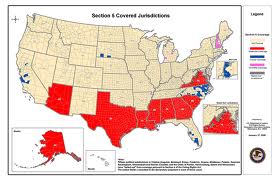
Louisiana is also a “covered” jurisdiction in Section 5 of the Voting Rights Act.  In fact, they are probably the MOST covered, as these particular states were deemed special due to their historical antagonism towards aspiring Black voters.  Under Section 5, all jurisdictions such as Louisiana need to propose voting changes to the U.S. Justice Department.  The state needs to show that the change will not have a disparate impact against recognized minority groups.  As it turns out, believe it or not, but the mark of a criminal record (and the discriminations that flow from it) has a massively disproportionate impact on People of Color.  It is the New Jim Crow, for daily discriminations, and the New Grandfather Clause for voting purposes.

I have no idea why Attorney General Holder, who was just in New Orleans, is not enforcing the Voting Rights Act in Louisiana.  I now live in a city where 11% of us are denied the right to vote… in a state where Black people are

twice as likely as White people to be disenfranchised… in a country that espouses democracy to the rest of the entire world.

Posted in Voting Rights | Tagged , , , , , , , , , , | 3 Comments

Does Change.org Allow Hateful Petitions?

UPDATE:  In response to the public’s outrage, the New Orleans Police Dept. stopped the policy of releasing records of victims.  Well done, NOLA.

Activists in New Orleans recently started a petition to stop the NOPD from releasing criminal records of murder victims to thousands of people.  In effect, the NOPD has conducted smear campaigns to “blame the victim,” no differently than sending out an email about every rape victim with their sexual histories.  The petition is HERE, on Change.org

In response to this call for Change in the NOPD’s practice (keep in mind they are under a broad scope of federal supervision right now), someone else posted a petition to maintain the status quo.  This suggests that killing people with criminal records is acceptable.

Local attorney Alyson McCrary sent this letter to Change.org.

Dear Change.org Legal Department,
I am writing because I believe one of your users is in violation of your terms of use.  Namely, Anthony Malacaro created the petition at http://www.change.org/petitions/citizens-of-new-orleans-sign-a-petition-in-support-of-releasing-criminal-history-of-murder-victims after the creation of my petition (http://www.change.org/petitions/city-of-new-orleans-end-the-practice-and-policy-of-releasing-homicide-victims-arrest-records ), using some of the exact language of my petition, and to counter the request in my petition to end a racially discriminatory and dehumanizing practice of disrespecting deceased victims of homicide and their families. Mr. Malacaro supports this inhumane practice. I believe his petition violates the following terms in your agreement:
  • upload, post, transmit, share, store or otherwise make available content that, in the sole judgment of Company, is objectionable or which restricts or inhibits any other person from using or enjoying the Site, or which may expose Company or its Users to any harm or liability of any type;
  • Users who infringe any intellectual property rights of others, whether or not there is any repeat infringement.
  • You further agree that you may not use the Service or the Site in any unlawful manner or in any other manner that could damage, disable, overburden or impair the Site
Could you kindly investigate and take action on this matter?
Thank you,
Alison McCrary
Safe Streets/Strong Communities”

Change.org that is an open source tool, one which  “is an online advocacy platform that empowers anyone, anywhere to start, join, and win campaigns for social change. Millions of people sign petitions on Change.org each month on thousands of issues, winning campaigns every day to advance change locally and globally.”  (taken from their website).

Those who would like to help them advance this change should cut/paste Ms. McCrary’s email and contact the site.

Change.org can be emailed HERE.

Posted in Commentary | Tagged , , , , , , , | 1 Comment

How To Confront a Candidate

It is often bemoaned that candidates only talk about certain issues, only debate the same topics, and hardly ever disagree on anything of true substance.  “My economic package is better than yours.”  “I’m tougher on our enemies than the other guy.”  Blah, blah, blah.  When we consider that Obama, Bush, and McCain all agreed on (1) the Bailout of the banks, (2) hundreds of thousands of American soldiers patrolling multiple Middle Eastern nations, (3) the Patriot Act, (4) maintaining the Drug War, (5) paying mercenary armies like Blackwater, (6) appointing industry insiders to regulatory positions, (7) accepting billions of dollars in campaign donations, and so many other things…  what do they have left to disagree about??  The level of discrimination against gay people.  A few percentage points on the tax bill.

So the key to getting your issue on the map is to ask the candidate in public, with voters and media in the room.  Even if you are creating your own media, the key is to get them “on the record.”  Wait in line for the microphone and ask away.  Obviously this is easier to do in a local race than a big national one, but those interactions are going to have more impact anyway.  People need to see that the president is, in many ways, inconsequential because there is little difference between candidates.

Go look in the mirror and practice how to load up a question.  Here, try these on for size:

“With prison spending exceeding education spending, and legal discrimination against 200,000 people in our state due to their felony record, where they are barred from employment, where computers are deleting applications that reflect a felony record, where public housing is denying the reunification of families… do you think we should continue to use prisons as a solution for mental illness, homelessness, and substance abuse?  Or do you think we should find an alternative?”

 Check out the tactic of leading in with some facts.  Frame the question.  Make it so they must agree… in public at least.

“Considering that education is the oldest form of self-empowerment and the only known pathway for stability, not only for an individual but for a community, do you think prisoners and former prisoners should be allowed to get an education?”

Follow-up:  “And what do you say to the person who feels that a former prisoner’s education is taking a classroom seat away from someone who was not in prison, and more deserving?”

Who can be against education?

“In a society where defense attorneys are sometimes earning millions of dollars each year defending drug clients, do you find any conflict of interest for a legislator, who has ties to the defense attorneys through their own firm or their close associates, to make laws that create more clients?”

“With all the failed results from rehabilitation and re-entry programs designed without the input of those who have direct experience, do you think it is time to listen to former prisoners (those who are truly the primary stakeholder in rehabilitation) about what works and doesn’t work… or should we keep giving money to so-called experts and the politically connected entities?“

“Do you think people released from prison should be encouraged to get more involved in their community by voting, holding jobs, and raising their children… or should they be pushed into the shadows of an underclass where drugs and violence are essential for survival?”

Here’s one I have for Attorney General Eric Holder, who is coming to do a talk on voting at my law school.  Let’s see if he selects it, and answers….

“In Louisiana there are 66,000 people on probation and parole who cannot vote, and over 10% of New Orleans is barred from voting.  Considering as Felony Disenfranchisement laws have a disparate impact on People of Color, do you believe the Justice Department should consider enforcing Section 2 of the Voting Rights Act in states, such as Louisiana, that are covered under Section 5 of the Act?”

Film it, post it, share it.  Let the follow-ups begin, and let the candidates show their knowledge, intelligence, leadership, and compassion for all their constituents shine… or not.

What question would YOU ask?

Posted in Actions, Commentary, Voting Rights | Tagged , , , , , , , , | 1 Comment

Santorum and Romney Square Off On Felon Disenfranchisement

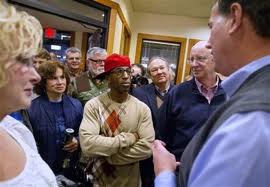
Republican presidential candidates are picture...

Rick Santorum asked Mitt Romney point blank: “Do you believe people who were felons, who served their time, who exhausted their parole and probation, should be given the right to vote?”  This was in response to an ad by Romney’s “Super-PAC” attacking the former Pennsylvania senator.

The ad says Mr. Santorum voted to “let convicted felons vote” — something the senator says is “explicitly false” because it implies, though it never says, that he wanted felons to be able to vote from jail. The vote Mr. Santorum cast, Senate vote No. 31 in 2002, would have overridden state laws when it comes to federal elections. It would have required them to let felons register to vote once they have completed their prison sentences and any probation or parole.

Romney, at first, beat around the bush.  “I don’t believe people who have committee violent crimes should be given their right to vote.”

Santorum retorted that, while Romney was governor of Massachusetts, the law allowed people on probation and parole (including those who committed violent crimes) could in fact vote.  And Romney did nothing to fight it.

In fact, until 2000, prisoners in Massachusetts could vote– just as they currently can in Maine and Vermont.

The problem here is about creating and underclass in America, a caste of Americans with no stake in the democracy.  A group, millions strong, who are told to pay taxes, abide by the laws, yet have no representation.  How can  a democracy survive with parents barred from the ballot box?  How can such a large group, with further discrimination in employment and housing, be expected to abide by the law?  Most of them will, and most do, but this is a credit to people’s basic human instinct to live in peace and harmony.  It is not due to political leadership.

Was the Commonwealth of Massachusetts somehow saved when prisoners were barred from participation?  Was the state of Rhode Island somehow dismantled when people on probation and parole were granted their voting rights in 2006?  I was part of the latter ballot campaign, going so far as drafting the final constitutional amendment… just one year removed from prison, for a violent crime.  It is ironic that I move to Louisiana for law school and legally lose my right to vote.  It should come as no surprise that I felt much more connected to the democracy, to my responsibilities as a citizen, in the state where I could vote.

Posted in Voting Rights | Tagged , , , , , , | 3 Comments

Philadelphia Freedom: Is This the New Swing Vote?

A coalition of seventeen organizations have recently embarked on a revolutionary voter registration drive, and what better place to be revolutionary than Philadelphia?  The Returning Citizens Voter Movement is directed towards formerly incarcerated people, engaging many more people with felony records who never went to prison, and far more people without records who have a family member in the criminal justice system.  Is this an effort that will be replicated around the nation in 2012?

The goal of 10,000 new registrations may seem overly ambitious, but consider that at any given time, Philadelphia has between 200,000 – 400,000 residents who previously served time in prison.  These are people who have the right to vote, and surely some do, but have collectively never been engaged in the political dialogue of their community.  As Maelissa Gamble, founder of The Time Is Now to Make a Change puts it, “People are tired.  They’re saying, ‘somebody should have done this already.’  And they are not seeing the re-entry resources that get talked about all the time.”

Gamble and other community leaders have been tangling not only with getting people assistance in restructuring their lives, but also in successfully tearing down the barriers that keep people from following their good intentions.  Last year Philadelphia “Banned the Box” and eliminated “Have you ever been convicted from a felony?” from job applications in the city.  It is ironic that the same government allocating funds for rehabilitation/re-entry also has laws that create ever-higher hurdles for people trying to build a life in the community.

With the Pennsylvania Republican Primary on April 24th (the same day as New York, Rhode Island, and Delaware) it will be interesting to see how this specific criminal justice-based civic outreach can be bolstered by the media.  Former Pennsylvania Senator Rick Santorum has a history in Philadelphia, and his views on issues may be well known.  Meanwhile, Texas Senator Ron Paul has been an outspoken critic of the Drug War and the massive use of incarceration in America.  With the Texas and Wisconsin primaries on April 3rd, it is possible that Paul’s campaign will have a bounce that reverberates through three weeks of focus on Pennsylvania (a perennial “swing state”).

All but three of the coalition organizations in the voter registration and awareness campaign are led by formerly incarcerated people.  This is part of a concerted effort by the Formerly Incarcerated and Convicted People’s Movement to register one million people across the country, and Philadelphia is leading the way.  One historical dilemma with a broad movement is the creation of factions and the challenge of coalition-building.  Gamble, formerly incarcerated herself, now finds herself in the middle of a group including the Human Rights Coalition, Proyecto Sol Filadelfia, ACLU, Reconstruction Inc., Educational Advocates Reaching Today’s Hardworking Students (EARTHS), and more.

It is often noted that over four million people are disenfranchised due to criminal records, however it should be also noted that there are tens of millions of people who are eligible to vote- people who have been (or still are) impacted by the criminal justice system.  This is an issue-based group, with no party loyalties.  The group is urban and rural, of all skin tones.  And the voices are beginning to be heard.

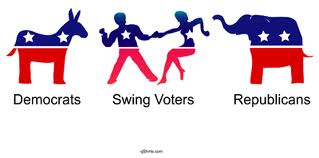
Politicians will be knocking on doors of “Likely voters” registered to their parties or as “Independents.”  If one is not registered and exercising their vote, there will be no knock, no pandering, no listening.  The coalition will be setting up registration stations all over the city, from grocery stores to community forums, probation offices to social services locations, they will even be registering people currently awaiting trial in the jails. When thousands of voters demand candidates who will call a cease fire in the Drug War, who will re-direct that money into education, to books rather than bars, the pandering will begin.  It is not likely that the GOP will hold an inner city debate with ordinary residents in the audience (these are made-for-TV controlled events); and it is not likely that Rick Santorum, Ron Paul, or Mitt Romney will come looking to do a “Town Hall” session with urban voters… but wait until 2016.  Rebuild it, and they will come.

Maelissa Gamble can be contacted at (215) 834-5165 and mgamblethetimeisnowtomakeachange@yahoo.com

Posted in Voting Rights | Tagged , , , , , , , , | 1 Comment

National Occupy Day in Support of Prisoners: Feb. 20th

A proposal passed yesterday by the General Assembly of Occupy Oakland is to generate a national day of action that will call attention to prisons across America.  While presidential candidates take to their stumps, one might be unaware that America is the international leader of incarceration with no competition in sight.  February 20th, amidst American Black History Month, has also been declared by the United Nations as “World Day of Social Justice.”

The call coincides with a recent call to action by supporters of Mumia Abu Jamal to condemn solitary confinement as a means of torture.  Mumia has been transferred to solitary since leaving Death Row.  Read more from the Human Rights Coalition, here.  The call also comes amidst growing awareness of the relationship between Wall Street, prisons, prison labor, and paid lobbyists pushing policies that create more prisoners.

“We are calling for February 20th, 2012 to be a ‘National Occupy Day in Support of Prisoners.’

“In the Bay Area we will ‘Occupy San Quentin,’ to stand in solidarity with the people confined within its walls and to demand the end of the incarceration as a means of containing those dispossessed by unjust social policies.

Reasons

Prisons have become a central institution in American society, integral to our politics, economy and our culture.

Between 1976 and 2000, the United States built on average a new prison each week and the number of imprisoned Americans increased tenfold.

Prison has made the threat of torture part of everyday life for millions of individuals in the United States, especially the 7.3 million people—who are disproportionately people of color—currently incarcerated or under correctional supervision.

Imprisonment itself is a form of torture. The typical American prison, juvenile hall and detainment camp is designed to maximize degradation, brutalization, and dehumanization.

Mass incarceration is the new Jim Crow. Between 1970 and 1995, the incarceration of African Americans increased 7 times. Currently African Americans make up 12 % of the population in the U.S. but 53% of the nation’s prison population. There are more African Americans under correctional control today—in prison or jail, on probation or parole—than were enslaved in 1850, a decade before the Civil War began.

The prison system is the most visible example of policies of punitive containment of the most marginalized and oppressed in our society. Prior to incarceration, 2/3 of all prisoners lived in conditions of economic hardship. While the perpetrators of white-collar crime largely go free.

In addition, the Center for Economic and Policy Research estimated that in 2008 alone there was a loss in economic input associated with people released from prison equal to $57 billion to $65 billion.

We call on Occupies across the country to support:

1.  Abolishing unjust sentences, such as the Death Penalty, Life Without the Possibility of Parole, Three Strikes, Juvenile Life Without Parole, and the practice of trying children as adults.

2.  Standing in solidarity with movements initiated by prisoners and taking action to support prisoner demands, including the Georgia Prison Strike and the Pelican Bay/California Prisoners Hunger Strikes.

3.  Freeing political prisoners, such as Mumia Abu-Jamal, Leonard Peltier, Lynne Stewart, Bradley Manning and Romaine “Chip” Fitzgerald, a Black Panther Party member incarcerated since 1969.

4. Demanding an end to the repression of activists, specifically the targeting of African Americans and those with histories of incarceration, such as Khali in Occupy Oakland who could now face a life sentence, on trumped-up charges, and many others being falsely charged after only exercising their First Amendment rights.

5. Demanding an end to the brutality of the current system, including the torture of those who have lived for many years in Secured Housing Units (SHUs) or in solitary confinement.

6. Demanding that our tax money spent on isolating, harming and killing prisoners, instead be invested in improving the quality of life for all and be spent on education, housing, health care, mental health care and other human services which contribute to the public good.

Bay Area

On February 20th, 2012 we will organize in front of San Quentin, where male death-row prisoners are housed, where Stanley Tookie Williams was immorally executed by the State of California in 2005, and where Kevin Cooper, an innocent man on death row, is currently imprisoned.

At this demonstration, through prisoners’ writings and other artistic and political expressions, we will express the voices of the people who have been inside the walls. The organizers of this action will reach out to the community for support and participation. We will contact social service organizations, faith institutions, labor organizations, schools, prisoners, former prisoners and their family members.

National and International Outreach

We will reach out to Occupies across the country to have similar demonstrations outside of prisons, jails, juvenile halls and detainment facilities or other actions as such groups deem appropriate.  We will also reach out to Occupies outside of the United States and will seek to attract international attention and support.”

Endorsers Include:

Angela Davis
California Coalition for Women Prisoners
Campaign to End the Death Penalty
Jack Bryson
Kevin Cooper Defense Committee
Labor Action Committee to Free Mumia Abu Jamal
Mobilization to Free Mumia Abu Jamal
National Committee to Free the Cuban Five
Occupied Oakland Tribune
Oscar Grant Committee Against Police Brutality and State Repression
Prison Activist Resource Center
Prison Watch Network
San Francisco Bay View Newspaper
Stanley Tookie Williams Legacy Network

“Social justice is more than an ethical imperative, it is a foundation for national stability and global prosperity. Equal opportunity, solidarity and respect for human rights — these are essential to unlocking the full productive potential of nations and peoples..” 

-Secretary-General Ban Ki-moon

Posted in Actions, Political Prisoners, Prison Conditions | Tagged , , , , , , , , | 5 Comments

California Prisoners on Lockdown in Mississippi

Another reminder that the holiday season is not a global love-fest: this report from All of Us or None:

“I was contacted by a number of family members whose loved ones are incarcerated in Tutwiler, Mississippi.  They informed me that there has been a race riot in Tallahatchie County Correctional Facility, where some California prisoners are housed.  Days ago the Jail exploded in violence.  This is one of those private prisons where the primary purpose is to save this state money and to secure a profit for a private prison corporation. Prisoners’ safety and rehabilitation comes second to pursuit of the almighty dollar.  I have been informed that it took over two hours to regain control of the environment and to end the misplaced violence, but the frustration remains extremely high during this current lock down.”

The free world can be puzzled by former prisoners who are emotionally conflicted when holidays come along.  What they need to understand is that holidays in prison are typically spent on lockdown.  Tempers get shorter.  Depressions grow deeper.  While prisons cut back on staff and pay triple-time to the guards who show up.  Some prisons let people out for a 10 minute phone call, and that is the limit of getting out of one’s cell; and if nobody to call, it is all day in the cage.  California is widely known for separating prisoners based on race.  Arguments can be made for both integration and segregation, but what approach does CCA take to race relations?  Most prisons stoke that fire, even if only in a subtle manner, as guards come to work with their own prejudices and occasional need for reality television excitement.

Tallahatchie County Correctional Facility sounds like a public prison incarcerating the locals, yet it is not.  It is owned by Corrections Corporation of America (CCA), widely known to investors on Wall Street as CXW, and currently trading at $21 per share.  They make money by contracting with state and federal agencies to transfer their prisoners.  Profit is made by the difference between the rental price of a cell, and how much they spend to keep the prisoner alive.  Tallahatchie has 2800 cages and two primary “customer bases”: the local county and the state of California (who send 2500 prisoners).  They collect about $65 per day per prisoner from the taxpayers of California; who also pay for transportation costs.

Oakland, CA is 2,170 miles from the prison.  Any family member seeking to visit a loved one would likely need to fly in to Memphis, then rent a car for the two hour drive to Tallahatchie.  The separation of families by prisoner-peddling carries stark consequences.  Family reunification, and staying in touch throughout a prison term, is widely touted as the number one path for successful reintegration.  California is under court order to reduce its prisoner population, as they have long-since reached an overcrowded level of inhumane conditions.  Renting space elsewhere, although costly, is their answer.  They have over 10,000 prisoners currently out of state… and climbing.

The need for out-of-state transfers, to relieve overcrowding, began in 2007.  According to the CA Dept. of Corrections and Rehabilitation (CDCR) it was supposed to be temporary until other reforms were created.  In 2009, the CDCR expanded their contract with CCA to 10,000 out of state cells- a response to the federal ruling, later approved by the US Supreme Court, declaring CDCR is implementing cruel and unusual punishment with their prison conditions.  Clearly the policy of buying more prison space was a shortsighted and failed policy.  CCA, meanwhile, is excited by this business and pleased that California is expected to send prisoners into their Colorado and Minnesota prisons (the latter is currently vacant).  The 2008 agreement capped payments to CCA at $632 million until 2011.  With those dollars spent, CDCR keeps on doling it out.

GEO is expecting $60 million per year from their much smaller contract with California.

According to MS Department of Corrections, the California prisoners in Tallahatchie are Medium and minimum security- meaning that they will be coming home soon and needing to develop a plan for release… from 2000 miles away.  But like most corporate-owned prisons, detailed data can be difficult to track down.  Their own site says it is Maximum Security.  It can be tough to figure out who, in this shell game of prisons, is being housed and where.

Mississippi, doing their part, has paid Wall Street for over 5000 cages, operated by CCA and GEO.  This includes the infamous Walnut Grove children’s prison, with 1500 cells, and subject of a scathing NPR report.  The rates are $42 per day.  The private prisons seek to fill their extra “beds” with prisoners from around the country.

As the report from Dorsey Nunn in California continues: “I am writing to ask you to call the heads of this corporate prison (Bobby Phillips or Kenneth Little) and let them know that every human being has the right to safety. You can contact them at (662) 345-6567.

 I am also asking you to call Matthew Cates, the head of the California Department of Correction and Rehabilitation and let him know that he is still responsible for the California prisoners housed outside of the state. Ask him what he has in place to insure the safety of prisoners being housed out of state. You can contact him at (916) 323-6001.

Dorsey Nunn is the Executive Director of Legal Services for Prisoners with Children, and a founding member of All of Us or None.  He organizes the formerly incarcerated, and their families, on a national level.

Posted in Uncategorized | Tagged , , , , , , | 9 Comments

Iowa Caucus: Did the Anti-War Candidate Really Just Win??

Ron Paul taking questions in Manchester, NH

Ron Paul

Iowa Caucus Results:

With all the votes counted, Mitt Romney at 25%, and Rick Santorum (a mere 8 votes behind) will split the delegate tally.  This split helps any other challenger, Ron Paul in particular, who came in at 22%.

Gingrich (14%), Perry (11%), and Bachman (5%) have been relegated to the second division.  Bachman called it quits.

But What does the Iowa Republican Caucus mean?  It is like a quiz in school, to get a pulse of the course, and to show off.  Although both John McCain and Bill Clinton came back from 4th place in Iowa to ultimately win their party’s nomination, most presidents have been victorious or a close second in the state.  It is the sign of strong messaging, strategy, and supporters.  Iowa (99% White voters, overly Evangelical Christian) is followed by the New Hampshire Primary, on January 10th.  These two early quizzes will show who is prepared for the much larger battles, as candidates compete for headlines and counter the backlash.  Mitt Romney will surely be the big spender of the primaries, while Rick Santorum will likely flounder as the Tim Tebow of the GOP.  It is difficult to see Gingrich or Perry surging in New Hampshire, while Ron Paul won the last straw poll in what is Romney’s territory.

For a primer on the Republican state-by-state math, and the delegates won to make the nomination, go here.

The Year of Peace and Justice v. War and Repression

This year represents a unique moment over the past half-century of traditional politics.  This year the anti-war message, and anti-“Drug War” message is coming not from Obama and the Democratic Party.  Instead, it comes from a Republican- one who stands to be assaulted by the mainstream media, by his own party, and the bipartisan elite who play all sides.  Senator Ron Paul has gained support amongst voters of all stripes who truly believe the government should have a limited role in telling others what to do.  Some call it “libertarian,” while others say it is “conservative,” yet such a philosophy reaches into foreign policy, drug policy, and health care.  The government cannot create a global economy and legislate wealth and poverty, but it can decide what is directed by a barrel of a gun.

As in many political races, much assessment often comes down to charisma.  How well did his speech go?  Do Christian voters connect with the candidate?  Can he chop wood on camera?  Sometimes, we pause to see where a candidate has been on certain issues.  Ron Paul’s presidential campaign, now in the most opportune of years, complicates the simplicity of what is typically hollow as a reality TV show.  He actually has views on criminal justice, the seemingly untouchable issue- an issue that directly affects 10 million Americans under current government supervision, millions more who have tangled with the police and courts, and many millions more with a family member in such a predicament.

The federal and state governments spend over $60 billion per year on incarceration, and rarely will you see this as an “issue” of debate or commentary in a political race.  The War on Drugs,which has been waged overwhelmingly in low income communities, has been a trillion dollar fiasco, and yet presidential candidates are reluctant to even answer a question on marijuana regulation.  The hypocrisy of presidents Clinton, Bush, and Obama admitting to activity they support as being “criminal” (i.e. smoking marijuana, who knows what they have not admitted to) only adds to the mystery of why this is a non-topic in political races.

Independent Voters and Ron Paul

Rep. Paul is the only candidate who has more support among Moderate/Liberal Republicans than among Conservative Republicans.  This translates to a possible windfall amongst Independent voters; and consider that there are more politically unaffiliated Americans than all the registered Democrats and Republicans combined.

Younger Support for Ron Paul

Paul also has a landslide lead in support among 18-35 year olds.  This has two significant meanings: First, the young earnest field campaigners that are so crucial for door-knocking, phone calling, and Get Out the Vote strategies (yes, classic political tactics do work).  If properly organized, the Paul campaign can inspire the type of Obama masses that came out for the 2008 election (it will be interesting to see how many Obamaniacs remain as true believers, apologists, or party supporters). Secondly, the other candidates are relying on support that is older and, traditionally, more fickle in the early going.  Paul is more likely to hold onto his base, and we see those older voters gravitating to Paul in Iowa and New Hampshire.

Many Peace/Justice Voters Likely to Choose Paul over Obama

Obama has already shown his cards on the wars, and reneged on even the simplest of promises: closing Guantanamo Bay prison.  His support for absolute power, once reviled under the Bush regime, has solidified his stature in the minds of voters- many of whom are disenchanted and angry former supporters.  Obama would likely prefer an election against any Republican except Ron Paul.

The myth of Democrats defending the poor, the urban areas, and communities of Color has been debunked.  The Good Cop/Bad Cop of two parties has been over-exposed, particularly when Obama pushed back against popular support to decriminalize marijuana.  He has even continued to crack down on medical marijuana.  The actions under Clinton’s administration were largely overlooked, as the average American was unaware of the domestic militarization happening in their name.  Independent media has since gotten up to speed while the number of impacted people has doubled since the massive influx of federally subsidized urban police forces, and the billions of dollars sunk into prison construction.

Gov. Rick Perrys Demise Boosts Paul

Electoral mathematics: Candidates usually carry their home states.  Paul is from Texas, good for the second-most nominating delegates (155) in the country.  He would be a sure winner of Texas vs. Obama, but it would be a major windfall if he defeats Texas Gov. Rick Perry in the Republican primary on April 3rd.  It is likely that multiple candidates will have dropped out by April 3rd, and Perry may be included.  Elections are expensive, and the Texas primary is nearly a month after Super Tuesday, when Romney can celebrate his landslide in Massachusetts, and Gingrich in Georgia (assuming The latter does not continue to be neutered).

January 31st is a key day when, Florida, the first significant state (50 delegates) holds their primary.  Anyone without a fashionable showing in Iowa (28 delegates), New Hampshire (12 delegates), South Carolina (25 delegates), and Florida are likely to find themselves out in the cold when it comes to fundraising.  If Rick Perry does not make a strong showing in South Carolina (either a win, or a close second), he will feel the pressure of stepping down and focusing on his Governor job in Texas.

Virginia is for Lovers and either Ron Paul or Mitt Romney

The most interesting Super Tuesday story will be in Virginia.  Although it is one of the larger prizes of the day (49 delegates), only Paul or Romney can win it.  None of the other candidates qualified with enough verified petition signatures.  Ironically, the GOP has been the party of election sanctity, never finding a restriction of voting rights they did not like.  Voter ID legislation, and cries of election fraud, have become a Republican calling card.  Rick Perry actually filed suit against the Board of Elections in Virginia, claiming that it is too onerous to check all those signatures… Yet surely he would not claim the same about a general election, that it is too “onerous” to verify every last Latino, young person, and urban residents young and old  (or those least likely to have valid ID).  Ultimately, will Paul or Romney parlay a Virginia victory into clear frontrunner status?

The Bottom Line:

Iowa was not supposed to be Paul territory at all.  The TV pundits, who have a near-unanimous support for global military intervention, do not want to talk about the viability of Ron Paul being the Republican presidential nominee.  Iowa was supposed to be bought by Romney’s media dollars as the “best chance against Obama;” or won by an Evangelical Christian with a basic pastor’s message of “Christianity against evil;” or won by the political “genius” of Newt Gingrich.  Yet the true winner is the independent-minded voter: the one rejecting the mainstream assumption that militarized power over people, foreign and domestic, “creates freedom and democracy.”  Nobody with a military base, or police outpost, overlooking their home has ever been free.

Posted in Commentary, Drug Policy | Tagged , , , , , , , , , | 2 Comments

California to End Funding of Child Prisons: A Window of Opportunity

In 1989, California was spending $600 million to supervise the 23,000 children under the control of California Youth Authority (CYA).  Two thirds of those children were taken from the home and placed in a variety of scenarios, from group homes to cages, and a consensus grew that this was overly expensive; furthermore, the decisions on what to do with a child (generally between ages 8 and 18) was often driven by costs rather than any rehabilitative plan.  Finally, although juvenile crime rates had been going down for years, the number of commitments and length of sentences resulted in drastic overcrowding of the children’s prisons.  (See: Legislative Analyst’s Office 1989 report, pages 319-336).

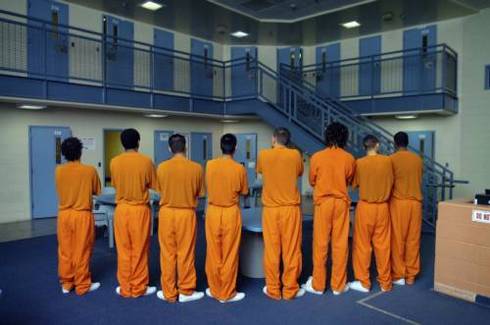
In 2011, what has changed?  California arrests 225,000 children, releases 130,000 from state and county prisons per year, and incarcerates at a rate more than double the national average.  The state stepped in to help the counties, who have traditionally been in charge of (legally and financially) incarcerating these youths. The state is poised to close up shop on the Department of Juvenile Justice, which now imprisons 1,100 youth (about 1% of all juvenile prisoners), and had been spending over $400 million per year.  They are essentially telling the counties: pay $125,000 per child to keep them in a prison cell, or you take them.  The DJJ has been operating three “reception centers,” five prisons and two work camps, for “violent” children, with authority until the age of 25.  Most are between 13 and 25, with an average age of 19, serving an average sentence of 3 years.  The population is 90% Black and Latino, with nearly a third coming from L.A. county.  This is why many voices have spoken out against this move, arguing that these people will merely be transferred into the adult prisons.  The argument is that the DJJ prisoners will be deprived of rehabilitative services in the adult prisons; with the extreme position that those under 18 will be mixed with adults.

When it comes to government programs, one must first put on their Cynic Goggles.  After a full assessment of “what’s in it for you, for me, for the other guy,” then a more idealistic analysis can take place.  Prisons are a government program, with the bulk of funds paying people’s salaries, paying construction companies, and paying companies that manufacture tasers, kevlar vests, and similar items.  The prisoners are merely numbers reflecting expansion of budgets.  Anyone wearing their Cynic Goggles will first ask: “Who loses in a reduction of prison budgets?”  After identifying those people, one can put their defense of the prison in perspective.

It can be difficult to publicly defend enhanced punishment of children… in 2012.  In 1990, when building youth prisons was in vogue, politicians and commentators rallied around (now debunked) predictions by self-styled criminologists like James Fox and John Dilulio, who whipped others into a frenzy over the “Juvenile Super-Predators” that never came.  Dilulio, a long-time White House employee, is ironically now part of the conservative group “Right on Crime”- which serves as a group confession that the War on Drugs was (and is) an abysmal failure that must be stopped.  Corporations like GEO, however, the world’s largest prison firm, deserve some morbid credit for bluntness and lack of shame.  For example, in their 2008 shareholder’s report they noted how any changes in drug and immigration policy will affect demand for their cages.  Therefore, they lobby hard to increase all uses of prisons… and the shift from public prisons to the corporate-owned.

In this latest scenario, the defenders of California’s juvenile budget include the counties, district attorneys, and probation chiefs.  Among the concerns they stated in a letter to Gov. Jerry Brown: this population “is decidedly unfit” for county facilities, “as these youth possess complex criminal profiles often accompanied by significant mental health, behavioral and treatment needs.”  These law enforcement entities claim that the serious offenders would adversely impact the less-serious ones.  The fallacy of this, among several, is that the complex human profiles of any prisoner, particularly children, cannot be simplified by the crime committed.

Typically, agents of the criminal justice system will have thick folders regarding a prisoner that were created through a few hours of interviews and assessments.  The assessors are universally not trusted, and overwhelmingly have little (if any) personal experience regarding the lives and environment of their prisoners.  Any commentary on “rehabilitation,” by law enforcement (or a county concerned about their budget) should be taken with a grain of salt.  It should not be surprising to see the DJJ prison guards take a similar stance, for fear that the state will close down the youth facilities if the counties don’t foot the bill.

Finding the funds to cage children, or adults, is not the only option.  Let us not forget that California is under a U.S. Supreme Court order to drastically reduce it’s adult prisoner population within the next two years.  Shifting 1000 young people into adult prisons will slightly offset gains made thus far, as Gov. Brown’s staff scrambles to move tens of thousands of adults into county jails.  Technically, this is reducing the “state” prison population… but there is no desire to reduce the population of prisoners in the state.  Likewise with the children.  There is an opportunity to reduce the number of incarcerated youth, and true advocates need to seize this opportunity.

I expect to hear and read about the rehabilitation industry fighting to keep these prisons funded, and fund the staff that serves the prisons.  Without prisoners, they may find it difficult to justify their own paychecks, their own departments, and their own organizations.  Such turmoil should be welcomed by anti-prison advocates, while the self-serving commentary of pro-prison voices should be rejected.  One should check the track record of how well the government and their service providers have been meeting the mental, emotional, and educational needs of children in prison… and of adults in prison.  Even take a look at their typical advocacy against the mental, emotional, economic, and educational needs of the formerly incarcerated.  They are akin to those who lecture about the sanctity of a fetus, then abandon the child once born.  Are the defenders of DJJ money talking about the “rehabilitation” that amounts to 90% of released youth ending up in adult prison?  Or studies showing that children with mental health issues got worse in prison (surprise) rather than better.

It is safe to say that a 90% failure rate is essentially a total success, if one’s goal is to continue children into a life of incarceration.

Are prison budgets as holy as social security?  They have risen at a far faster pace, and many people have staked their financial stability to them.  As the free market capitalists would say: they made a bad investment.  Personally, I am not so troubled by the possible financial bankruptcy due to prisons, particularly child prisons.  The possible moral bankruptcy, however, runs much deeper than any bottom line.

Posted in prison economics, Rehabilitation | Tagged , , , , , , | 3 Comments