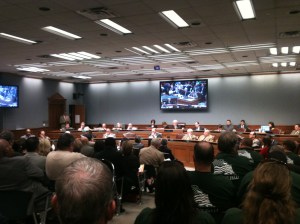
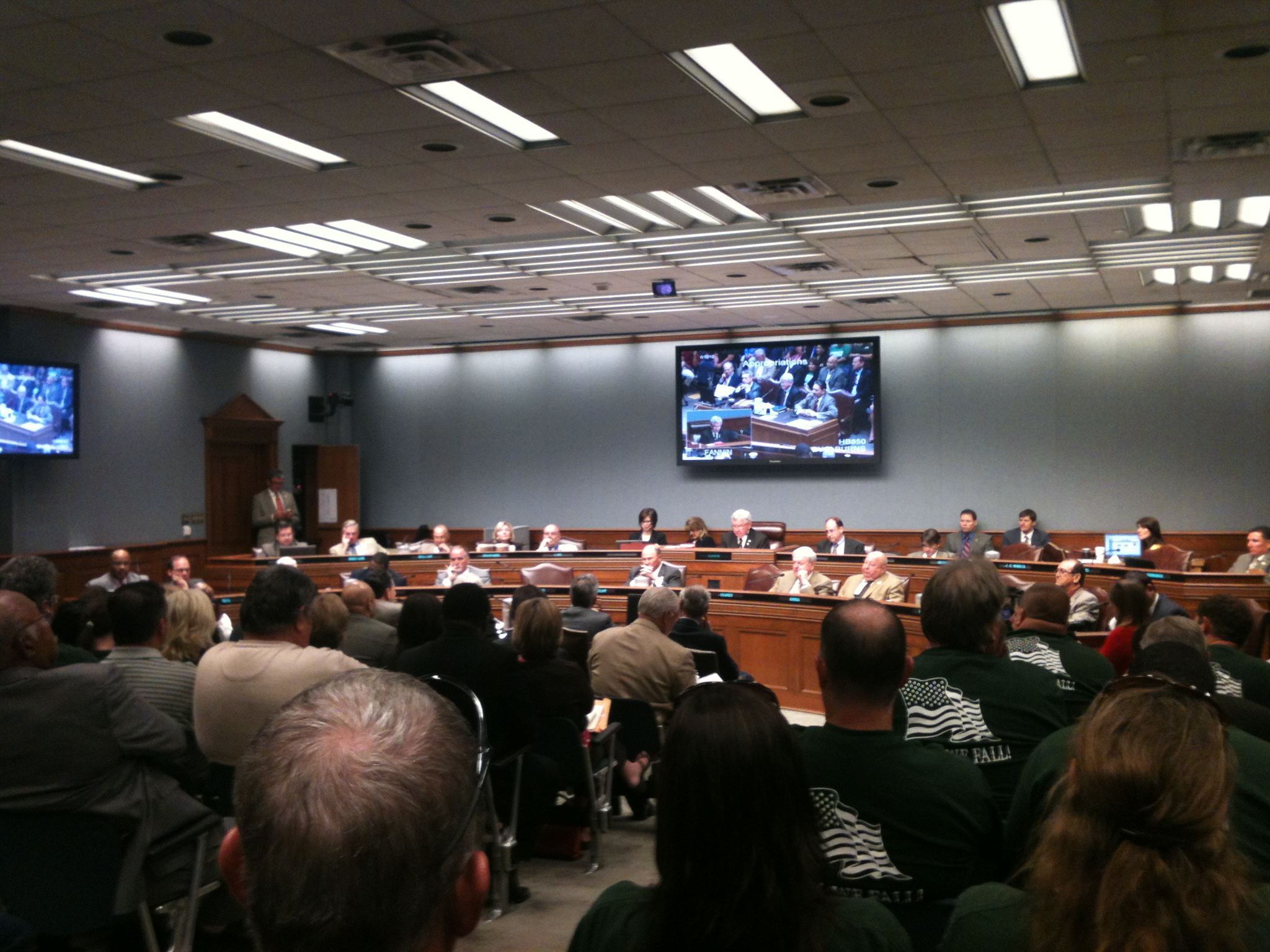
Louisiana’s House Appropriations Committee held a hearing today on HB 850, regarding the sale of Avoyelles Correctional Center, and the authorization to sell every prison built after 1989. This would follow the direction of Arizona and Florida, and possibly lead to The GEO Group, Inc. having a third prison in the most incarcerated state in the world. To understand this proposal, it is important to know the players, a bit of history, and a bit of economics. For an excellently detailed overview of the proposal, see Ryan West’s “Penny Wise, Pound Foolish” at Louisiana Progress.
Today’s hearing was action-packed, to say the least, with nearly 200 people in the room. Over 50 wore matching t-shirts; but rather than your typical grassroots activists demanding humane treatment for prisoners, the people were prison employees and spouses standing in solidarity. After all, prisons in America are primarily protected and supported as jobs programs rather than as a societal need. Avoyelles prison was built because a judge ordered Louisiana to stop overcrowding, and it was unenthusiastically accepted in the parish as a way to employ locals. Unemployment at that time, according to former Avoyelles Rep. Raymond Laborde, was 12-14%.
I walked in late, due to testifying on behalf of V.O.T.E.’s bill, HB 295, to end licensing discrimination for people with criminal records. (More on that later.) But when I did arrive, the grilling of DOC Secretary Jimmy LeBlanc and Governor Jindahl’s Deputy Chief of Staff, Kristy Nichols, was in full swing. I was wondering if anyone had pointed out that Jindahl received $28,500 from the for-profit prisons over the years. Rep. James Armes moved that this hearing be presented to the full House, rather than just the Appropriations Committee, as this is the first time the state was authorizing something so serious as selling a multi-million dollar asset. It was defeated, 11-10 (Voting in favor: Armes, Brossett, Burrell, Geymann, James, Leger, Montoucet, Moreno, Smith, Thierry.)
Nichols claimed that we have the right of first refusal when the 20 years is up, to buy the prison back, and there is a reversionary clause in case the corporation went bankrupt or performance measures were not met. I was curious what those performance measures were. As was pointed out later, none of that language is in the statute and we have no contract to look at; furthermore, Avoyelles Parish District Attorney Charles Riddle later countered Nichols, saying that such a statute won’t overrule a federal bankruptcy court.
If It Ain’t Broke, Why Fix It?
Rep. Roy Burrell elicited the statement from Secretary LeBlanc that our prison system was “not broken.” He wanted to know why we were trying to fix it, and at the cost of driving all the prison employees into poverty level wages? His inquiry, along with others, made it clear that the Governor and LeBlanc put little, if any, value on Louisianans earning a living wage. All of the savings were admittedly coming through shifting union jobs into WalMart level jobs starting at $8 an hour, climbing to $10 after three years.
Where will the money go? This was Rep. Brett Geymann’s chief concern, and he moved for an amendment that they be mandated into the Budget Stabilization Fund, rather than the Rainy Day Fund which can be spent in a single day. After an objection by Appropriations Chairman Jim Fannin (who has received at least $4000 from for-profit prisons, and represents the district where CCA operates Winn prison), the vote went forward and lost via tie, 12-12. The yeas were nearly the same as those supporting the other amendment. As this bill came up last year, clearly most legislators already have a position.
A long list of malfeasance and criminality was listed at the Allen and Winn prisons, run by GEO and CCA, respectively. It was a rap sheet that easily could have been lifted from Private Corrections Working Group, known for watchdogging GEO, CCA and others. Somehow, nobody mentioned similar conduct by homegrown for-profit prison corporation, LCS Corrections Service, run by Michael LeBlanc. LCS changed their name from Premier Enterprise Services after an ethics scandal, and was founded by the late Patrick LeBlanc. LCS owns four prisons in Louisiana, a consistent donor, and presumably would also be in position to bid on Avoyelles.
Former U.S. Representative Jimmy Hayes had the line of the day, when referring to the need for the best prison possible: “When released they don’t go to Ex-Con Land, they move next to me and you.” (Considering that I’m headed for a degree from his alma mater, he may be righter than he thinks.) It sounded like the politicians were starting to get the larger prison picture, a trend happening throughout the country. Hayes pushed back on another bit of misinformation by Nichols: this bill applies to the sale of all prisons built after 1989, not only Avoyelles. I managed to scratch off yet another of my long list of notes.
Convict Lease Labor and Bursting the System
Senator Rick Gallot’s scathing indictment of the entire concept had the entire chamber on edge. Like the financial gurus of Gwinnett County, Georgia, Gallot also pointed out that the parishes are getting free labor from prisoners across the state. A point amplified by Alexandria Mayor Jacque Roy, that for GEO or CCA to rent out their prisoners to the highest bidder is a return to “a form of peonage; we haven’t done that in many years.” He made a valid point about this not saving money, in so many ways it doesn’t, but I couldn’t help rolling my eyes in hearing such a thing, in a state with a prison famously known as “The Farm,” where guards on horseback oversee what looks exactly like a plantation.
“If we’re going to be so tough on crime, there is a price to pay for it,” Gallot said. I went into the room wanting to say one fundamental thing: the private prison corporations create growth by growing, and bursting, the entire system. Considerable talk throughout the nation has focused on what influence private industry can have on society by owning the prisons, and owning a profit-motive for more prisoners. Since 2001, GEO, Corrections Corporation of America (CCA), and Cornell Corrections have spent $22 million on lobbying Congress alone. With the help of the American Legislative Exchange Council (ALEC), GEO and CCA have employed nearly 300 lobbyists in seventeen states over the past decade. These corporations have also given over $10 million to political campaigns over the past decade, including $1.9 million in 2010 alone. What do they ask for?
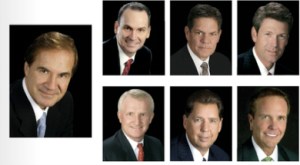
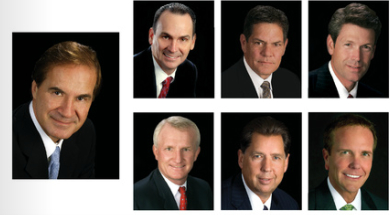
GEO Board of Executives
“In particular, the demand for our correctional and detention facilities and services could be adversely affected by changes in existing criminal or immigration laws, crime rates in jurisdictions in which we operate, the relaxation of criminal or immigration enforcement efforts, leniency in conviction, sentencing or deportation practices, and the decriminalization of certain activities that are currently proscribed by criminal laws or the loosening of immigration laws. For example, any changes with respect to the decriminalization of drugs and controlled substances could affect the number of persons arrested, convicted, sentenced and incarcerated, thereby potentially reducing demand for correctional facilities to house them. Similarly, reductions in crime rates could lead to reductions in arrests, convictions and sentences requiring incarceration at correctional facilities. Immigration reform laws which are currently a focus for legislators and politicians at the federal, state and local level also could materially adversely impact us.” GEO Group, 2007 Annual Report, Financials p.20.
Clearly, all those lobbyists are fighting to stop the decriminalization of marijuana, to lengthen sentences, eliminate Good Time credits, curtail parole, incarcerate immigrants, maintain mandatory minimums, and increase Three Strikes laws. An incisive report about this “Unholy Alliance,” is worth the read. This goes against the popular sentiment across the nation, whether for humanitarian or financial reasons, as mass incarceration has had no useful effect on our communities. As suspected, California has responded to the Supreme Court’s order to reduce their cruel and unusual overcrowding by increasing capacity rather than decreasing prisoners.
The number of prisoners has more than doubled since 1990, when private prisons began to ramp up their game; their number of caged humans went up 1664% between 1990 and 2009. CCA and GEO are both billion dollar companies, with their CEO’s Damon Hininger and Jay Zoley earning $3.3 and $3.5 million per year, respectively. The largest shareholder in CCA, Wellington Management, is also the third-largest shareholder in GEO. Top holders are the likes of Fidelity, Vanguard, and Wells Fargo. Each of these owners all have their own interest in advancing their investments. From my perspective as a prison reformer, I always said, “That’s okay, keep locking folks up. You’ll see.” In 2002, the National Institute on Money in State Politics tried raising this already problematic issue, with “Contributing Influence: Private Prison Giving In The South” (But who reads these things?) GEO and CCA are confounding the Burst The System strategy, however, as it clouds the People from truly recognizing the basic mathematics of this equation. As Senator Neil Riser (Chairman of the Finance Committee) said, “We have one of the highest incarceration rates in the world. This ain’t going away. Right or wrong, we believe in locking people up in Louisiana.”
This Deal Is A “Stupid” Reverse Mortgage
Senator Eric LaFleur was perhaps the bluntest of the bunch. As a man with three private prisons in his district, he had to stick up for one of his prime voter constituencies: the Avoyelles prison guards and families. However, as a public finance attorney, the man checks the fine print. GEO and CCA may be wishing they had back the $6000 (likely more) they have given him over the years, as he called this deal nothing more than a “Reverse Mortgage.” He bypassed the jobs argument and focused on the “stupid” concept of us selling a state-owned asset and then paying to use it. “Why not sell it all?” Chico State Park, Sycamore Point, Superdome, state police… “Won’t we be better off?” LaFleur accused them of hiding behind this deal because they aren’t signing the note, and they should all vote “No” because this could happen in their district next for the same wrong reasons.
One thing completely off my radar: securing the mineral rights under Avoyelles’ 1200 acres, in a county where oil leasing has been on the rise. District Attorney Riddle brought the committee to math class: The proposal does not factor in the cost of financing or overseeing the contract, and the numbers are based on only ONE of the seven Requests For Information (RFI) last year. The $31.50 per diem that is touted as a savings is only guaranteed for the first three years [there is the fine print I was looking for], and many of the politicians, including Jindahl, will be long gone when the piper comes to collect. The privatization, unlike health care where patients have a choice, comes with an unheard of guarantee that it is 96% full. I wanted to shout out one of my other key points: CCA and GEO will screen out the unhealthy prisoners, thereby jacking up costs on the public prisons- just like charter schools do with special education. But Riddle was rolling, and I didn’t feel like being kicked out on my first day in the legislature.
Riddle exclaimed that the closing of Forcht-Wade drug rehab prison was a “horrible answer” as it reduces recidivism. Along the same prison growth mantra, former Rep. Laborde sharply criticized the recent moves to increase Avoyelles capacity and to spend $800,000 on new windows, all to impress their potential buyers. Someone mentioned that the most important part of the attached fiscal note is at the very end: “until the facilities and operations are bid, the potential savings to the state is indeterminable.” That pretty much took away the bulk of my testimony… except for this nice list of people overtly receiving money from the private prison companies. Keep in mind that the large party donations can be filtered to whomever they wish, and this does not include the many employees and shareholders of these corporations.
Nationally, GEO and CCA have spent nearly $20 million on lobbying in the past eight years.
REGISTERED LOBBYISTS IN LOUISIANA- 2011
Randy Haynie, Corrections Corp. of America
Duane Cowart, The GEO Group
Linda, Mathew, & Thomas Spradley, The GEO Group
Jack Whitehead, The GEO Group
*American Legislative Exchange Council (ALEC) (See: Composition of ALEC Committees)
Campaign Contributions
| CCA, GEO, and LCS have given over $295,500 to Louisiana politicians since 1990. (Data for GEO dates to 1999. LCS was formerly known as Premier Enterprise Services, until a Texas ethics scandal.) |
- Ø In 2010, over $2.4 million was spent on state politics by GEO and CCA, nationwide.
- Ø Private Prisons benefit by bursting the state system.
|
|
CAMPAIGN DONATIONS: For-Profit Prison Corporations (1990-2011, Partial Listing)
|
| DOLLARS |
RECIPIENT |
SELECT POSITIONS |
|
$49,500
|
LOUISIANA REPUBLICAN PARTY |
|
|
28500
|
Bobby Jindal (R) |
Governor |
|
22500
|
SENATE DEM. CAMPAIGN CMTE LA |
|
|
15750
|
David Vitter (R) |
U.S. Senate |
|
14000
|
REPUB. LEG. DELEG. CMPGN CMTE LA |
|
13400
|
Mary L Landrieu (D) |
U.S. Senate |
|
19000
|
BLANCO, KATHLEEN BABINEAUX |
Former Governor |
|
11750
|
Rodney Alexander (R) |
U.S. House D-5, District of-Winn, LaSalle, Pine Prairie, Caldwell Parish, J.B. Evans, Avoyelles Prisons |
|
8000
|
CAIN, JAMES DAVID |
Ret. Senate |
|
7500
|
TUCKER, JIM |
Frmr. Speaker of House |
|
6000
|
HOUSE DEM. CMPGN CMTE OF LA |
|
|
6000
|
LAFLEUR, ERIC |
S Jud. B / Finance, D-Allen, Pine Prairie, South Louisiana, Avoyelles Prisons |
|
5500
|
MARTINY, DANIEL R (DANNY) |
S Parliamentarian / Judiciary A |
|
4000
|
FANNIN, JIM |
H Appropriations (Chair), D-Winn Prison |
|
3500
|
HILL, DOROTHY SUE |
D- Allen Prison |
|
3500
|
IEYOUB, RICHARD |
Fmr. A.G. of LA |
|
3000
|
CHANDLER, BILLY |
|
|
3000
|
Townsend, T Taylor |
|
|
3000
|
LONG, GERALD |
S Finance D- Winn Prison |
|
2500
|
HILL, HERMAN RAY |
|
|
2500
|
Smith, Kenneth Mike |
|
|
2500
|
MICHOT, MIKE |
|
|
2500
|
FIELDS, WILSON |
|
|
2000
|
ALARIO JR, JOHN A |
Senate President |
|
2000
|
ELLINGTON, NOBLE E |
|
|
2000
|
MARIONNEAUX, ROBERT (ROB) |
|
|
2000
|
MURRAY, EDWIN |
S Judiciary A / Finance |
|
2000
|
RISER, NEIL |
S Revenue (Chair) / Homeland Security, D- LaSalle/Caldwell Parish Prisons |
|
2000
|
KENNEDY, JOHN N |
|
|
2000
|
MELANCON, CHARLES |
U.S. House, fmr. |
|
2000
|
DUNCAN, KEN |
|
|
1700
|
FOTI JR, CHARLES |
Fmr. A.G. of LA |
|
1500
|
Nowlin, Rick |
|
|
1500
|
DONAHUE, JACK |
S Judiciary A / Finance (Chair) |
|
1500
|
Cravins, Donald |
|
|
1500
|
Hines, Donald |
|
|
1500
|
DECUIR, JASON M |
|
|
1250
|
LAMBERT, EDDIE J |
H Homeland Security |
|
1250
|
MORRIS, JAMES H (JIM) |
H Appropriations |
|
1250
|
ROBIDEAUX, JOEL C |
H Ways and Means (Chair) |
|
1000
|
CALDWELL, BUDDY |
Attorney General |
|
1000
|
CORTEZ, PAGE |
|
|
1000
|
CROWE, A G |
S Labor (Chair) |
|
1000
|
Kostelka, Robert W (Bob) |
S Judiciary C (Chair) |
|
1000
|
DUPLESSIS, ANN |
|
|
1000
|
HEITMEIER, DAVID |
S Health & Welfare (Chair) |
|
1000
|
Terrell, Suzanne |
|
|
1000
|
John Fleming (R) |
U.S. House D-4, D- Allen Prison |
|
1000
|
MCPHERSON, JOE (PSC) |
|
|
1000
|
PINAC, GIL |
|
|
1000
|
SCALISE, STEPHEN J |
U.S. House D-1 |
|
1000
|
THOMPSON, FRANCIS |
S Finance, D- J.B. Evans Prison |
|
1000
|
LeBlanc, Jerry |
|
|
750
|
CONNICK, PATRICK |
H Appropriations / Judiciary |
|
750
|
HARRISON, JOSEPH (JOE) |
H Appropriations / Judiciary |
|
750
|
LABRUZZO, JOHN |
|
|
550
|
LOUISIANA DEMOCRATIC PARTY |
|
|
500
|
Adley, Robert |
S Judiciary C |
|
500
|
Armes III, James K |
H Appropriations |
|
500
|
Buffington, Sherri Smith |
S Homeland Security (Chair) / Finance |
|
500
|
Downs, Hollis |
|
|
500
|
Jackson, Lydia |
|
|
500
|
Katz, Kay |
|
|
500
|
McVea Thomas |
|
|
500
|
Ritchie, Harold |
|
|
500
|
Salter, Joe |
|
|
500
|
Tucker, Jim |
|
|
500
|
Walsworth, Mike |
S Finance |
|
500
|
St. Germain, Karen |
H Transportation, Public Works(Chair) |
|
500
|
Montgomery, Billy Wayne |
|
|
500
|
Heitmeir, Francis |
|
|
500
|
WOOTON, ERNEST DURHAM |
|
|
500
|
CARTER, STEVE |
|
|
500
|
DARDENNE, JAY |
|
|
500
|
HUDSON, CHARLES |
|
|
500
|
LANDRY, JEFF |
|
|
400
|
ODOM, BOB |
|
|
300
|
NUNGESSER, BILLY |
|
|
250
|
GEYMANN, BRETT |
H Appropriations |
|
250
|
GUILLORY, MICKEY J |
H Criminal Justice, D- S. Louisiana Prison |
|
250
|
HAZEL, CHRIS |
H Criminal Justice |
|
250
|
LEBAS, H BERNARD |
D- Pine Prairie Prison |
|
250
|
LEGER III, WALT |
H Speaker Pro Tempore |
|
250
|
LIGI, ANTHONY V (TONY) |
H Appropriations |
|
250
|
PEARSON, KEVIN |
|
|
250
|
SCHRODER, JOHN M |
H Appropriations |
|
250
|
SMITH JR, GARY L |
S Judiciary B |
|
250
|
SMITH, PATRICIA H |
H Appropriations |
|
250
|
WHITE JR, MACK (BODI) |
S Judiciary C / Finance |
|
200
|
HOLDEN, MELVIN L (KIP) |
|
|
200
|
JOHNSON, TIM |
|
| TOTAL |
|
|
|
$295,500
|
Source: Open Secrets.org, FollowTheMoney.org, DataInfluenceExplorer.com
|










 unprison
So You Want To Be A Prosecutor? 6 Rules to get started.
Here are six rules (of thousands) that people should consider as they enter the field.
Rule 1: If you aren’t willing to be a Whistle Blower, you should not be a prosecutor.
It is generally considered to be a bad thing to tell on one’s co-workers. In the criminal underworld, “snitches get stitches” (or worse), whether or not the prosecutor rewards the snitch with leniency or immunity from prosecution. However, in the corporate realm the snitches (or whistleblowers) get blackballed and sued. In foreign policy, the whistleblowers get called traitors. In the police force, whistleblowers are deemed betrayers to the Blue Wall of Silence.
This is a primary flaw in our code of justice, when the enforcers are unable to enforce against themselves. There are dirty cops and dirty prosecutors. If a District Attorney is not committed to keeping an ethical office, or unable to do so, they lose credibility when trying to hold others accountable. The law becomes a cruel joke rather than something loftier than human foibles. There is a lot of pressure to go with the flow, not make waves, and earn a promotion for loyalty. (Oh, you want to be judge?)
Ironically, criminal entities are often more “ethical” on this issue than government entities. The general principal amongst gangs and associations is to police one’s own, lest someone else have to do it for you. And the latter becomes a mess. What if a young prosecutor caught their superior withholding evidence? Look the other way when a witness seemed to be a clear liar (yet helped their case)? Would they keep their mouth shut? If so, they are engaged in criminal activity and have thrown their initial idealism to the wayside. A prosecutor needs to enforce the laws equally, particularly when a criminal in government can have far more detriment on society than an everyday drug dealer.
Rule 2: The adversarial system is not balanced.
Just to dispel a quick myth: only in the world of corporate law is there a system of two balanced adversaries with a neutral judge as referee. In criminal law, the millions of dollars invested into each local police force is not done on an impartial “justice-seeking” manner. The police and prosecutors see themselves on the same team: the Executive Branch that enforces laws. The accused are not considered by the Executive as innocent until proven guilty; they are like hounds locked onto a scent. The defense attorneys, meanwhile, are seen as the opposition. The Public Defender is part of the Executive Branch as well, and they handle a large bulk of ordinary crimes. They do not have such a cozy partnership with the police.
Defense attorneys must hire their own investigators, who lack the authority of police to arrest and interrogate and flash a badge. These resources are limited. Hiring professional experts, or getting scientific testing (such as DNA) is a far different process when the defense is making the request.
The judges in criminal cases are often former prosecutors who made their mark by getting convictions in murder and other sensationalized cases. They are human, they have a bias. Furthermore, juries rarely represent the socio-economic background of the defendant. With police officers often not coming from the communities they monitor, there are multiple stages of bias that a typical defendant travels through along the System.
Rule 3: Police are human, they don’t always tell the truth.
Anyone who believes that any occupation is infallible, should not be in the business of truth-gathering. Some religious leaders have, and will, molest children. Some Wall Street executives have, and will, rob millions and billions of dollars from people- with complex and simple schemes, they have stolen from taxpayers and investors alike. Some political leaders are liars. Some cops are dirty. This should be a sticky note hanging off every noble prosecutor’s computer monitor.
A lot hangs in the balance with one lying police officer. The lives of a defendant, and their families, have been ruined by one liar. Some of these officers are protecting their own criminal enterprises. Some are simply unwilling to admit a mistake, as we all have done, and would rather see someone else pay the consequence for fear of their own paycheck being cut. And some are unwilling to tell the truth about their co-worker. The list of cover-ups by cops is long and notorious. In New Orleans, for instance, the resistance to finding the truth about the Danziger Bridge killings was huge, and included many members of the NOPD and Orleans District Attorney who did not want to know that the police killed innocent and unarmed citizens of the city.
Many prosecutors have suborned perjury by turning a blind eye to lies. They refuse to cross-check their witnesses, or don’t bother to reveal the evidence that contradicts the officer. With no accountability for prosecutors who pretend not to know the Brady Rule (turn over exculpatory evidence), there is no incentive to seek truth and justice other than one’s own internal compass. Check yourself, and see whose word is taken for granted, and whose is treated with suspicion.
Rule 4: The most concentrated group of drug users are young White people.
Want to wage the War on Drugs? Go where the users are: college campuses. Start a task force and raid dorms and Greek houses based on the smell of marijuana. This will eliminate a feeling of racial bias in your law enforcement; it will also be the most efficient. Public housing, for example, is disproportionately elderly people yet gets a great deal of police attention.
Think twice about your drug war strategies when you release a full-blown addict on a drug mission, all because they gave a statement against someone you want to incarcerate. First, you are taking the word of someone who has been lying to their own family to get drugs. Second, you are putting them on the street at their most dangerous without even forcing a detox period. Prosecutors who engage in this behavior are bulking up the unreliable convictions and furthering drug use in the community. This is common practice.
Rule 5: If a majority of a community doesn’t trust government, there’s a problem.
The government draws its powers from the consent of the governed. When the people no longer give that consent, the government will be abolished. So said the Drafters of the Declaration of Independence, and the sentiment is true today. Government officials should keep in mind this principle as consent is enforced. You need to be aware of both reality and perception of reality.
There is a growing sentiment amongst Latino, Muslim, and other people that they are always suspects. Such people would never call the police for assistance personally or in the community. They cede protection, as it can be more dangerous than fending for oneself. Because we all know what happens to suspects. As prosecutors move forward with enforcement choices, take the time to consider what parents are teaching their children about the police.
6. Enforce the Laws the People give you.
A common defense raised by police or prosecutors regarding an unjust law, such as marijuana possession, is “I just enforce the laws they give me.” True- as laws are supposed to be passed by a separate legislature that represents The People. The problem is that the super-lobbying of Attorney Generals dictates the process. District Attorneys run for election based on increasing laws, increasing punishments, and it becomes very redundant. If a prosecutor’s boss is going to use their weight to pass laws, a prosecutor should do the same. Think marijuana use should be legal? Say something. Or don’t say anything about any of the laws- the whole occupation should just enforce the laws the People give them.
And after J.P. Morgan, the “ethical” of the banks, told us they schemed the till as well… do you still think petty criminals are the national threat in America? We spent a trillion dollars trying to keep the banks upright, so they could in turn save us all- or so the story was told.
Related articles
Share this: