
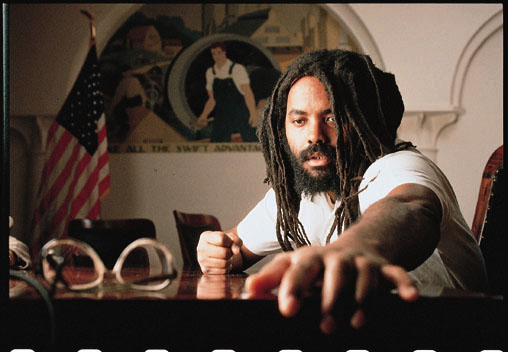
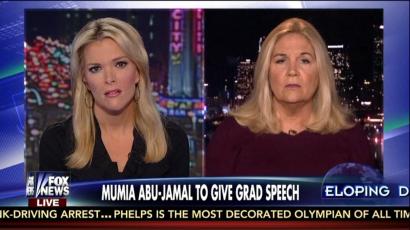
 The Pennsylvania legislature unanimously passed a bill, the “Revictimization Relief Act,” in the wake of Mumia Abu-Jamal’s commencement speech delivered at Goddard College. The rationale for the bill is to suppress conduct that would cause “mental anguish” for victims of crime. Mumia Abu-Jamal, a prolific writer and speaker, is convicted of killing a police officer in 1982 and has maintained his innocence throughout his continuing legal saga. Gov. Tom Corbett signed the bill into law prior to being voted out of office.
This week, the Abolitionist Law Center filed a typical First Amendment lawsuit on Mumia Abu-Jamal’s behalf, raising the obvious (and likely successful) claims that the government is vaguely targeting certain speakers in violation of their 14th Amendment right to equal protection. Such an argument is incomplete, however, and Mumia should consider amending the complaint to ensure these gag tactics become abandoned. They are not only impeding Free Speech; Pennsylvania is illegally encroaching upon the federal power to regulate copyrights. A deeper analysis of copyright and prisoners can be read in Making a Record With a Criminal Record.
This bill is not the first time states have attempted to suppress such speech. The “Son of Sam” lineage of state laws grew out of New York City’s infamous subway shooter, David Berkowitz. When the New York legislature learned Berkowitz was negotiating the rights to his story,[1] they passed a broad law preventing people from capitalizing on writings about their crime.[2] The “Son of Sam” law was later replicated, including federally.[3] Pennsylvania passed their own law in 1995 allowing the state, and victims, to claim the profits of a convicted person (Pa. Stat. Ann. tit. 42 § 8312).
Commenters and lawyers tend to focus exclusively on the obvious Free Speech issues, yet fail to include intellectual property rights. These writings are more than speech, they are copyrighted material, and the federal Copyright Act and Dormant Commerce clause should be invoked to block states from impeding this area of law. Furthermore, the overt targeting of Abu-Jamal suggests the law is a thinly veiled, and unconstitutional, Bill of Attainder- a law targeting one individual.
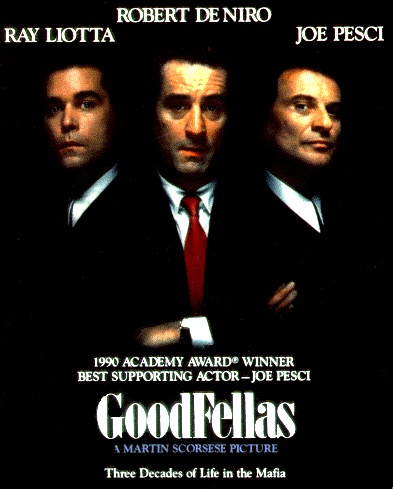 Over a decade after “Son of Sam,” Simon and Schuster contracted Nic Pileggi to co-author “Wise Guy,” a book with mobster Henry Hill (ultimately turned into the movie “Goodfellas”). New York intervened and the case proceeded to the U.S. Supreme Court based on a Free Speech argument. The Court ultimately struck down the original “Son of Sam” law with language suggesting a more tailored law would survive such challenges. Since the Schuster decision, other state laws have been successfully challenged.[4] Some states amended their law, such as New York, while California’s was struck down and abandoned.
Pennsylvania’s new law applies to those who are victims of a personal injury crime, which could be as expansive as every simple assault or domestic violence case. It allows for injunctive or “any other appropriate” relief, meaning the judge could award monies or attempt to order a third party to suppress speech. The civil violation would be to engage in conduct that continues to perpetuate the effects of the crime, and this includes “temporary mental anguish.” Such a law is both vague and overly broad, placing judges in a precarious position of deciding whether someone’s subjective anguish is sufficient. What if the conduct is holding a job, finding a residence, or appearing before a parole hearing? Would a judge be expected to eliminate those things?
 Laws impeding on copyright and free speech have no effect if they are not also multi-jurisdictional. But this creates further federal complications. For example, in 1991 Sammy “The Bull” Gravano pled guilty to federal racketeering charges in New York. “Underboss” was published in 1997, and eventually Gravano was arrested for drug distribution in Arizona. Arizona brought suit against entertainment titans Harper Collins, Twentieth Century Fox, and International Creative Management, and alleged the creation of an elaborate scheme to avoid “Son of Sam.”[5] The Arizona court upheld a seizure of “Underboss” royalties even where the crime and victims were in New York.[6]
To curtail conduct under the Revictimization Relief Act, the state would need to control a person’s actions. In Mumia Abu-Jamal’s case, this may require holding him incommunicado with the outside world in a similar vein as those accused of high-level Al Qaeda operations. This could then trigger other Eighth Amendment claims of cruel and unusual punishment.
 The Copyright Act preempts state laws controlling Abu-Jamal’s commencement address
It is likely that Pennsylvania strategically chose to ban “conduct” rather than “speech” or “writings.” The First Amendment stops the government from controlling the content of speech, and ensures that public safety regulations on the time, place, or manner of speech be as slight as possible. But in terms of who owns written or recorded speech, who controls it, who benefits- this is the field of copyright. Mumia Abu-Jamal’s controversial commencement speech was actually a recording. Once digitally fixed and memorialized, it became copyrighted material.
One need not be a citizen to hold copyright, and international treaties serve to protect even “stateless” persons. Although significant rights are lost, or temporarily taken, by being in prison, Abu-Jamal’s writings and recordings are legally his own.
Federal copyright law should override and condemn the “Mumia Law” and the “Son of Sam” laws as state interference under Field Preemption, meaning the feds own the field. The Constitution mandates federal law as the supreme law of the land, superseding any state law to the contrary.[7] Where Congress creates comprehensive regulations, states are precluded from legislation in this field unless explicitly allowed. Immigration laws are a prime example.[8] The Supreme Court has, however, expressed latitude where states have historically held a degree of power.[9] Recent state laws relaxing drug enforcement illustrate the tension of state’s rights within federal prohibition under the power of the Commerce Clause.[10]
The Copyright Act covers, among other things, songs, movies, and books, i.e. the same material listed within “Son of Sam” statutes, and the same “conduct” discussed in relation with Abu-Jamal.[11] These state laws refer to all financial compensation, including all “royalties.” The legal basis for a royalty is drawn from copyright and the rights of reproduction and distribution.[12] States passing laws that duplicate or encroach upon copyrightable material are explicitly annulled under Section 301. Thus, once created, the state would have no power to control the work.
Lacking the power to create an equivalent right, states have blatantly intruded upon the rights of authors to preemptively seize royalties in an attempt to control the work. The Act bars all involuntarily transfers of copyright.[13] Congress made one exception to this provision, regarding seizure of assets under the Bankruptcy Act.[14] This specific cross-referenced exception excludes other vague exceptions.
Courts protect the financial incentive to create and disseminate ideas by stopping copyright infringement. This requires standing, counsel, and an incentive to file suit. Under “Son of Sam,” however, these things remain unclear (and even hazier under “Mumia.”) Any judgment for damages would likely be owned by the state, and copyright attorneys would require an explicit contractual arrangement to be paid. The state holds all power regarding copyright infringement protection. Thus, the right to exclude others has been expropriated or abandoned.
 Interstate Activity is governed by the federal Commerce Clause

Imagine a former Pennsylvania prisoner moving to Texas. She signs with an agent in New York, and a recording contract in Tennessee. After her album is released, Pennsylvania’s attorney general determines that the songs create temporary mental anguish for the victim of a personal injury. Furthermore, the state attempts to seize all royalties under the “Son of Sam” law and the attorney general files various injunctions in various jurisdictions. Because she is on a national tour, her record label, agency, and every local vendor is expected to comply.
In such a morass of litigation, some entities may try to comply and yet not know how. Others may feel the creative material does not fall under the statute. Others may believe Pennsylvania lacks jurisdiction to enforce any orders, outside their own state. This is clearly interstate commerce, being regulated and burdened with an obstacle by state statutes. It is for just such a reason that the federal government holds exclusive powers to regulate.[15]
The “Mumia” Law is simply unconstitutional on multiple grounds
The state has a legitimate interest in compensating the victims of crime. It is more challenging to stop all mental anguish through the power of the courts. Furthermore, it makes no sociological or historical sense to suppress the creativity and insights of convicted artists and intellectuals. Where states have legitimate interests, they also have a responsibility to pursue them in ways least offensive to constitutional principles of Copyright, First Amendment, Due Process, and Equal Protection.
The issue is a classic slippery slope. Whether complicated by exonerations, repealed laws, drug prohibition (and legalization), political acts, or controversial convictions,[16] there are many people potentially exposed to “Son of Sam” and the new Pennsylvania “Mumia” law.[17] To avoid a legal quagmire, state laws of this nature should be repealed or abandoned through litigation or legislation. Whereas Mumia Abu-Jamal has long represented a test case for the rights of incarcerated people to speak, his claims (along with Robert Holbrook and Kerry Shakaboona) should include Pennsylvania’s unlawful encroachment on federal copyright protections.
Read the complete legal article, “Making a Record With a Criminal Record” HERE.
[1] In years past, it was common for attorneys in such cases to take over such rights in exchange for representation. The Code of Ethics has been modified, as this practice carries the potential to influence the lawyers’ behavior to make a better story.
[2] The Son of Sam law supplements pre-existing statutory schemes authorizing the Board to compensate crime victims for their losses, see: N.Y. EXEC. LAW § 631 (McKinney 1982 and Supp. 1991), permitting courts to order the proceeds of crime forfeited to the State; N.Y. CIV. PRAC. LAW §§ 1310–1352 (McKinney Supp. 1991), providing for orders of restitution at sentencing, N.Y. PENAL LAW § 60.27 (McKinney 1987), and affording prejudgment attachment procedures to ensure that wrongdoers do not dissipate their assets, N.Y. CIV. PRAC. LAW §§ 6201–6226 (McKinney1980 and Supp. 1991). The escrow arrangement established by the Son of Sam law enhances these provisions only insofar as the accused or convicted person earns income within the scope of § 632–a(1). See: Simon & Schuster, Inc. v. Members of New York State Crime Victims Bd., 502 U.S. 105, 111 (1991)
[3] 18 U.S.C.A. § 3681 (West).
[4] See below.
[5] Id., at 323. Other defendants in this case are Peter Maas, the author of the book, T.J.M. Productions, Inc. (which the Board alleges Maas created in order to funnel compensation to Gravano for his work on the book and a movie) and International Creative Management, Inc., agent for T.J.M. and Maas as well as Gravano.
[6] State ex rel. Napolitano v. Gravano, 60 P.3d 246 (Ariz. Ct. App. 2002), holding: (1) application of forfeiture statutes to royalties from book did not violate constitutional free speech guarantees; (2) royalties had causal connection with racketeering as required for forfeiture; and (3) state had jurisdiction over forfeiture proceeding. Incidentally, the New York Crime Victims Board unsuccessfully brought a claim against Gravano, with the New York appellate court holding that the Board, itself, has no standing to bring a cause of action because a victim is needed. New York State Crime Victims Bd. v. T.J.M. Prods., Inc., 705 N.Y.S.2d 320 (2000).
[7] U.S. CONST. Art. VI.
[8] Most recently in Arizona, where certain portions of a law aimed at immigrants were struck down, while others were left untouched. The Supreme Court decided to wait and see how the state applied the law. See: Arizona v. United States, 132 S. Ct. 2492, 567 U.S. ___ (2012). Cf. Chamber of Commerce of U.S. v. Whiting, 131 S. Ct. 1968, 179 L. Ed. 2d 1031 (2011) (Provision of Arizona law allowing suspension and revocation of business licenses fell within Immigration Reform and Control Act’s (IRCA) explicit savings clause.)
[9] Rice v. Santa Fe Elevator Corp., 331 U.S. 218, 230 (1947).
[10] Gonzales v. Raich, 545 U.S. 1 (2005).
[11] e.g. NY EXEC. LAW §632-a (McKinney).
[12] 17 U.S.C.A. § 106 (1982).
[13] § 201(e). The Act provides in pertinent part:
“Involuntary Transfer. When an individual author’s ownership of a copyright, or of any of the exclusive rights under a copyright, has not previously been transferred voluntarily by that individual author, no action by any governmental body or other official or organization purporting to seize, expropriate, transfer, or exercise rights of ownership with respect to the copyright, or any of the exclusive rights under a copyright, shall be given effect under this title except as provided under Title 11.” The exception for Title 11 allows a bankruptcy court to transfer copyrights.
The Copyright Act was amended by Pub. L. No. 95-598, § 313, 92 Stat. 2676 (1978); Bankruptcy Act: 11 U.S.C.A. §§ 101-1,330 (Supp. 1988).
[15] U.S. CONST. Art. I § 8
[16] e.g. Mumia Abu Jamal, Leonard Peltier, the “Angola Three,” and Mike Tyson.
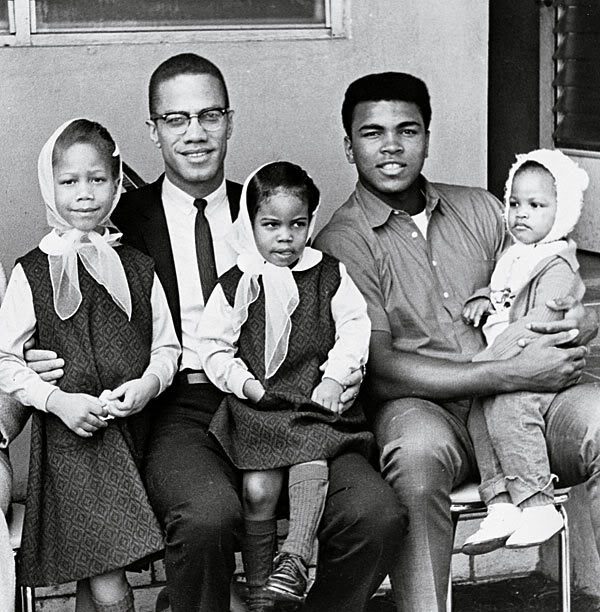
[17] Some artists who were convicted of crimes that involve a victim include Jay-Z, 50 Cent, Immortal Technique, Sid Vicious (Sex Pistols), Chuck Berry, Lisa “Left Eye” Lopes (TLC), Johnny Paycheck, Jim Gordon (Derek and the Dominoes; co-writer of “Layla”), James Brown, Merle Haggard, Leadbelly, Rick James, Phil Spector, David Allan Coe, Wilson Pickett, The Prisonaires, Saigon, Big Lurch, C-Murder, and Styles P; as well as notables such as O.J. Simpson, and political figures such as George Jackson, Martin Luther King, Jr., and Malcolm X.














 unprison
White People Beat Their Wife and Kids Too
Several things are troubling about the reaction of America. First, the focus of this violence is on Black men as perpetrators, and secondly, the suggestion that employers should act quickly and permanently ban people for criminal behavior. Numerous columns and comments arise that speak to these two points, thus it is time for some counterpoints.
So if the historical oppression of Black people (by White people and the government forces) is cause for the historical backlash of Black people, what are White folks’ rationales? White people have been extremely violent in the governmental context (if we put a skin tone to the people who enforced slavery) fought back against Reconstruction, fought (and murdered) the Civil Rights movement, and staff our over-militarized domestic police forces. And that is not even getting into foreign policy.
If the image of a drug dealing gun-toting thug were not enough, now Black men are allowed to carry the banner for domestic violence as well. Although the White drug dealers of the world, including the real heavyweights who earn millions, are benefitting by the mischaracterization of drugs as a Black issue… the White* women and children of America gain no solace in their abuse if we paint this as a character flaw inherent in Black men. (*Mixed couples aside).
As a society we have long gone for the easy answers, such as violence being caused by inherently evil people. Just root that out, or keep them in check, and mission accomplished. It is not that simple, which is why simpletons can’t be in charge of solving these problems. The movement, and civil structures, that arose in the 1970s and 1980s to stop spousal and child abuse did not come as a response to violent Black men. Domestic violence support services are not overwhelmingly staffed by and servicing Black women (although they are, and should be). Lets get real.
The historical dilemma of domestic violence is that wives were not coming forward, unwilling to be possible pariahs in their social circle and subjecting their families to turmoil. The father could be arrested, lose his job, and not be able to support the wife or children. Even worse, she wouldn’t be believed in a patriarchal society of male police officers and judges (similar to the disbelief given Black accusers of White violence).
The courage to say “Enough!” and shatter an intolerable family demands support, no matter what color are people’s skin tones or where they live. Studying who calls the police, or who goes to jail, does not give us statistics on who are the victims and perpetrators; it only tells us who calls the police and who goes to jail. The women who feel stuck behind the Wall of Silence need support. If they are White, this latest public iteration of the problem may keep them behind the Wall if they don’t have a Black partner, i.e. an “acceptable” abuser.
The more we portray crime and violence in racial terms, the more people inherently support a more punitive response. Focusing solely on the effects of social problems by arresting and punishing someone does very little in addressing, and preventing, the causes. I’m here to tell you: the cause of domestic violence in America is not the existence of Black men within our borders.
Employers and Criminal Activity
The brouhaha of the NFL threatens to undo decades of cultural education and policy development.
The Baltimore Ravens and Minnesota Vikings have learned that “the customer is always right.” Their fans and sponsors have spoken: don’t take domestic violence lightly. When the Ravens chose to wait and see what the League investigation revealed, and how the criminal charges played out, the fans were okay with Ray Rice losing about $500,000 from a two-game suspension. And then came the graphic video. People were stunned, that this video could generate that response. The Vikings have almost learned this lesson, and every team is likely scrambling with how to handle one of their employees doing something similar. The New England Patriots at least had the help of the court system, as the state held Aaron Hernandez without bail pending his trial for murder.
In the NFL, players can legally only be subject to sanctions by their team or the League. Not both. Thus, a team needs to play it wisely from the time of the event, as their whole profit model is based on likeability (and winning). Selling stuff with the logo is how they rake it in, and I have two jerseys, a mug, floor mats, a decal… and a slew of brainwashing items for my five-year-old daughter. If Troy Polamalu ever saw my little one in her customized Kiramalu jersey he would want to do a shampoo commercial with her. But who is putting an Adrian Peterson jersey on their kid now?
Most business are not on TV with a fleet of journalists and its own channel. Most employers will not be expected by their customers to take action immediately after an arrest, and should be able to continue employing someone while the judicial system runs its course. The Pittsburgh Steelers recently had their top two running backs arrested for marijuana on the brink of the season. Many wondered what would happen to the team if suddenly they were both suspended for several games. The team chose to punish them internally, with no details yet released. Obviously the team’s ability to “get away” with this response, and also allow the judicial system to run its course, reflects America’s views of marijuana at this time. We have far less tolerance for domestic violence.
Most employees (99.9%?) will not have earned millions of dollars prior to an allegation, arrest or conviction. Feeling consequences for one’s actions is an overwhelmingly accepted concept, whether it is through the criminal or economic system. So we should be careful not to draw too many lessons from these public figures being in the spotlight and how best to handle them. The rest of America needs to keep supporting families, and if they have consequences to pay, need to be able to rebuild their lives rather than be eternal pariahs.
We don’t see a lineup of White Wall Street executives on the Bloomberg Channel being paraded around for some alleged (or actual) domestic violence or drug use. We see wealthy Black men, talented in their field, and anomalies to the rest of us. Yes, take this opportunity to discuss these issues as it relates to us… but pointing the finger is not a method of dealing with our own problems.
Share this: