Help Rhode Island “Ban the Box” Sign This Petition!

It is well established that the path to stability for the formerly incarcerated is through employment, yet studies show that simply asking “Have You Been Convicted of a Felony?” is a major barrier on two levels.  First, it sends a message to the applicant that it is hopeless to apply; second, it allows employers to scrap an application without so much as an interview.  Studies have proven this to be true.

A famous Milwaukee study found that Caucasian applicants received callbacks 35% of the time, but only 17% with a felony record.  African-American applicants went from 15% to 4%, respectively.  If only 4 out of 100 African-American Rhode Islanders with a felony can even get an interview, it is clear that the chances of honest employment are slim.

Roughly 25% of RI has a criminal record, and 17,000 people per year are released from the ACI.  The New Mexico legislature issued a 2010 report showing the law will have “no fiscal impact.”  Thus, any state contemplating Ban the Box can be assured it will cost them nothing.

Representative Scott Slater has introduced a bill, HB # 5101, to counter this hopelessness.  It is similar to legislation passed in MA, CT, NY, MN, and NM over the past two years, and city/municipal ordinances around the nation (including Providence) which address this situation in some manner.

SIGN THE PETITION OF SUPPORT HERE!!

What it WILL do:

Allow applicants to explain their felony convictions at the interview stage, if they have been deemed otherwise qualified for the job;

Stop public view of arrests and dismissed charges;

Require an employer to put in writing, whenever the felony conviction is basis for denying employment, and refer to the specific conviction(s);

Allow an applicant to present evidence about the accuracy and/or relevance of the report;

What it WON’T do:

Will not override any law that mandates people with felonies, or certain felonies, from working in particular occupations- (children, elderly, financial, etc.);

Will not force employers to hire felons.

THE PETITION:

Greetings,

We the undersigned call on the RI House of Representatives to pass H5101 and “Ban the Box.” We acknowledge that many entry-level job applications have a box to check, asking: “Have you ever been convicted of a felony?” Studies show that this question often has no relation to the job itself, drastically reduces the applicant’s chances of a job interview, and serves to eradicate hope amongst a growing segment of the community.
Representative Scott Slater has sponsored H5101 as a way of delaying that disclosure until the interview, unless state law bars people with certain felonies from holding particular jobs. The bill is co-sponsored by Representative Anastasia Williams (Chair of House Committee on Labor), and will allow applicants an opportunity to explain themselves while giving employers a chance to interview someone who could become their hardest working and most grateful employee.
We acknowledge that this legislation will create no jobs for this group of society, which is nearly 25% of our brothers, sisters, sons, and daughters. Many of those with convictions represent people with mental health struggles, substance abuse issues, or youthful indiscretions. This bill sends a message that our society believes in reintegration, forgiveness, and an end to debts paid to society. A working community is a safe community, and we call on the General Assembly, and Governor Lincoln Chaffee, to eliminate the barriers for those in pursuit of honest work.

Direct Action for Rights & Equality
RI Communities for Addiction Recovery Efforts
Rep. Scott Slater (District 10)
Rep. Anastasia Williams (District 9)
Open Doors
RI Jobs With Justice
David Segal
Joe Almeida
National Employment Law Project
Drug Policy Alliance
Rep. Grace Diaz (District 11)
Rep. Leo Medina (District 12)
Dr. Joe Bevilacqua
Reed Cosper, RI Mental Health Advocate
Olneyville Neighborhood Association
RI Progressive Democrats
Charles Levesque
Jim Vincent, NAACP – RI Chapter
Ocean State Action
American Friends Service Committee- SENE
Councilman Miguel Luna (Ward 9)
Prof. Andrew Horwitz
Dwayne Keys
Peter Wagner, Prison Policy Initiative
RI People’s Assembly

SIGN YOUR NAME HERE!!!

Posted in Actions, Drug Policy, prison economics, Rehabilitation | Tagged , , , , , , , , , , , , , , , , , , , , , , , , , , , , , , , , | 2 Comments

SUSAN ROSENBERG’S 16 YEARS AS A POLITICAL PRISONER COME TO LIGHT IN NEW MEMOIR

An AMERICAN RADICAL: Political Prisoner in My Own Country to be published March 1, 2011

It didn’t take me long to get to know Susan.  We could do the convict’s shorthand considering we both spent our most formative years in a cage, and we know that each word the other speaks has a book of wisdom buried within it.  I am eagerly awaiting my copy and will give a review, from an entirely different sort of prisoner who had different circumstances and motives that led us to the same place: prison.  Dostoevsky once said, “If you want to understand the humanity of a culture, go to its prisons.”  I have no doubt Susan Rosenberg will take you there and beyond.

— Bruce Reilly, Activist and author of NewJack’s Guide to the Big House.

Pre-Order your copy in paperback or for Kindle, and keep up with book events through Facebook.

Early Praise for AN AMERICAN RADICAL:

“Articulate and clear-eyed, Rosenberg’s memoir memorably records the struggles of a woman determined to be the agent of her own life.”
– Kirkus Review

“Rosenberg takes us on an astonishing journey–from a tiny underground revolutionary cell into the vast underground of the American penal system…an impassioned memoir.”
– Bell Gale Chevigny, editor of Doing Time

“Deeply moving, lyrically written…Everyone who cares about justice and our future will want to read and share this heartening book.”
– Blanche Wiesen Cook, author of Eleanor Roosevelt

“Compelling…will rouse readers to forge ahead with their own commitments to genuine patriotism through opposition to oppression.”
– Don Hazen, Executive Editor, AlterNet.org

“Gripping…a harrowing story that is painfully personal and an important part of American history.”
– Christian Parenti, author of Lockdown America

***

In 1982, long-time radical activist Susan Rosenberg was placed on the FBI’s most-wanted list with orders of “shoot to kill.” In 1984, she and Timothy Blunk were unloading a U-Haul filled with 740 pounds of explosives at a storage facility in Cherry Hill, New Jersey, when the FBI arrived. Rosenberg was sentenced to 58 years in federal prison and spent the next 16 horrific years in some of the worst maximum security woman’s prisons in the country.

Rosenberg served time in six different federal institutions and endured the first ten years in varying degrees of seclusion, including stints in the first experimental high security unit (HSU) for women and in the first maximum-security prison for women in the United States. At HSU she was regularly stripsearched, heavily chained, and subjected to intense psychological torture such as complete isolation, sleep deprivation, twenty-four hour lighting, and constant surveillance. Susan and others in conjunction with the ACLU prison project, and the support of Amnesty International fought and won the closing of this experiment. Rosenberg went on to other prisons, later working in general population as an HIV peer educator and teacher until she was granted executive clemency by President Bill Clinton, in January
2001.

Candid and eloquent, Susan Rosenberg’s powerful memoir is a profound indictment of the U.S. prison system, as she recounts her journey from the impassioned idealism of the 1960s to life as a political prisoner in her own country–and reflects America’s turbulent coming-of-age over the past half century.

Susan RosenbergSUSAN ROSENBERG has been a speaker, educator, and lecturer to those concerned with the issues of women in prison, political prisoners, prison reform, and social justice activism. Since 2004, Rosenberg, has served as the director of communications at a faith-based human-rights organization working to alleviate poverty, hunger, and disease in the developing world. Rosenberg received a BA in American history from the City University of New York and an MA in writing from Antioch University. She lives in New York City.

Please visit www.AnAmericanRadical.com for more information.

Posted in Commentary, Political Prisoners | Tagged , , , , , , , , , , , , , | 7 Comments

Touchdowns and Lockdowns: Transcending Racial Politics in Prison Through Sports

(Ed.  This article first appeared in AlterNet, and is being re-posted upon request, inspired by the NFL playoffs.)

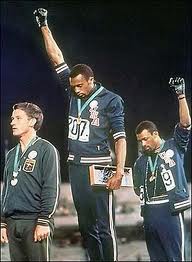
Jesse Owens and Joe Louis dared to disprove the Master Race theory. Jackie Robinson took the spikes at second base because he knew they were looking for one excuse to be rid of this defiant “Ni**er.” Tommie Smith and John Carlos reminded the world of the struggle at home, while Cassius Clay became a Muslim and pointed out, “I ain’t got no quarrel with them Vietcongs… no Vietcong never called me Ni**er.” Doug Williams discovered the differing perceptions of a quarterback, whether he’s at an African-American University or Super Bowl MVP.

The world of sports has always contained the racial issue. One could argue, in the 21st century, that we have few (if any) more famous firsts, but one cannot contend that sports have become color blind. American culture is consistently noticing whether a player is in a sport or position we have become comfortable with, though some credit should be given to baseball and soccer for their diversification throughout all positions. Fan favorites are still judged by intangibles like haircuts and smiles, but if you can play, you can play.

As an athlete myself, I’ve grown aware of the contrast between the players and the spectators. Sports have always developed camaraderie, responsibility, and leadership; certainly one of the few life rafts available to boys in America struggling against violence and oppression in our communities. I grew up helping to organize our neighborhood games because we didn’t have the money to join the leagues and buy all the equipment- and we loved football. All year round, tackle with no pads, and as the youngest I had to fight that much harder.

So that’s where I found myself for a decade: organizing leagues amongst those who failed in their struggle against violence and oppression. In prison. Only during my five years in Maximum Security were we allowed to play football, and this league was not for the faint of heart. Granted, we played tackle every day, all year round mostly amongst friends — whether 2-on-2 or 8-on-8. But the League on weekends during the NFL season was where everyone came out … even that guy you want to punch in the face because of something he said to your homeboy three years ago. Officially, it was “flag” football … but if you physically knock the man to the ground, he is down.

In my first week of prison, I heard a gracious insight on the basketball court by the man guarding me. He said, in not so friendly terms, “You may run things out there, but we run it in here.” Let me point out the fact that I’m White. I took it in stride. What I suspected then I became an expert on later: the American prison industrial complex is a racially discriminatory basin for the racially discriminatory judicial process, which is in turn the arbitrator of a racially discriminatory law enforcement system. The prisons, and the Drug War that overfeeds them, are a socially destructive force far beyond the Klan’s wildest dreams.

One can hardly imagine the sense of burden and obligation when living in the front lines of a racial war zone. When roughly 98% of the guards, marshals, cops, judges, and lawyers are White, it is not easy to share that characteristic in prison. As a student of history, politics, and liberation movements, there is a feeling of responsibility to meet ignorance with the truth. Whenever someone says something divisive over the “P.A.” (throughout the cellblock, with everyone listening), it’s the guy in the middle who needs to speak up in a constructive manner or the unspoken discontent will brew overnight.

On the football field, like the other sports, I always played on the hodgepodge ragtag Bad News Bears sort of squads. We had the Black, White, Latino, and Asian all coming together, similar to the multicultural French World Cup soccer team (1998) that rose above domestic ethnic strife to become champions on their own soil. We constantly had guys in The Hole, whether for gambling, drug use, or standing up to the guards. One year I got sent to the Hole after the Super Bowl, because I had made a football jersey with a T-Shirt and black marker. I took it in stride, knowing the brass was watching our game on the cameras. We only had eleven or twelve guys each weekend, but it was all we needed.

Characters like Black Rhino, Mac, Ant, Kev, and Kim showcased strength and heart to make a coach drool. An incredible 6’5″ athlete like Bobo reminds you how much professional talent never made it to college. And our wily quarterback Byron came with the wiggle of Barry Sanders and the arm of Joe Montana. I called him “Kordell.” He called me “Hines.” In prison, there’s no anomaly of being a Black Quarterback but there is the anomaly of being a White Wide Receiver or White Cornerback. That’s me, the anomaly.

I would line up on their best receiver and put him on lockdown. I would come over the middle and catch the underneath ball and subsequently be blown up by a linebacker. And I would bust a move to catch the bomb for a touchdown. Some guys wouldn’t want to cover me because they wouldn’t want to catch heat all week, how “the Whiteboy beat you for the TD.” For a variety of reasons, I was the only White guy amongst all the receivers, corners, running backs, or QB’s.

Our crew consisted of the guys who generally saw beyond race. For some, this came through their experience in organized sports in the past. Or come from a “neutral” ethnicity like Kim, a Cambodian. All are strong enough to stand up for what they believe, like the Rhino- a Black man who loves “White” music too. Mac, the musician, has a respect for diversity as broad as his gods in the evolution of rhythm and rhyme. Perhaps the whole of us are just wired a little differently, as leaders, with independent thoughts, and a genetic disposition to think all people are generally cool. Or perhaps we are the “real” convicts, who see one color: Khaki. We treat a man with the respect he earns, as someone with no guns, cars, or bling-bling to hide behind. In prison, a man is reduced to his mind, his mouth, and his hands.

One day an old school Italian guy comes up to me. Everyone knew me to some degree, as I also served as a jailhouse lawyer and portrait artist for my community. This guy was pretty well known in and out of the prison, but we weren’t close at all. He says to me, “Y’know, I go out there every weekend to watch you beat on them Ni**ers.” A line like that, in a place like prison, doesn’t leave much room for a thoughtful response.

“I appreciate the support,” I told him bluntly. “Especially as an underdog whose gotta fight for so much respect out there.” Then I couldn’t help but change the tone. “But those guys you call Ni**ers, those are my friends, and I’d appreciate it if you showed some respect.” The world of sports brings “race” to the fore, but the world of sports in prison its something that most could never imagine.

People often ask how I bring folks together. It starts by holding tightly to a courageous compassion and one fundamental principle: People are People. We all want the same things, like “Life, Liberty, and the Pursuit of Happiness.” As a constant outsider, it becomes easier to relate with everyone. I’m just me, whether its breakdancing or speaking Spanish, and never felt the need to act tougher than anyone.

I continue my organizing of prisoners, former prisoners, and families on the outside, working towards criminal justice reform. Most of my squad is still Inside, but I ran into Byron the other day in front of Burger King. Told him I’m looking to find a league we can enter with all the formerly incarcerated. To him, it’s primarily a way to have our fun again. For me, it’s a way to unite us, raise our self-esteem, and send a message back Inside that we’re out here working together towards seemingly impossible goals: Life, Liberty, and the Pursuit of Happiness.

Bruce Reilly is an organizer for Direct Action for Rights and Equality, in Providence, RI. After nearly 12 years in prison, Bruce formed 1000 lbs Guerilla as an outlet for his creativity in theatre and film. His book, “Newjack’s Guide to the Big House” is available HERE.


Posted in Commentary, Prison Conditions | Tagged , , , , , , , , , , , , | 2 Comments

Prison Labor Unions in America: What North Carolina Taught Us.

The current United States Supreme Court, the h...

Image via Wikipedia

With the development of the Georgia prisoners’ labor strike, there is renewed interest in the labor movement behind the walls of prison and the rights of the incarcerated to organize.  A jailhouse lawyer like me always wants to know the legal precedent on an issue.  Has this been heard before?  If so, how do the past decisions affect current tactics?

Ten years ago, while earning $2 per day, I came upon Jones v. North Carolina Prisoners’ Labor Union, Inc., 433 U.S. 119 (1977) where the U.S. Supreme Court reversed the lower court decision that the prisoners were free to unionize (including the right to solicit other members, distribute bulk mailings, etc.).  This ruling has formed a part of the Court’s pattern: to leave prison issues to prison administrators.  Looking back at the American penal system of three decades ago, as compared to now, the Court will soon need to discard that approach if the Rule of Law and constitutional rights are to play a role in restoring sanity to the incarceration nation.

A very timely book, From Black Power to Prison Power: The Making of Jones v. North Carolina Prisoners’ Labor Union, Inc., forthcoming by Drexel Law Professor Donald F. Tibbs, is poised to shed some light on the connections of prisons and social movements.  As Tibbs writes:

“During the late 1960’s through the 1970’s, race and punishment were conjoined twins. The political and legal ambitions of many governmental leaders, and the wardens that managed America’s prison system are ineluctably tied to the proliferation (and dissolution) of African American social movements – especially the Black Power Movement and its lead organization, the Black Panther Party. By the time Jones was argued before the Supreme Court in 1977, FBI Director J. Edgar Hoover had spent considerable years and federal resources “preventing the rise of a black messiah.” Using his brand product, COINTELPRO, Hoover targeted every Black radical that he worried might “unify the masses.” He defined their organizations as Black Nationalist Hate Groups and he openly declared their leaders, as well as their followers, to be the “greatest threat to the internal security” of America. On many levels, Hoover succeeded. Most notable was his campaign against the Black Panther Party and its leaders ranging from Huey P. Newton to Elaine Brown.”

Coincidentally, Elaine Brown has been an activist on the ground in Georgia working with those prisoners and their solidarity supporters (including over 3200 names on a Petition of Solidarity) regarding the current episode.  Those activists have successfully bridged the gap between the cages and the community, as there are politicians and prosecutors investigating the abuses in Georgia– those that led up to the labor strike, and those that occurred in retaliation.

The Jones decision framed the North Carolina struggle as a veil for Black Nationalist Hate, despite the fact that (similar to Georgia) the group was composed of a multi-ethnic, multi-generational base and leadership.  As every conscious prisoner knows..  there’s only one color in prison:  Khaki.  (Orange, or blue, depending on the jurisdiction).  As interest grows around prisoners’ Freedoms to Associate, Assemble, Speak, Redress Grievances, Petition Their Government and the like. the issue of Jones is certain to be revisited.


Posted in Commentary, Courts, Prison Conditions, prison economics | Tagged , , , , , , , , , , , , | 2 Comments

Formerly Incarcerated Convene to Establish First National Agenda

On February 28th to March 2nd, 2011, a group of activists who have first-hand experience regarding inhumanities of the American prison industrial complex will convene in Alabama to lay the groundwork for a national civil rights movement.  This conference of affected peoples grows out of broader momentum over the past decade, with many formerly incarcerated activists unifying to establish their own conference, for their own agenda, as part of their own movement.

“What you are seeing now in Georgia,” says Pastor Kenny Glasgow of The Ordinary People’s Society (TOPS), “is a response to inhumane prison conditions and thousands of people’s sense of hopelessness.”  He is referring to the December 9th prison labor stoppage across the Georgia system, the largest prisoner protest in American history.  “It has become so systematic, “ he says, “the prison industry has managed to unite us.”  Over 3,000 people have signed a solidarity petition in support of the prisoners.

America, with 5% of the planet’s population, holds 25% of the prisoners.  The 2.3 million exist in a gulag of state, federal, and for-profit prisons, while nearly 10 million people currently live under some manner of government supervision.  This would be the 8th largest state in the nation.  It is unknown exactly how many millions have a criminal record, or are family of those who have once been inside the prison industrial complex, but some estimates exceed 10 million released prisoners in America, and 50 million with criminal records.

Linda Evans, co-founder of All of Us or None, puts this gathering in a historical perspective:  “Holding the first of two national gatherings at the epicenter of the Civil Rights struggle is a symbolic action of great power, invoking similar moments such as Stonewall, the Great Grape Boycott, and the Seneca Falls Declaration of Sentiments.  The rights of prisoners, including those who were there and those who are targeted to go there, need all of us to share our wisdom and unite our struggle.”  Events will occur in Montgomery, Dothan, and Selma, including a backwards march over Edmund Pettis Bridge.

The conference is being organized by a Steering Committee consisting of Malik Aziz (Philadelphia), Susan Burton (Los Angeles), Pastor Kenny Glasgow (Dothan, Alabama), Arthur League, Aaliyah Muhammed, and Dorsey Nunn (San Francisco/Oakland), Bruce Reilly (Providence), and Tina Reynolds (New York).   Participants will be putting aside their local struggles in order to develop a common platform regarding restoration of civil rights, stopping prison expansion, elimination of excessive punishments, and protecting the dignity of family members.  The Steering Committee will organize dozens of others to convene in Alabama.  Read the Committee bios HERE…

The Alabama Convention will be the beginning for activating a Movement.  Next stop: Los Angeles, on November 1st, 2011.  Allies and supporters should send donations, via paypal, at www.theordinarypeoplesociety.com or by mail to: TOPS, 403 W. Powell Street, Dothan, AL 36303 to assist in the expenses of creating such an event.  People can also get involved, as participants or supporters, by Supporting Civil Rights of the Formerly Incarcerated. A political agenda will be established by a collaborative process, and provide opportunity for strategic support.

This national conference is supported by All of Us or None, World Conference of Mayors, Drug Policy Alliance, Equal Justice Initiative, Rev. Al Sampson, Dr. C.T. Vivian, Prodigal Child Project, National Justice Coalition, Rev. Al Sharpton, New Bottom Line, National Second Chance Council, National Exhoodus Council, A New Way of Life, Legal Services for Prisoners with Children, Women on the Rise Telling Her Story (WORTH), Direct Action for Rights and Equality (DARE), MN Second Chance Coalition, The Ordinary People Society, and others.

Contact: Pastor Kenny Glasgow, The Ordinary People Society

(334) 791-2433  alabamaalliance@yahoo.com

Dorsey Nunn, All of Us or None

(415) 516-9599    Dorsey@prisonerswithchildren.org

Posted in Drug Policy, Prison Conditions, Uncategorized, Voting Rights | Tagged , , , , , , , , , , , , | 1 Comment

Death Threats On Jailhouse Lawyer in PA. Take Action!

Map of Pennsylvania highlighting Huntingdon County

Image via Wikipedia

The Human Rights Coalition-Fed Up! has received reports that Andre Jacobs, a Pennsylvania state prisoner in solitary confinement, has been physically abused, issued death threats, denied medical treatment, called racial slurs, and had his legal property illegally withheld and confiscated by prison staff at SCI Huntingdon in the past week.

On January 3, 2011, prison guard Cook yelled out to prisoners on the solitary confinement unit, “You niggers are always complaining, we’re about to turn it up!” He then told Andre, “We already know you file paperwork, file a grievance and you’ll die here!”

On January 4, 2011, prison guard Cook told Andre, “We got a shitload of your legal mail out there. Either you sign an agreement to not try to sue about yesterday or you’re not getting it. That’s per Lt. Taylor and approved by Wakefield and Eckard [ranking staff].” After other prisoners spoke out, Andre was given some-but not all-of his legal mail.

On January 6, 2011, guard Uzenski (sp?) made obscene comments when conducting a visual strip-search prior to escorting Mr. Jacobs to a physical. When Andre requested to see a Lt., Uzenski grabbed his arm, which was still in the door slot, and the other guard present slammed his arm in the slot, causing an abrasion. Uzenski said, “You got a problem with me looking at your f***ing c**k?! I’ll break you f***ing neck, nigger!” Mr. Jacobs was deprived a physical examination as a consequence, which he has been waiting on for 3 years.

Just last week in Rhode Island, “problem” prisoner Dennard Walker mysteriously died in solitary confinement.  Walker’s family has not even been told if it was a violent death or not.  The investigation is underway.

In 2008, Mr. Jacobs was awarded $185,000 in a lawsuit against the PA Department of Corrections (DOC) in which he represented himself. Andre has been held in solitary confinement since 2001, when he filed his first lawsuit at age 19. He is now 28 years old.

Since that victory he has been transferred to three different prisons, repeatedly assaulted, attacked with electro-shock and chemical weaponry, strapped to the “restraint chair” for 18 hours at a time, held naked in a cell without property for 7 days on multiple occasions, deprived of food and water, and subject to other human rights violations. Andre has also been issued dozens of fabricated misconducts in order to keep him buried alive in solitary confinement.

The PA DOC has been made aware of these criminal violations on multiple occasions and have taken no action to hold perpetrators accountable.

Andre has recently filed a federal civil rights lawsuit in the Middle District of Pennsylvania over these acts of torture, naming more than 100 DOC and state law enforcement agents as defendants.

Please call and write prison officials and inform them that you are aware of these severe human rights violations. Demand an end to the repression of human rights defenders.

The repression is escalating and Andre and others at SCI Huntingdon are in real danger. Please tie up the phones and faxes – people’s rights and lives are on the line.

Phone Calls: Superintendent Raymond Lawler:Phone 814.643.2400

Superintendent Lawler’s Address: 1100 Pike Street, Huntingdon, PA 16654

SCI Huntingdon Fax: 814-506-1186

Secretary of Pennsylvania Prisons, Shirley Moore Smeal Phone: 717-975-4918

Secretary Moore-Smeal’s address: Central Office, 2520 Lisburn Road, PO Box 598, Camp Hill, PA 17001

Talking Points

1)    Patiently report the above incidents. Don’t let them brush you off.

2)    Ask what steps they are going to take to stop these abuses.

3)    Ask what other officials they have contacted about these reports.

4)    Demand an answer as to why Superintendent Lawler is not permitting Andre to have his legal property.

5)    Ask for email addresses so you can more readily send reports in the future.

6)    Inform officials at Huntingdon and Central Office of other media agencies, legislators, governmental officials, or law enforcement you intend on contacting so that they understand that they are being watched.

Please take it upon yourself to contact one further person-legislator, reporter, friend, family member-and insist that they play a part in speaking out against the torture of Andre Jacobs and the racist repression of human rights defenders.

Sample Letter:

January 11, 2010


To:

Acting Secretary Moore-Smeal

2520 Lisburn Road

Camp Hill, PA 17001


Secretary Moore-Smeal,

I have recently become aware of the decade-long series of abuses inflicted against Andre Jacobs by guards and officials throughout the PA DOC. Recently, acts of retaliation have escalated.

On January 3, 2011, prison guard Cook yelled out to prisoners on the solitary confinement unit, “You niggers are always complaining, we’re about to turn it up!” He then told Andre, “We already know you file paperwork, file a grievance and you’ll die here!”

On January 4, 2011, prison guard Cook told Andre, “We got a shitload of your legal mail out there. Either you sign an agreement to not try to sue about yesterday or you’re not getting it. That’s per Lt. Taylor and approved by Wakefield and Eckard [ranking staff].” After other prisoners spoke out, Andre was given some-but not all-of his legal mail.

On January 6, 2011, guard Uzenski made obscene comments when conducting a visual strip-search prior to escorting Mr. Jacobs to a physical. When Andre requested to see a Lt., Uzenski grabbed his arm, which was still in the door slot, and the other guard present slammed his arm in the slot, causing an abrasion. Uzenski said, “You got a problem with me looking at your f***ing c**k?! I’ll break you f***ing neck, nigger!” Mr. Jacobs was deprived a physical examination as a consequence, which he has been waiting on for 3 years.

I am requesting that you put an immediate end to this abuse by transferring Andre to another facility where he can finally re-enter the general population. A legitimate investigation into the criminal acts of staff working in the solitary confinement unit at Huntingdon is urgently necessary.

As the first African-American woman to be Secretary of the DOC, we are counting on you to work with a concerned citizenry to put an end to these acts of racist abuse.

Thank you for your attention in this matter.


Respectfully Submitted,


Posted in Actions, Prison Conditions | Tagged , , , , , , , | 1 Comment

Any FBI Employees in YOUR Activist Organization??

The Seal of the United States Federal Bureau o...

Image via Wikipedia

The struggle continues for the Minneapolis activists working in solidarity with Palestinians, who are now accused of aiding “terrorists” and whatnot, but what we now know is that an FBI agent infiltrated their circle of social justice activism.  With the rise of COINTELPRO 2.0, activists around the nation may want to look around at their meetings and check up on their Facebook Friends.

To all of you dedicated hard core loving people I have refused to “Friend”:  Please know that I am just being cautious.  The sad thing is that this attitude is required simply to exercise one’s civil rights of petitioning their government, Freedom of Speech, and Assembly.  Or in this particular case, the right to aid an oppressed people facing genocide.

Is it so wrong to help the Palestinians?  Do nations around the world have laws against providing material aid, such as food and medicine (the types of things regular folks can actually obtain)?  No.  Has the global community labeled Palestinians as “terrorists” in the struggle for land and liberty in land controlled by Israel?  No.  Are the Palestinian people, represented by thousands of individuals, groups, and organizations “at war” with America?  No.

So what is the FBI doing investigating, arresting, and prosecuting activists who are not even alleged to have anything to do with weapons or violence?  The Committee to Stop FBI Repression has done an excellent job to organize a response, including a national day of action on January 25th.

As the Patriot Act comes up for renewal and we approach the Tenth Anniversary of 9/11, it is worth assessing the true intent of American Intelligence Agencies and the Military-Industrial Complex which they serve.  In the meantime, it is clear that there are certain elements (some known, some otherwise) who have proven to be undemocratic and, unfortunately, should not be trusted to protect the freedoms of the activists- the likes of whom are America’s greatest legacy.

A brief list of America’s “terrorists:”

Dr. Martin Luther King, Jr., Cesar Chavez, Harriet Tubman, Thomas Jefferson, John Brown, Frederick Douglas, Daniel Ellsberg, Eugene Debs, and many many more…

Posted in Actions, Commentary, Political Prisoners | Tagged , , , , , , , , , | 1 Comment

Victory! Lucasville Hunger Strikers Demands Are Conceded.

Number of executions each year by the method u...

Image via Wikipedia

From various reports on the ground in Ohio, particularly Solidarity With The Lucasville Prisoners on Hunger Strike:

The prison authorities have provided, in writing, a set of conditions that virtually meets the demands set out by Bomani Shakur in his letter to Warden Bobby, and the victorious protesters have resumed eating!  This follows a large rally yesterday, and an open letter to the Warden signed by nearly 2000 people.

The men had very basic demands, after 17 years of solitary confinement:

1. Full recreation privileges.
2. Full commissary privileges.
3. Full access to Access SecurePac catalog.
4. Semi-contact visits.
5. Access to computer database so that they can assist in the furtherance of their appeals.
The hunger strikers send thanks for your support and state that they couldn’t have won without support from people from around the world.   They add to their statement the following:

This time they were fighting about their conditions of confinement but now they begin the fight for their lives.   They were wrongfully convicted of complicity in 1993 murders in Lucasville prison and have faced retribution because they refused to provide snitch testimony against others who actually committed those murders.  Now, because of Ohio’s (and other states’) application of the death penalty, they still face execution at a future date. Ohio is today exceeded only by Texas in its enthusiasm for applying the death penalty.  We need to take some of this energy that was created around the hunger strike to help these men fight for their lives.

This case brings into question the ability of a prisoner to adequately petition for their own exoneration, especially when held in dungeon-like conditions.   But watch this space for further news on their ongoing campaign.

Posted in Actions, Political Prisoners, Prison Conditions | Tagged , , , , , , , | 1 Comment

Private Prison Soon to be Bankrupt

My last post on the Wyatt (responding to a potential state takeover) generated a number of inquiries about this privately-owned prison in Central Falls, RI.  I realize it is time for another installment of information.


What is Wyatt?

From their own website:

The Donald W. Wyatt Detention Facility, located in Central Falls, RI, is operated by the Central Falls Detention Facility Corporation, which was created by the Rhode Island General Assembly in June 1991 to design, build, and manage the first publicly owned and privately operated detention facility in the Northeast. It is a quasi-public detention facility designed to function as an economic engine for the city of Central Falls and the state of Rhode Island.”

The Wyatt is NOT publicly owned, although the mayor appoints the corporate board.  It is owned by private bondholders whose repayment, by corporate decree, come before anything else (including operating costs).  Anyone who believes the Board of Directors owns a company might want to run that by the investors with stock/bond certificates.  It is, however, publicly funded. All of their revenue comes from tax dollars paying to hold prisoners.


Wyatt is going bankrupt.

This prison, like many privately-owned prisons, was a financial scheme worthy of a credit default swap or any other esoteric Wall Street chicanery.  It has been losing $5 – $10 million per year since the expansion and refinancing.  The building itself is worth under $90 million and depreciating, while the corporation owes $141 million of interest on $101 million in debt.  That’s right, they are paying 140% interest on the loan.  If someone bought a car listed at $10,000, but took out a loan that came out $24,000, they would be considered an idiot, but that’s the difference when one is playing with someone else’s money.


And keep in mind: it is the taxpayers who are paying the interest.  Not a bad loan to own, ay?


According to Receiver Judge Pfeiffer’s report (p.56), the prison has lost money every year since the expansion and is in technical default on its bonds.  Two years ago when the mayor proposed selling Wyatt to private prison mega-corporation CCA, the land and prison were independently assessed at $45 million.


Why the Expansion in 2005?

The expansion and refinancing of the original bonds was an opportunity to make millions for some individuals, while delaying the collapse.  Original bondholders now had the money to “cash in” as the corporation took out a fresh batch of new money.  The expansion allowed middlemen and construction people to cash in, with everyone getting a small bite from over $100 million.  A project coordinator can easily explain 10% of costs going their way, and Anthony Ventetuolo explained that his 2% off the top is totally normal.

The refinancing also creating a “rainy day” fund, to make bond debt payments when the income is not flowing, was a way of concealing the income not flowing.  This fund is done.


Consider that the 1992 bonds were a total of $30 million.  The 2005 bonds were $106 million, including fees, and yet the prison did not even double in size.


Who Manages the Money?

Cornell (Cox) Corrections were dismissed when the new cash flow came in with the expansion/refinancing, and Anthony Ventetuolo took over under the name of AVCORR.  Ventetuolo was a founding partner in the deal to win a bid and build a prison for the Bureau of Prisons to use in Southeastern New England.  He was a highly paid consultant by the Corporation, and made over $1 million just during the expansion, and took over the prison when the new money flowed.


What’s in it for Central Falls?

The original reason Rhode Island authorized these capitalists to make an investment in public human suffering is because it was believed to be a revenue stream for the local municipality.  Sounded good at the time to the Legislature.  This revenue is theoretically coming from discretionary “City Impact Fees.”  The fees have not been paid in several years, and the bondholders threatened to file suit against the Corporation if they pay the City prior to paying their bonds’ principal and interest.


Is a City Impact Fee the same as “revenue”?

It is called a “Fee,” which is something you pay for a service.  In this case, it is absolutely discretionary.  What does Wyatt get?  I call on my public management gurus to help answer that, but there are services like water and sewage that add up to real costs.  The Corporation is tax exempt, as well.  And if the City Impact were merely $1000 per day (A conservative estimate for a place holding over 1,000 prisoners and employees), that adds up to over $6.5 million since the Wyatt was built in 1992.  The Corporation has paid Central Falls $2 million over the past 8 years (I am unsure how much, if any, was paid prior).   Would you call that “revenue?”


Has Anyone Investigated This Corporation?

Yes.  The bondholders themselves realize they are caught holding the bag and somebody is dipping in, which only makes it worse.  In 2008 they called for an independent audit, and hired Michael Fair.  The auditor released a report in 2009, and found serious “financial control deficiencies.”  Considering Arthur Anderson was the original auditor of Wyatt under the Cornell Corrections regime, one can only guess how it used to be.


Naturally, every corporation tries to avoid a scandal and would prefer to deal with things privately.  This one has close ties to Attorney General Patrick Lynch (2002-2010), who never threw the book at anyone involved with the Corporation, and hired his sister as their legal counsel.  The bondholders threw Ventetuolo out in 2009 (I am not aware of any pending charges) and hired Michael Fair to run the operation on an interim basis.  It is worth noting that Patrick Lynch recused himself regarding the investigation of Mayor Moreau in other matters.  Considering the power Moreau wielded in appointing the Board of Wyatt over the years, Lynch basically recused himself from the Wyatt.


How is the Corporation Connected to Central Falls’ Bankruptcy?

The Central Falls smokestack blew, just prior to the 2010 elections.  I’m not sure entirely how the prison and the city are intertwined, except that the mayor has power to appoint all of The Corporation’s local board members.  This mayor, Charles Moreau, is the same man who was using the city tax dollars to pay his friends $10k to board up foreclosed properties.  If that is any indication, there are any number of rocks to look under to “follow the money.”


In a small state like Rhode Island, it is understandable for the mayor, police chief, and state attorney general to be chummy.  It doesn’t mean that corruption is evident; it only calls into question the capacity of anyone to have independent oversight and investigation.  It is not surprising that the Receiver of Central Falls, Judge Pfeiffer, tossed the mayor aside and is now talking about Wyatt.  It is suspicious that he sees the state bailout of Wyatt to be a good thing in any way… except to bailout the bondholders.


The bottom line is that the Wyatt Corporation is going under, and not just because we have more prison cells than prisoners in America from a glut of investment.  It is because one should anticipate graft and mismanagement from any endeavor that lacks a Buyer/Seller balance of power, one that involves taxpayer funds, and is an industry that feasts on social degradation.  Cornell Corrections has since been swallowed up by another prison profiteer, Geo Group, as the entire industry is under strain. Mergers often indicate an excess of capital, which is clearly the case for those who banked on a prison planet.


Anyone wishing to understand Wyatt, particularly who may have decisionmaking power in this process, should first read:

2008 Audit Report

Massachusetts Inspector General Report on Wyatt’s sister-prison

Harvard Design School study of Wyatt

An investment banker’s expose on Wyatt (partner in the firm)

Corporation’s Indenture of Trust Agreement


The Central Falls Detention Facility Corporation named their prison the Donald Wyatt Detention Center, after a federal administrator.  To learn more about what happens inside the prison, there are several enlightening court cases.


Posted in prison economics | Tagged , , , , , , | 3 Comments

Conservatives Launch The “Right On Crime” Initiative To Save Money and Lives Across the PIC

Newt Gingrich

Image via Wikipedia

I feel like that crazy scientist in the disaster movies, who has been running around for years saying that the conservatives will get out front on prison reform, because (1) it will cost too much to continue and (2) the carnage of prisons will no longer be hidden in their neck of the woods.

Zoom in camera on my stoic face as unexploded bombs fall from the sky behind me… “It has begun.”

Newt Gingrich and Pat Nolan co-authored a Washington Post Op-ed that brings attention to their new initiative, Right On Crime, that is taking hold in 20 states, including Pennsylvania, New York, Vermont, and Connecticut in the Northeast.  Some will be skeptical of their motives, particularly when the core group consists of principal architects of the Prison Industrial Complex as we know it.  Reagan’s AG Ed Meese, former drug czar Asa Hutchinson, and professor John Dilulio, key player in the “Faith Based Initiatives” and coined the myth of juvenile “superpredators” which never cam true despite its policy implications on juvenile incarceration.

After Pat Robertson recently instructed his flock about our incredibly misguided prison and drug policies, newly-elected Governor Cuomo sent a serious salvo over the bow of the New York Correctional Officers’ union– by saying “Prisons are not Jobs”in his inaugural address.  The planets are aligning for a plate tectonic shift in policy.  Ironically, the Conservatives (and others) are using the same arguments others have been using for decades.  And in Rhode Island, where three champions of prison policy reform have left the Statehouse, it remains to be seen who will emerge to become the new “Usual Suspects.”  And will it be so usual?

“The Right on Crime Campaign represents a seismic shift in the legislative landscape. And it opens the way for a common-sense left-right agreement on an issue that has kept the parties apart for decades.”  Gingrich, freed from Power, is taking a key step to find this agreement space.  I had wondered if it would begin with a Ron Paul – Dennis Kucinich “fringe” bipartisan core, but it makes more sense to start outside the pearly halls of Congress.  People need to get over the “who said it” reactionary hate… like when Obama commented on a high profile business owner hiring a high profile employee with a felony record.  Just look at facts…

“We spent $68 billion in 2010 on corrections – 300 percent more than 25 years ago. The prison population is growing 13 times faster than the general population. These facts should trouble every American.
Our prisons might be worth the current cost if the recidivism rate were not so high, but, according to the Bureau of Justice Statistics, half of the prisoners released this year are expected to be back in prison within three years. If our prison policies are failing half of the time, and we know that there are more humane, effective alternatives, it is time to fundamentally rethink how we treat and rehabilitate our prisoners.
We can no longer afford business as usual with prisons. The criminal justice system is broken, and conservatives must lead the way in fixing it.”

Right On Crime cites work in Connecticut that was pushed by grassroots organizations such as A Better Way Foundation (who also led their successful Ban the Box bill), but largely opposed by conservatives and moderates on both sides of the aisle.  Likewise in RI, a revived bill to limit probation violations to the time remaining (first introduced by Segal in 2007) would likely get a Right On Crime seal of approval- and possibly the sort of bipartisan support that could become the legacy of Gov. Chaffee’s independent administration.   Chaffee can easily move to save Rhode Island $37million in prison budget; but he may be awaiting that sort of full-spectrum support to alleviate controversy and pushback from a 1500-member Correctional Officer union earning millions in overtime (their opposition to every reform is understandable).  It is worth noting that the unions who win elections (SEIU, Nurses, Teachers, UNITE) are not particularly known for their “Lock Em Up” mentality.

Gingrich has been developing this awareness and involvement over the past few years, although there is no word on his opinion of the recent Georgia prisoner strike.  Community members and politicians are intervening in Georgia, and I am told have actually seen photos of the abuse from prison guards (particularly the retaliation upon some deemed leaders of the peaceful refusal to leave their cells and work).  Newt could still join over 3000 people who signed a Petition of Solidarity with the prisoners.  Stay tuned for the involvement of Illinois congressman Danny Davis, which could jumpstart Senator Jim Webb’s bipartisan, bicameral bill to form a Blue Ribbon Commission to suggest an overhaul of the criminal justice system.

Despite passing the House, and passing the Senate Judiciary (where Sheldon Whitehouse is a co-sponsor), Harry Reid would not hold a floor vote.  Prison reformers across the nation, and those who compose the Prison “Industrial” Complex (i.e. make their living off some slice of it, good or bad), eagerly await this new Congress.  The Right On Crime initiative, along with the past 20 years of mainstream Democrats’ Tough On Crime trench-digging, proves that nothing is dead in the water.  Organizations like DARE, who have spent 25 years often fighting Conservatives, remain distinctly unaffiliated with political parties, and are now seeing support for their “radical” proposals.  It might be interesting to see who begins to invite their knowledge and expertise to the table.


Posted in Drug Policy, prison economics | Tagged , , , , , , , | 2 Comments