
Image via Wikipedia
This weekend I was in a public discussion about Movement Building, held at the Launchpad gallery in Brooklyn. A man asked a classic question within the world of activism, experts, and nonprofit organizations: “What do you say to the organizations who would rather not work with you [formerly incarcerated], who will say ‘you get too emotional’ or ‘we’ve got this just fine.'”
The man went on to name some names, and we all know various people or organizations who behave as such. Whether those people are being foolish or ignorant, we should at least give them credit as not being malicious. They are possibly not even aware they have met someone, previously locked up in a cage, who can analyze the Prison Industrial Complex in the manner of an economist or sociologist. If they have a certain assumption about the “clients” they are working for, it would not occur to them that there are some advocates and activists who are publicly effective without wearing their Beat Downs on their sleeve. They can make websites, cite statistics, and make shiny reports as well.
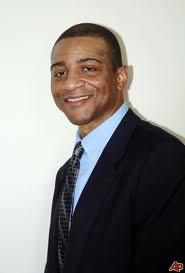
Daryl Atkinson, an attorney, grassroots activist, and formerly incarcerated man once told me, “We understand the issues 3-Dimensionally. 1: We understand them through a legal and economic analysis; 2: We understand the issues on the ground, doing day to day work with the community out here; 3: We understand from our personal experience. Most working on criminal justice reform only have one dimension, some are lucky to have two. Very few of us have all three.”
What I tell those advocates, be they ignorant or “uppity,” and that is how we are not all irrationally blinded by some sort of moral revenge. We take reasoned positions all the time. Perhaps the corner office activist does not realize that the imprisoned activists are constantly marking strategic lines in the sand, as are DOC officials, about what can be crossed; when (and in what form) to take action. The Jailhouse Lawyer has very limited resources, and must choose wisely when moving an issue forward. As the Georgia Prison Strikers knew: collective action must be worth taking a beating for.
For the never-incarcerated full-citizen advocate, there are questions that should be on your wall:
1. Who is my constituency?
2. Am I advocating for an issue that prisoners would otherwise take a beating for?
3. Has this been vetted by the people I’m talking about?
If there is no identifiable support for a particular issue or angle on an issue, one should wonder what the hell they they are doing. Attorneys familiar with prison conditions, or anyone subscribing to Prison Legal News (edited by two former jailhouse lawyers, with an attorney on staff), could tell you the pressing issues in nearly every jurisdiction… as could the average formerly incarcerated individual.
Those willfully working in ivory towers are easily disconnected from the community they are attempting to assist. They may be lulled into fighting easy battles, believing that it is a gradual path towards justice. Yet imagine fighting on behalf of Light-Skinned Negroes, Educated Women, or Non-Flamboyant Homosexuals? When we choose to be a fighter in the Civil Rights Movement, we have to give credence to the value of our time; and for those of us who are paid, we need to recognize the need to honor the community’s investment in us.
Every week I have personal contact with people I know Inside. Every day I have contact with people who were Inside, and I can’t walk down the street without running into someone who knew me from the Inside. In an average week, I have contact with over 50 different people entangled in the web of our Prison Industrial Complex. Most of whom are kicking like crazy just to keep their heads above water- like a duck on the pond, you won’t see it from the outside, but I see it, I know it, because I am of the same species.
I told that man in Brooklyn to remind such insular advocates of the study on Education and Incarceration done by John Jay College (and many esteemed contributors). The study had one large puzzle they could not decipher: Why Men of Color had higher literacy rates on the Inside than the free world, which goes against White data and popular perception. This is a pretty big question, and perhaps they already received $100,000 in funding to answer this, but they never asked someone who played chess, scrabble, and pinochle in a cell block.
People of Color are born (obviously) in concentrated communities that are managed by the government like police states or Bantustans. This is no fault of the newborn, nor the teenager being frisked somewhere as I write this. “Those who can, Do,” which in the ‘hood means: Those with a chance of getting out of the situation are gonna go for it. Systemic poverty, especially when it appears to be intentionally imposed and enforced, does not sit well with the average thinking person. Combine that with youthful arrogance, impulsiveness, and impatience, and the intellectual resident of American Bantustans will formulate a plot- usually selling a product (not very original of an idea, proven to be successful for some).
A considerable portion of America’s Best and Brightest youth, born into certain impoverished and militarized communities, are filtering through the prisons. It is shameful that this knowledge needs to be dropped on educators, as this should be well known to them instead. Apparently many have been lulled into believing that their 10% enrollment of Black and Latino students reflects the college-ready segment of that 30% of America. So where is the post-incarceration embrace of that demographic?
About two weeks ago I called on Ruth Simmons, President of Brown University and a Black woman addressing a conference on Brown’s Slavery and Justice activities. I explained to her this phenomenon of the Modern Slavery System skimming these kids out of the formal educational pool, and called on her to make a commitment to getting them back in, to offer a single scholarship each year to someone coming out of the Adult Correctional Institutions just 10 miles from campus. She dodged the question quite noticeably to all 150 people in attendance.
They can’t connect all the dots without us. They act less efficiently and lose step with the Movement. The sad thing is, it is not only their loss, it is all of ours- particularly when those who exclude affected people are given big microphones to speak on their behalf.
I have yet to speak on behalf of a labor union, marriage equality, or Afghani civilians… but I do speak up in support of them, use their data, and try to amplify their messages. The exclusionary advocates will heed the same concepts in the unprisoning of America, or they will render themselves irrelevant over time.

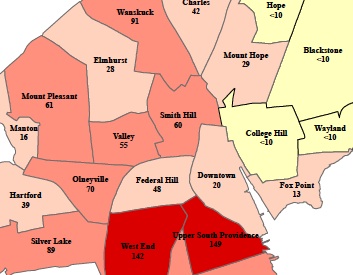 With Providence on the brink of bankruptcy (and everyone being asked to “tighten their belt”) it stands to reason that every budgeter re-examine their priorities.



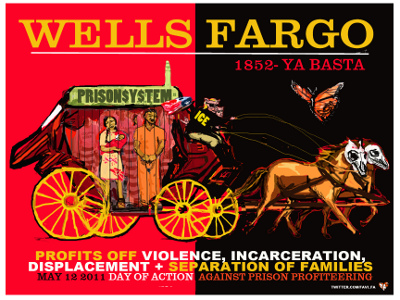



 unprison
How I Expect California to NOT Release Prisoners… If We Let Them
Image via Wikipedia
By now, every activist is aware that the US Supreme Court “ordered California to reduce its prison population to 137.5%of design capacity within two years. Finding that the prison population would have to be reduced if capacity could not be increased through new construction, the court ordered the State to formulate a compliance plan and submit it for court approval.” This was an appeal of federal judges ruling 2 years ago that 55,000 prisoners should be released, when there were 148,000 men and women filling a system designed for 80,000.
At first glance, this indicates 33,000 people will be coming home a little earlier than they were (if you take 90 days of every sentence, thousands of people with a few weeks left in prison will be home the next day… while people serving huge sentences won’t notice a thing.) But we must look closer to anticipate the response of the Prison Industrial Complex, allowing us to counter the move.
California should be expected to attempt an increase of capacity through:
1. County Jails have already pushed back. Feds, states, and municipalities are always trying to slide the tax burden to another entity, as if it were not the same taxpayers funding every level. Although the county jail system is not mentioned in the Supreme Court ruling, they are only slightly overcrowded, yet vastly underfunded. This will be a Cash Grab for the local jails to increase their prison addiction, but the state is offering just $68/day per prisoner. Even less than the $77/day they currently pay.
Ultimately, releasing 33,000 prisoners will not decrease the state DOC budget by much, because no buildings will be closed down and no prison guards will be laid off. Funding the counties, however, would cost nearly $1 billion. With over 30,000 members of the California Correctional Peace Officers Association, they stand to gain the most from keeping the prisoners incarcerated, and kept in state. If they would each pitch in a mere $33,000 per year, then this would be an easier equation.
2. State bonds to build prisons is the least popular, as this industry has proven to be broadly unpopular when forced to underfund education and many other services. Gov. Schwarzenegger had to learn that building prisons was difficult, particularly in the face of broad statewide coalitions getting in the way, such as All of Us or None, Critical Resistance, Justice Now, Californians United for a Responsible Budget (CURB), and many others. In his about-face, he stated clearly that prisons should never cost more than Higher Ed, as they currently do.
The backdoor way of building new prisons is building “good” prisons, such as medical, mental health, or substance abuse prisons. Considering the deaths in California prisons were largely deemed a direct result of inadequate health care, expect a push for a 5,000 bed “medical” prison complex… costing roughly $200 million to build and $300 million per year to operate. The contract may be for $100 million to try getting it passed, so we need to look at the fine print about “Cost Overruns” so that Halliburton (king of prison construction) or Bechtel (world’s largest construction firm, based in SF) don’t do what they always do… keep adding onto the cost.
3. The private prison gulag is starving for prisoners. The day after this ruling, it is likely that flocks of representatives flocked to the California Bureau of Prisons with proposals in hand. Prices per prisoner per day are flexible- and 33,000 prisoners can force a “deal” better than the federal government rate of $103 day. Some states have paid as little as $80 day, and a bulk rental could likely come at $50/day. In effect, California could be taking over stagnant prisons in Arizona, Colorado, Oklahoma, and Texas. Thus, this whole “problem” of overcapacity can be solved with about $1 billion budget increase to the DOC budget. And not a single shoplifter, pot smoker, or wandering mentally ill person will need to get out a single day earlier than expected.
4. Lease-Revenue Bonds are the Weapon of Mass Destruction in this picture. (See CURB’s fact sheet on prison construction) They have been the financial tool to fund many large unpopular construction projects (including prisons), without having to get public support through the ballot process. The concept is simple, like building a giant hotel: The private investors put up the initial construction money (letting the taxpayers think it is no cost to them), and those construction bonds are paid back by leasing the hotel rooms. The “renters” end up paying for the project, thus “Lease-Revenue.”
Although this would work as a business plan in the private sector, in the case of prisons those renters are the same public taxpayers who did not want to pay to build the prison in the first place. Adding insult to injury, the interest ends up being close to 100% over the life of the bonds. A $300 million project will cost $600 million, while the investors who bought up those initial bonds make off like criminals. All the while, they will pay for lobbyists to ensure the prison population does not dip- not a crack in the Drug War, not a diversion program for the mentally ill, and increasing the criminalization of immigrants lacking papers.
It is worth noting that the Massachusetts Inspector General detailed the boondoggle their state fell for through Lease Revenue Bonds when building the Plymouth House of Corrections. They paid considerably more through this tactic (sold as no-cost to the taxpayer) than if they had simply built it with state funds up front. Less than 50 miles away, an insidious push is being made for the state to take over bond repayment of a prison in Central Falls, Rhode Island. The “public” argument is that it will ease overcrowding in the state prison and keep jobs in the private one. The “private” argument is that unless someone takes over these bonds (with a huge balloon payment pending) the prison will go into bankruptcy by paying the debt first and left with no operational funds.
California has two years to comply with the reduction, and a plan should be forthcoming that likely taps a bit of each method. Activists, taxpayers, and politicians should be on the lookout for duplicitous dealings… as the only rightful thing is to simply release 33,000 people. Considering exponential growth of prisons, and Tough on Crime politicians (see the definition of “fascism” here) strive to increase all misdemeanors to felonies, and other such methods of protecting a state-funded industry… they should let out 50,000 because the 137% capacity will be peaked soon enough.
Ultimately, people should be forced to confront the question of the Eighth Amendment, and whether something is Cruel and Unusual Punishment only when we can’t afford it? Communities are decimated. People are incarcerated for things that Jeopardy contestants could never guess carried such penalties. An entire caste of Americans with convictions, along with their friends and families, need to organize with our supporters to say “Enough!”
Share this: