Judge Imprisons Mom For… Not Checking the “Felony” Box

In America, the sentence never ends.  With a multitude of “collateral consequences” to face, there are many reasons for one to either lie about their criminal history or try to avoid it.  In reality, for one to develop an upstanding citizen lifestyle, they need to find work, a place to live, and get involved with their community.  However, if they are barred from employment, barred from school or licensing, barred from housing, barred from voting, and/or barred from volunteering in their kids’ activities… the people who create these barriers are reinforcing the need for a criminal lifestyle in order to survive.

Anita McLemore  is a mother overcoming addiction.  Anyone who has been there, personally or as friend or family, knows that there are bumps in the road… and once in a while that person has to catch a break.  McLemore had the “luck” of living in Mississippi, one of ten states that have an outright ban on SNAP and TANF benefits for people with felony records.  The other 40 states have laws mostly banning only those who do not comply with their releases, or in other words: takes into account their current behavior.  But in her attempt to get a break, and get food stamps for her two children, this working mom lied and did not check the box regarding her criminal history.  She likely would have gotten food stamps in Tennessee, Florida, and Louisiana… in Mississippi she gets three years prison time, after pleading guilty.

(Word to the wise: never plead guilty, nor let your client do so, and throw yourself on the mercy of the court.  A plea “bargain” is a contract that requires something in return.  Her federal public defender, Omodare Jupiter, should be ashamed, if nothing else).

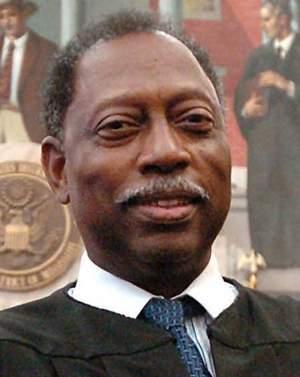
U.S. District Judge Henry Wingate bypassed the Federal Sentencing Guidelines that would have restricted the sentence to two to eight months (and perhaps probation).  These are the same guidelines that judges claimed, for two decades, kept them from giving lesser sentences to modest drug possession cases.  Judge Wingate also recently denied Ms. McLemore’s request for a two month stay of execution, so she could have additional time to prepare her children for this transition.

Anita McLemore paid back the $4,367.  Her biggest mistake, clearly, is not working on Wall Street, for a Savings and Loan, or for a mortgage broker.  If she had a college degree and wore a suit to work, she would likely avoided prosecution altogether.  On the same day she was sentenced, six people involved in a multi-million dollar mortgage fraud received less time than Anita McLemore.

Presidents Bush and Obama could not even fill a single cell block with those incarcerated for the massive frauds that resulted in the economic meltdown that currently holds so much political currency.  And amidst this meltdown, ironically, the federal government will spend approximately $500,000 to prosecute and incarcerate Ms. McLemore.  And most ironic of all: now her two children are eligible for state and federal assistance; as their caregiver could apply for the same food stamps McLemore was ineligible to receive.

After eight years as a prosecutor, Judge Wingate was confirmed as a judge (for life) in 1985, and has been the Chief Justice of his district since 2003.  As the first African-American judge in the history of Mississippi, this Reagan appointee receives numerous awards from the NAACP and other groups that fight for diversity.  For an interesting account of Justice Wingate, who has been accused of corruption and partisanship, see a 2007 profile in Harper’s Magazine; http://www.harpers.org/archive/2007/12/hbc-90001999.

Ultimately, what We the People must understand is that the Incarceration Nation does not consist of ten million evil people under government supervision.  There are indeed people whose greed and malice impact others, and sometimes on a massive scale, but many of them never set foot in a courtroom.  The cages of America look a lot more like Anita McLemore than most would believe.  And the criminal justice system far too often endeavors to ensure that the ripples of a criminal conviction never stop; they are amplified, affecting people’s children.  McLemore’s “crime,” was not an action but an omission… with the goal of getting bread.  Wingate, on the other hand, took hundreds of thousands of dollars from the collective tax base and disrupted a family so that the most severe punishment could be inflicted upon Anita McLemore and her family.  It is time to overturn Mississippi’s ban on food stamps to mothers like McLemore, stop the systemic discrimination against those with records, and to question the motivations of this federal judge (and others).

Posted in Courts, Rehabilitation | Tagged , , , , | 8 Comments

My First Semester in Law School: Not What You Thought.

As my first semester of law school comes to a close, I can’t help but step back from my typical public policy commentary and reflect upon what has been the most action-packed four months of my life.  As someone once said, “You can’t step into the same stream twice,” and there is a part of me that has remained static while everything around me changes.  Yet in seeing those changes, I too am changed.  Some may wonder if I will ever just leave prison behind me and forget.  However, the place that gives me perspective, from which I draw so many lessons and so much strength, could never be far from my mind whether I want it to be or not.

I came to New Orleans knowing but a few criminal justice activists, legal professionals, and some friends of friends.  It was good to have folks who knew I had spent twelve years locked in prison.  And to those who knew me, they never needed “the story” for how I ended up there.  It isn’t difficult to recognize that such a stretch of time generally means you did something pretty bad, especially if you did it as a teenager.  Most adults relate to each other for who they are and how they act as grown ups, and don’t gauge each other by what type of teenager they were.  As I got to know some of my new classmates, our backgrounds began to come out.  Having lived the life I have, including as a very public criminal justice activist my past incarceration will always start to surface… and it did.

In hindsight, I am relatively certain who made it a personal campaign to try sullying my name and have me run out of law school one way or another.  The motivations were so trivial it was easy to miss at the time.  The small (but loud) bandwagon of negativity issued a message that formerly incarcerated people should not be allowed to pursue an education.  A very small group of people stood up (anonymously) to proclaim “forgiveness” is a bad thing, and those who have served our punishments should never be allowed back into society.  The media, loving anything salacious, stoked the fire a little bit, and yet most of them recognized that this is not the only message that needs to be heard.  I did a local newspaper and TV story attempting to be accountable in my new community.  As the story bounced, I was hit with a request from practically every media outlet I could imagine.  And I denied them all.  They were missing the story.

The story of my first semester is not about me, and my journey from a cage to a classroom.  The irony of such a story is that my cage was already a classroom, where I learned a great deal (including law) while living as a monk, and I began putting that knowledge into practice.  Law school, by itself, is actually far less stressful than providing legal help in a prison block, where documents are subject to confiscation, lives of friends are in a balance, and I had been targeted for punishment as a troublemaker.  But like I said, the story isn’t about me; it is about the amazing people around me.  In particular, it is about the Tulane University Law School Class of 2014.

Imagine over 200 students suddenly finding out their classmate was in prison.  If it were for stealing a Ferrari off a dealer lot, this would likely just be considered “cool.”  Yet it was not.  My past was explicitly dragged out, and not entirely accurately, but the fact of the matter is that I did kill a man and I did spend as much time in a cell as the rest of them spent in elementary, middle, and high schools.  It was not, nor will ever be, “cool.”  My classmates were facing the gossip, the blogs, the commentary, and that overriding message that I should never be forgiven, my punishment should never end, and I should not be allowed to be in school.  How would they react?

Many classmates surely called their best friend from home, called their parents, and spent some time thinking on the matter.  How could they not if I am sitting directly behind them in class?  Meanwhile, I had many people from the Northeast, New Orleans, and around the country asking me how the students are treating me.  The media gave an impression that I was under siege with a scarlet letter, and soon to be burned at the stake on the quad.  What I found was the direct opposite.  What I found reaches deep into my heart like every movie that ever made me teary-eyed.

In the midst of the hoopla, about fifteen classmates came to my house for an inaugural meeting to start a National Lawyers’ Guild chapter at Tulane.  The social justice folk were like all the social justice folk who recognize that life doesn’t go down the same the world over, and realize that a privileged American life is a poor comparison for the challenges and choices faced by most of the world.  The typical graduate student’s life is a poor comparison for most of America.  There are many factors that create ten million people under government supervision, and only the ignorant would try to judge us all.  And only the twisted could advocate for rehabilitating prisoners while condemning those who actually are back on their feet.  Such people don’t make excuses for me; they simply accept me for who I am.

Another classmate approached me and said, “Your post said to ‘ask you,’ so I’m asking…”  We ended up having an in depth discussion about myself, what I did, where I came from and what motivates me now.  A few weeks later we spoke again, and he told me about his conservative background.  He mentioned how, without really thinking about it, he might have thought people like me don’t really deserve rights to anything.  Yet he had to think about it, as here we were.  He thought about what kind of Christian he aspired to be on a daily basis; he knew that this was a moment to face the teachings of Christ, and to live up to them.  The conversation blew me away.  Several other classmates have expressed similar sentiments, and how the way they were raised, with religious teachings or not, leads them to embrace me.

While it seemed the storm brewed around us, and various people wanted (if not demanded) to know who I was, some students looked to their class presidents for answers.  I had lunch with the 3L class president, and we soon found very friendly ground.  I had lunch with my own class president, and it was clear that this challenge was ours as a whole, the Class of 2014.  When someone suggested the opinions fly in our online group, the comments quickly came that this is not the right forum and not how we should handle it.  We needed to find a way to move through this, for people to feel comfortable, or we (if not me alone) would crumble.  There was talk of holding a large meeting to air concerns, but ultimately the work was done on a personal level.  The Facebook messages started to pile up, “I sit across the room from you and just want to let you know I fully support you being here.”  A guy comes up to me on the staircase and tells me he read my book, found it amazing, and is happy I made it.  A friend in the bar telling me he draws inspiration from me.  A young woman, who I had previously gotten to know just a bit during our Habitat For Humanity project, courageously marches over to me before class and apologized for the treatment towards me.  Again, I was blown away.

The semester was tough on me in many other respects.  I had many outstanding responsibilities as a key organizer/activist in several criminal justice endeavors, including holding down a part time job.  I travelled to Los Angeles, New York, D.C., and even went home to bring my daughter down to NOLA.  The typical law school adjustment warnings don’t include transitioning out of your work, transferring your probation (I did not know if I could attend school until a few days prior to Orientation), and staying connected to your toddler 1500 miles away.  I missed some classes, missed some readings, but it all came together around Thanksgiving with a solid grasp on all the material.  And the hoopla some refer to as “that bullshit” seems so long ago.  Fortunately it happened when it did, and we can all move on.

My class was put on the spot.  As one of my mentors Howard Zinn famously said, “You can’t be neutral on a moving train.”  I don’t yet know all of my classmates, but most of them can pick me out of a crowd and know my name.  They do not seem neutral to me, they overwhelmingly seem to have taken a position of acceptance.  I feel like I have laughed with over 100 of them, shared a drink with over 50, watched sports with at least 20, and a sizeable bunch are already likely to be lifelong friends.  The stories I could tell about the love, humor, kindness is baffling.  Surely there are some who are not comfortable with having me in their class, but we all have a type of person we do not like to be near due to political beliefs, personality traits and the like.  Such is life, and I’m sure avoiding me is easy to do.  I don’t feel any negativity in any sense- and I am someone who has had to sense negativity out of self-preservation.

Maybe it’s a New Orleans thing, and there is something to the fact that we all chose to attend school in this city for one reason or another; to help it rebuild, to enjoy the culture, or just because its laid back- people are not as geared to the ruthless cynicism expected elsewhere.  Or perhaps it would be the same experience no matter what school I were in, but I like to think that isn’t so.  I’m of the belief that there is truly something special about the Class of 2014.  Three months ago, I had no idea how the story would play out and what role I would have in it.  But now, as we approach the last of our exams, I see this class has a place for me.  And I am nothing short of proud to know the people that I do; people who realize first hand that people change, and we are not the sum of our worst day, and none of us has walked a mile in anyone else’s shoes.  I am excited for the Break, the spring, and the opportunity to get to know many more of these beautiful people.

That’s my story, and I’m sticking to it.

Posted in Commentary, Rehabilitation | Tagged , , | 5 Comments

What is the Cost of Firing Someone With a Criminal Record?

Can the government fire employees after the media highlights their criminal records?  They may, but it may come with a cost.  The Rhode Island Public Transit Authority (RIPTA) allowed three people into their training program who had records, and all of the felonies were over five years old.  Two passed the training and made it to be drivers.  Not an incident was reported until the media decided to do a fear tactic story, about who is driving folks around.

Within four days of the story, RIPTA Chairman of the Board, Thom Deller (who has his own ethical blemishes over a long and peculiar government career) announced that the two drivers are not on the road.  He did not say if they had been fired.  The bus drivers union, meanwhile, is holding a “No-Confidence” vote of the RIPTA CEO Charles Odimgbe.  Union President John Harrington says “We believe in second chances, but there was a lack of good judgment hiring those individuals…”  And therein lies the rub: when will it be good judgment?

Over 10% of the residents Providence, for example, are actively on probation or parole.  Far more than 25% of the city has a criminal record.  Over 50% of Black men in Providence have criminal records.  These records range from petty to serious, recent to distant, with each subsequent charge being enhanced both in name and punishment.  Ultimately, petty crimes for those with extensive histories result in major prison sentences.  I note that to say this: those who have no felonies over the past five years have been faring well.  At what point are they employable?

It is poor public safety policy to take a cross-section of any community and say you are not allowed to work.  It is a sign of poor leadership if a community stands by as a bulk of the workforce is labeled “persona non grata,” and there is no pathway back into society.  What is the message the legislators and the RIPTA Board are sending?  The one I hear is “We don’t care where you look for work, just don’t look for work around here.”  This translates into, we don’t care how you feed and house yourself, just go away.  Yet there is no place else to go… except prison.

What is the message being heard by millions of people across the country who have criminal convictions?  By tens of thousands of Rhode Islanders not lucky enough to work for an aunt or uncle?  That message is clear:  Don’t bother looking for work.  Don’t bother getting an education.  Don’t bother obeying the rules.  Personally, I do not like that message one bit, yet I have heard it loudly for quite some time.  It means more people quitting after ten rejections in their job search, when perhaps the eleventh application would have paid off.  It means more drug sales.  More breaking into businesses late at night looking for a means to eat and sleep.  It means that people I care about are likely to end up on either end of a gun.  It means someone I know may carjack someone else I know, with one mother in a visiting room and the other at a funeral.

Some people thrive off of distress.  They enjoy the opportunity to squeeze increasing taxes out of the workers so they may militarize communities.  They should stand up and be counted.  More unemployment means more police and prisons.  Courts can stay backed up and busy.  Yet those same courts will also need to address systematic methods of forced unemployment.  From the days of “No Irish Need Apply” to Jim Crow segregation, courts and lawmakers have ultimately responded to a public that demands a right to regulate its own communities.  Title VII is just one avenue to attack systemic discrimination that links racial disparity with the effects of our current criminal justice system.  The people are on the rise in this regard.  Whether it is the recent victory in Detroit to “Ban the Box” on job applications, or Gov. Cuomo’s ability to extract millions from companies who discriminate based on criminal records, it is becoming more expensive to hold the Puritan line of a chosen people ruling over the outcasts.

No political system can maintain authority if the laws do not reflect the will of the people.  This will is both national and local and, as our U.S. Constitution reads: Power is drawn from the consent of the governed.  The war on drugs has long lost its consent of the people, and yet this war, primarily “fought” in low income areas wages on at the behest of those profiting from the carnage.  Ultimately, the people in low-income areas (as elsewhere) need to come together, assess their problems, and propose solutions.  We need to toss out the massive failures.

Do those who take public transportation in Rhode Island believe people with criminal records should not be allowed to work or drive the bus?  Public transportation is primarily used by the poor and people of color; people who tend to know quite a few with a blemish on their record.  People who have a different reality than those calling the shots.  It is a shame to see elected and appointed leaders publicly state their assumptions that having a criminal record equates to being a bad person, a bad worker, or a danger to strangers.  To have no judgment process, no filter, is to say that all people without criminal records are equal.  They are all of the same intelligence, same work ethic, same moral standard, and should be awarded or punished all the same.  Those who paint broad strokes are clearly ignorant, because they certainly do not have enough experience with the huge percentage of America who have been arrested and processed through our criminal justice system.  Ignorance may get people elected, but it shouldn’t keep them in power.

Posted in Commentary, Rehabilitation | Tagged , , , , , | 2 Comments

Out of L.A.- FICPM Will Register 1 Million Voters Opposed to Mass Incarceration

Los Angeles skyline and San Gabriel mountains.

Image via Wikipedia

When a young woman from Arizona asked how she could get her voting rights restored, she heard a blunt reply:  “We don’t need you to get your rights restored.  We need you to get together with other folks and work towards getting everybody’s rights restored.  That is systemic change.  That is a Movement.”

Last week, over 300 people at The Watts Labor Action Center in Los Angeles ratified a national platform for the Formerly Incarcerated & Convicted People’s Movement.  The unique element was the qualifications for voting this platform into existence: having been convicted of a crime.  It should not be unique for the people affected by an issue to take a leadership role, but unfortunately criminal justice advocacy has gone nearly as off-course as the system itself.  As Steering Committee member Dorsey Nunn put it, “That would be like breast cancer advocacy being run by a bunch of men.”

The FICPM gathering culminated a commitment made at the 2010 US Social Forum in Detroit, to hold “our own” conference in the next two years.  Done.  Two dozen affected activists hammered out differences in language and priority over the past six months, birthing the national platform.  Several hundred ratification participants may have been weighted to the West Coast due to the location of the gathering, yet twenty states (and Washington, D.C.) were represented at the gathering.  A strong East Coast contingent was represented by Pennsylvania, New York, and others.  With a Mission, Vision, Platform, and structure, the Movement is situated to cast a wider net than the criminal justice system itself.

Youth organized their own workshop for movement building against the oppressive policies that lead to racial profiling, gang labeling, inhumane sentencing, and trauma inflicted upon boys and girls in prison environments.  Organizers Jazz Hayden (NYC), Wayne Jacobs (Penn.), and Norris Henderson (New Orleans) led a discussion on the current voter disenfranchisement policies (and how to fight back).  Tactics to reverse hiring discrimination were presented by Daryl Atkinson, Esq. (N.C.), Linda Evans (SF), Patty Katz (Oregon), and Wayne Jacobs (Philly).  The last session involved the impacts of mass incarceration on the entire community, as it is a common misconception that only the “perpetrator” is punished.  But if an entire community is suffering the affects of criminal convictions, the unemployment and inability to raise families; it needs to be questioned which is worse on society at large: Crime?  Or the punishments?

Drug Policy Alliance followed the FICPM gathering with their bi-annual International Reform Conference in Los Angeles.  Over 1200 people filled the Bonaventure hotel for nearly 50 panels, gatherings, and plenaries.  The presence of FICPM members could be felt throughout the three-day event.  Nearly a dozen panels included people who have stepped out of prison to become valuable assets in bringing the War on People, known as the “War on Drugs,” to an end.  Tina Reynolds (Women On the Rise Telling Her Story, NYC) spoke on the opening plenary, while Daryl Atkinson (NC Second Chance Alliance) spoke in the closing plenary.

Dorsey Nunn (Legal Services for Prisoners with Children, San Francisco) received The Robert C. Randall Award for Achievement in the Field of Citizen Action, which honors citizens who make democracy work in the difficult area of drug law and policy reform.  Considering the long list of achievements on Dorsey Nunn’s resume, there may not be any space on the bookshelf for another award.  He is never one to shy away from the controversial, and the Oakland native closed his speech out with a timely remark regarding prison reform efforts being tied to budget constrictions:  “Some say that for my people to go free, this country has to go broke.  If that’s the case, then go broke.”

A panel at both events focused on employment discrimination of those with convictions (“Ban the Box”).  It was the only DPA event where every panelist had been incarcerated, and the concentrated expertise could not be found elsewhere.  Linda Evans (All of Us or None) is considered the godmother of an organizing wave across the nation, as Ban The Box brings attention to the broader issue of how convictions serve to banish people from society: access to employment and housing are affected by convictions.  Atkinson, LaResse Harvey (CT), and myself brought a range of experiences in the technical aspects of the laws, the organizing strategies, and the messaging required to cultivate a belief in fundamental fairness.

Just as Pastor Kenny Glasgow and The Ordinary People’s Society (TOPS) showed in Alabama, the Los Angeles host organizations displayed strong local leadership and hospitality.  Led by Susan Burton (A New Way of Life) and Fanya Baruti (All of Us or None), Southern California proved to be a true anchor for building a movement.  The ability for such a diverse group of people to coalesce should be obvious, but is not easily understood by the average observer.  Most, if not all, spent a substantial time in a steel cage.  Participants included Alex Sanchez (Homies Unidos), Eddy Zheng, Miss Major (TGJIP), Benny Lee (Chicago), Tony Papa (Drug Policy Alliance), Wayne Kramer (Jail Guitar Doors-USA) and many others.  Regardless of geography, ethnicity, gender, sexual orientation, or political ideology: the ability to transcend differences and arrive at a unity of purpose is an amazing testament to democracy and brotherhood.

Among the many insightful comments raised over the week, at both FICPM and DPA gatherings, was by my New Orleans colleague Norris Henderson.  When discussing the rationale for supporting the grassroots efforts, he remarked, “It depends on how you measure success.”  Some will want a very concise measurement, such as policy victories or services delivered.  But a movement and a culture is much more fluid.  As a former organizer, my Executive Director wanted me to tabulate all the people I had helped over the year.  We did so by creating groups, such as how many came to a meeting; to a rally; spoke in public; testified in City Hall or the legislature; came to a skill-building session; requested assistance regarding police, or criminal actions; wrote to us from prison; and the like.  How do you measure success when the ultimate goal is cultural change rather than a policy victory?  It is by developing leaders, activating people, building role models, and getting a message out that connects with others.  It is through the crucible of overt struggle that these things can emerge.

I am confident the FICPM will marshal a million voters to acknowledge mass incarceration as their primary issue.  It is just over 2,000 voters per congressional district, and it is an issue affecting nearly two million children and three million parents of current prisoners.  Mass incarceration has impacted tens of millions of Americans, many who are still suffering the collateral discrimination of a conviction in their past.  Over one million current probationers have their full right to vote, and as the FICPM says: “Organize.  Organize.  Organize.”

Materials will be available on the FICPM website: www.FICPMovement.Wordpress.com

Those wishing to reach FICPM should email FICPMovement@gmail.com

Read the full National Platform HERE, the Section titles are as follows:

I.  We Demand an End to Mass Incarceration;

II.  We Demand Equality and Opportunity for All People;

III.  We Demand the Right to Vote;

IV.  We Demand Respect and Dignity for Our Children;

V.  We Demand Community Development, Not Prison Profit;

VI.  End Immigration Detention and Deportation;

VII.  End Racial Profiling Inside Prison and In Our Communities;

VIII.  End Extortion and Slavery In Prisons;

IX.  End Sexual Harassment of People In Prisons;

X.  Human Contact is a Human Right;

XI.  End Cruel and Unusual Punishment;

XII.  We Demand Proper Medical Treatment;

XIII.  End the Incarceration of Children;

XIV.  Free Our Political Prisoners.

Posted in Actions, Drug Policy, Prison Conditions, prison economics, Voting Rights | Tagged , , , , , , | 5 Comments

How Wells Fargo, and the 1% Use the Drug War

Wells Fargo Center in Los Angeles, California

Image via Wikipedia

A new book, Amexica: War Along the Borderline, reveals details of how Wachovia bank (now owned by Wells Fargo) was caught red-handed laundering hundreds of billions of dollars from Mexico.  This is a major pillar of the banking system.  What were the penalties?  Look into a Department of Justice tactic called “Deferred Prosecution.”  It is white collar probation for one year.  The charges were dismissed “with prejudice.”

The March, 2010 Wachovia deferment can be read HERE.  They admitted over $110 million was laundered through them in Florida.  They agreed to also pay a fine of $50 million.  The admitted charge is not “money laundering,” but “failure to maintain an effective money laundering program.”  This would be akin to stealing a car and pleading to “failure to maintain a no-steal program.”  The agreement was signed by Douglas Edwards, Sr. V.P. of Wachovia… and if they deny the laundering they are guilty of breech of contract under section 16 of the plea bargain.

Consider that a billion dollars is the equivalent of nearly every American Drug War prisoner being caught with $2000.  While some big time dealers are caught with tens of thousands of dollars, the vast majority of prisoners are there for a mere few hundred dollars of drugs and cash.  So while these 99% people, often committing crimes under the duress of poverty, are serving hundreds of thousands of years in prison… Wachovia employees and shareholders are given no direct prosecution- only the corporation receives a deferred prosecution.

And isn’t it funny how the Whistleblower, fighting the drug war and corporate crime, gets brushed off as the bad guy?

See more HERE, on Democracy Now!

Posted in Commentary, Courts, prison economics | Tagged , , , , | 1 Comment

Two Ways to Destroy “Occupy Wall Street”

The corner of Wall Street and Broadway, showin...

Image via Wikipedia

As somebody’s momma once said, “the best thing you can do is show up.”  This has been happening all over the country since a group of folks decided to head down to that bull on Wall Street and call out to stop the bullshit.  This is not a report on “OWS,” it is an insight on the historical demolition of popular movements.

Divide and Conquer

The classic method of the powerful to distract the masses is to get them to fight amongst themselves.  The easiest one is via racism, and the other is class warfare pitting the Middle Class vs. Lower Class.  America’s long struggle with racism needs no extra lesson here, but one can see the tensions within OWS, and it is guaranteed that the Koch Brothers of the world, the Rupert Murdochs, with all their corporate and media power, will find every crack to expand.

The powerful have often inserted rabble rousers in the midst of the protest class, to pose as one, and to stir up internal strife.  This was done in the early Labor movement and overwhelmingly in the Civil Rights era.  Many a Native American activist has remarked about how there were times that the undercover agents outnumbered the activists.  They have been known to be the one who turned a peaceful protest violent, or manipulated factions against each other.  Will the current Occupiers be on guard for this?

Before continuing, let me add a disclaimer: I don’t speak on behalf of any ethnic or political group, nor organization, nor ideology.  I’m just one independent thinker.

I’ve seen various reports of racial tensions on the front lines of these actions and in the planning committees.  I read and hear about them with the expectations that the opposition will exploit them, and may have had a hand in manufacturing them.  It is worth noting that a true Popular Movement, one widespread enough to change a culture, thereby enacting political and economic change, will not have a corporate vertical structure.  Those who see the Occupy actions as opportunities to craft a single agreed upon message will doom the actions.  Those who are coming from Top-Down organizational structures, and wish to implement them more broadly, will suffocate the movement.

The 1% knows how to fight an army with a vanguard of leadership, it does not know how to deal with a hydra, or a million hydras.  It is not unexpected that many activists in a Movement are not directly affected, and it is typical that solidarity members can gravitate towards leadership roles if they have good communication skills.  These people are often referred to as “White Liberals,” but defining the affected class in an economic movement is not so simple as to break it into racial demographics.  If the result of such a “Black and White” view were to exclude poor and working class White people, a popular Movement is dead in its tracks.  Ultimately, the majority of America is poor and working class White people.  If a bulk of that group is convinced to wave the American flag and believe protesting political policies is being “un-American”, then it is over.

The 1% stands on the backs of poor and working class Whites.  They also stand on the backs of middle class Whites and People of Color, who believe assimilation and accommodation are the path to prosperity for their families.  The 1% has convinced a bulk of those groups that their stability is connected to standing on the necks of others.  And this connects with the second method of destroying OWS:

Pay the Protesters

Professional advocates can become beholden to their funders- be they government, corporate, or foundations.  Often, that funding is for the affects of an economic and political system that created this all-too-predictable financial crisis.  The funding typically is explicit in barring advocacy for structural change.  The pay-off will go to anyone who will take it, but generally the first offers go to those who appear to have credibility; sometimes that will be People of Color, and other times it will be White Liberals.  Someone to carry the water and be highlighted as a “responsible” leader of these people, and a commission is formed, and the new activists are told to go home so the chosen leaders can advocate on their behalf.  This is not so difficult to do when a movement looks more like an organization, and structured with a top-down approach (even if the top looks like the consensus of a small group).

What to Do?

People need to keep showing up.  Show up with a cacophony of voices, with ALL their issues.  Whether the issue is foreclosure, unemployment, civil rights, or something else, it is all tied into the structure of consolidated wealth that uses the government to protect this wealth.  In an uncertain feudal society, the King needs his lords and barons to protect him.  The nobility, in turn, needs their sheriffs, soldiers, and tax collectors to keep the serfs in line.  It is cheaper for them to hire more sheriffs and build more prisons than for their economic system to be modified.

Why is there never any discussion of automated technology leading to unemployment?  Because it is more Divisive to have working class Whites railing against Latino landscapers and in the streets about Voter ID, Secure Communities, and funding immigrant detention prisons.  In truth, there are so few skilled blue collar jobs in America for two primary reasons: (1) machines replaced humans (more profit for shareholders), and (2) companies moved businesses overseas after bipartisan pushes to change international laws (such as NAFTA).

The most un-American people in America are those who do not care about employing Americans, and would rather make another million via machine or cheap Chinese labor.  Even more un-American would be to take these profits and invest them outside of America, and then call on the American taxpayers to bail them out, or protect their economic interests in other countries.  Will mayors reign in police, or will riot gear be the new standard gear for every patrolman?  How many will be arrested?  Will the police themselves question their orders?  Few scenes so far have encapsulated OWS than a NY  Marine yelling at the NYPD, asking why they are in full riot gear and attacking unarmed civilians engaging in their 1st Amendment rights.

Why should multi-national corporations that do nothing for the common good in America receive favored status?  Why should a nation that proclaims an adherence to “market forces” bail out those who played and lost?

The bipartisan bailout followed the bipartisan deregulation that caused it.  For every action, there is a reaction.  Bush and Obama, Dems and Republicans, were all in position to respond to the economic debacles of the past few years.  Rather than launch full scale investigations (Governors and Attorneys General included), they re-filled the empty pockets.  This was the reaction in Washington, D.C., where millions upon millions of corporate money flows- both in campaign donations and public contracts.  This was the greatest theft in modern history.  And now people are legitimately rallying around this, as clearly it went too far: many Middle Class people are slowly acknowledging they are no longer in the club.  For every action there is a reaction.

Is there an end game?  Is it possible that the current economic system can employ another ten million people- or employ five million to incarcerate the other five million?  Neither scenario looks likely.  The latter is a bit more possible, but only if the 1% pay vastly more taxes, as the incarceration tab has come home to roost.  Unless automation and foreign labor are drastically altered, there are simply not enough jobs in the current structure… and that is just presuming that shifting millions of jobs back home would not result in a catastrophe elsewhere.

Every day I walk down the street past bank-owned homes that are boarded up; past homeless people, and folks hanging out because they can’t find work.  It makes me feel that the mayor of my city should be forced to sit on that curb until an idea pops in his head, one which involves blighted property and eminent domain.  One which involves community development bloc grants.  One which recognizes that the homeless lady and the unemployed guy are more important than any entity who would balloon a mortgage payment, evict an owner, and sit on a boarded up home collecting rats, overgrown with weeds… until someone buys the house for the land it is worth and demolishes the home.  (after they collected the insurance money on the defaulted mortgage, so there is no loss).

It doesn’t matter what one looks like to see that things need to be stopped and shouted about.  It just matters that one stops to look.

Posted in Commentary | Tagged , , | 2 Comments

SENATE TO VOTE ON NATIONAL CRIMINAL JUSTICE COMMISSION ACT: CALL YOUR SENATORS TO SUPPORT PASSAGE

Many people around the country have maintained pressure on senate leadership to support the National Criminal Justice Commission Act (NCJCA), legislation that would create a bipartisan Commission to review and identify effective criminal justice policies and make recommendations for reform.  Senator Jim Webb (D-VA) will offer his bill as an amendment to the Commerce, Justice, Science (CJS) Appropriations bill.  The vote is expected to occur on Wednesday.

Last year, the legislation came very close to passage after having passed the House of Representatives and the Senate’s Judiciary Committee. I hope you will help us go all the way this Congress.  Please call your Senators who are listed below and ask them to VOTE YES on Senator Webb’s NCJCA amendent to the CJS appropriations bill this week.

ACTION NEEDED:
If one or both of your Senators are listed below, please ask to be connected to their office by calling the U.S. Capitol Switchboard at 202-224-3121.

When connected, please ask your Senator to VOTE YES on Senator Webb’s National Criminal Justice Commission Act amendment to the CJS appropriations bill this week!

Senators (listed alphabetically by state):

Alaska Lisa Murkowski (R)
Mark Begich (D)
Arkansas Mark Pryor (D)
California Dianne Feinstein (D)
Colorado Michael Bennet (D)
Connecticut Joseph I. Liberman (I) Richard Blumenthal (D)
Delaware Thomas R. Caper (D) Christopher Coons (D)
Hawaii Daniel K. Inouye (D) Daniel K. Akaka (D)
Illinois Mark Steven Kirk (R)
Indiana Richard G. Lugar (R)
Maine Olympia J. Snowe (R) Susan M. Collins (R)
Massachusetts Scott Brown (R)
Michigan Debbie A. Stabenow (D)
Montana Max Baucus (D) Jon Tester (D)
Nebraska Ben Nelson (D)
North Dakota Kent Conrad (D) John Hoeven (R)
Ohio Rob Portman (R)
Oregon Jeff Merkley (D)
Rhode Island Jack Reed (D)
South Dakota Tim Johnson (D)
Texas Kay Bailey Hutchison (R)
Utah Orrin G. Hatch (R)
Vermont Bernie Sanders (I)
Washington Maria Cantwell (D)
West Virginia John D. Rockefeller (D) Joe Manchin (D)
Wisconsin Herb Kohl (D)

MESSAGE:

I am calling to ask the Senator to VOTE YES on Senator Webb’s National Criminal Justice Commission Act amendment to the CJS Appropriations bill this week, because:

  • Having a transparent and bipartisan Commission review and identify effective criminal justice policies would increase public safety.
  • The increase in incarceration over the past twenty years has stretched the system beyond its limits. These high costs to taxpayers are unsustainable, especially during these tough economic times.
  • The proposed commission would conduct a comprehensive national review – not audits of individual state systems – and would issue recommendations – not mandates – for consideration.

If you have questions or want to report the outcome of your calls, please contact Kara Gotsch at kgotsch@sentencingproject.org.  Thank you so much for your help!

If your senator believes the U.S. criminal justice system is faring just fine, please ask them to provide a cost-benefit analysis of this government program.  Ask why California is under Supreme Court order to reduce the population, and why prisoners are on hunger strike.  Ask why Troy Davis’ last court ruling was never reviewed before being murdered by the state of Georgia.  There are many things to ask; the Commission is proposed to develop some answers.

Posted in Actions, Legislation | Tagged , , , , | 1 Comment

Formerly Incarcerated Will Set Forth a Clear Agenda on Nov. 2nd

A shift in the national criminal justice landscape will happen on November 2nd.  It may be slight, as though sitting up in a chair, or it may be like tectonic plates creating an earthquake… but a shift will occur nonetheless.  Hundreds of people with first experience living under the control of government agencies will gather to launch a national platform, share knowledge, and develop skills in the arena of prison reform and abolition.  The Formerly Incarcerated & Convicted People’s Movement unites the convicted, the family members, and the communities across America to provide a compass for what has become a vast and meandering behemoth: those who rehabilitate, prevent, and/or fight the criminal justice industry.

If those who oppose prisons as we know them are to be successful, they need to be more powerful than those who see cages, slavery, and discrimination as an economic engine- one that converts tax dollars into jobs and profits for a limited class of people; one that has no tangible, positive result.  There are people who do not want to lose the benefits that caged people bring them, and they must be exposed, not coddled.

The gathering’s theme is “Strengthening Our Actions & Voices Through Unity,” in direct opposition to “divide and conquer” tactics that have always been used against the 99% of people with no stake in mass oppression.  Registration begins at 8:30 am, followed by workshop sessions on juvenile incarceration, voting rights and participation, impacts of mass incarceration on families and communities, and “Ban the Box” (employment discrimination) campaigns.  Lunch is followed by a process for adopting the National Platform, and steps moving forward.  Registration is still available at https://unprison.com/register-for-la/.

Many on the East Coast, Midwest, and South have expressed their dismay at not being able to travel to Los Angeles for this unique network building opportunity.  Fortunately there are those who are able to piggy-back the FICPM gathering with the Drug Policy Alliance conference starting the next day, November 3rd, through the weekend.  DPA has been an ally and supporter of the directly affected people in America, as can be seen through Tony Papa, author of “15 to Life” and a senior staffer focused on communications.  Among DPA’s panel discussions will be Saturday’s final session: “Ban the Box: Ending Attacks on Civil Rights in Employment and Beyond.”  All four presenters are formerly incarcerated, including Daryl Atkinson (who went to law school and became a lawyer after prison), Linda Evans (an organizer, and former political prisoner), LaResse Harvey (a policy director playing a key role in recent Ban the Box and Marijuana Decriminalization victories), and myself (an organizer, consultant, and current law student).

Most of America (and those struggling under the police and prison effects) hail from small towns and small cities.  We are not blessed with a critical mass of activists and organizations that exist in places such as San Francisco or New York City.  This is why we need to seize the opportunities that large gatherings present.  It is difficult to say where I would be today if not for attending DPA’s last Reform conference, Critical Resistance 10, US Social Forum, and the Allied Media Conference.  Every time, in every city, I gained a new perspective on what is possible for myself and my community.  And just as importantly, I connected with new experts, mentors, and colleagues who did not flinch at my past experience in prison.

There are millions of people who have been incarcerated, millions more who have been on probation, and countless with a loved one trying to negotiate the lifetime of punishment and second class status that often attaches for life.  When these voices step out of the shadows to be heard a shift in consciousness occurs.  We are not statistics in a report, not clients needing services; we are neighbors and families who are needed as fully participating members, if not leaders, in our communities.

Posted in Actions | Tagged , , , , | 2 Comments

Troy, Hunger Strikes, and Law School: The Movement for Self Empowerment

These are busy times in the era of mass incarceration.  The execution of Troy Davis sparked the largest public opposition to the death penalty in American history.  Vigils and protests arose throughout the nation, horrified that someone can be put to death without any physical evidence, particularly where witnesses recanted their testimony and pointed to police pressure for what they said in 1989.  (Read about his flawed hearing last year).  People were not calling out for mercy, they were calling for Davis’ release.  Among the opposition were formerly incarcerated people who were on death row for years before proving their innocence.  They are living proof to the thin line separating actual innocence and an execution.  One lying witness, one bad test, one missed filing deadline and an innocent person can be put to death by a system that spent years in premeditation and deliberation.

Meanwhile, 3000 miles away in California, broken promises to reform prison conditions have led people locked in solitary confinement to resume their hunger strike.  This strike similarly galvanized anti-incarceration activists around the nation during three weeks in July.  One member of the negotiation team is Dorsey Nunn, Executive Director for Legal Services for Prisoners with Children (San Francisco), and a founding steering committee member of both Critical Resistance and the Formerly Incarcerated & Convicted People’s Movement.  His experience of a decade in prison combines with his organizer and mediation skills to provide a trusted voice in any discussion on incarceration.  It is no small accomplishment to have served time and then risen to direct a community law project.

And finally, media began a frenzy when one former prisoner (who happens to be me) decided to get an education.  Considering that school is generally a job training program, and education is a major factor in stopping recidivism, it is interesting to see the apparent lack of support.  Granted, only about 1% of the 700,000 people released this year will have committed a homicide, be it Manslaughter or 1st Degree Murder, so it’s understandable that people (in all parts of the community) don’t have the experience to know where they stand in this scenario, for what I did at age 19 was no petty crime at all.  But 1% would be 7,000.  In the six years I have been out there are tens of thousands (who are the not the non-violent first time offenders everyone supports) returning home who also need access to job training or a means of survival.  In lieu of that, they could do what a man in Texas just did: burn down a building so he could return to prison.

Education is the primary method of self-empowerment.  Whether it is teaching someone how to fish, how to build fishing poles, or how to practice law, it provides independence over oneself.  The alternatives are menial jobs, and a competition for menial jobs that pay below a living wage.  Working below a living wage requires someone to work two jobs just to get by, leaving no time for education or raising a family.  Lack of education is a primary way of devolution, and intentional denial of education is a method of oppression.  Formerly (and currently) incarcerated people are often trained for data entry, food preparation, and other menial jobs.  Those who remain in this status, either because the chasm is too wide or for lack of motivation, will likely remain as “clients.”  Those who dare to empower themselves to be self-sufficient can be met with animosity or walls.

What is the message to current, or recently released, prisoners when media rises up to challenge someone’s right to an education?  It is a discouraging one, to say the least.  It is interesting that the man who burned down the house was met with less controversy than my paying a university for the right to sit in a classroom.

On November 2nd, hundreds if not thousands of anti-incarceration activists will gather in Los Angeles to coalesce a Movement of self-empowerment.  (Click Here to Register).  Communities are losing many of their best and brightest before they even make it to higher education; they are losing fathers, grandfathers, and mentors.  Anyone who wishes ill will on communities of color would prefer that those once cast out remain as outcasts to their neighbors.  However, critical mass has been reached and the systemic problem cannot be ignored.  The full day event in Los Angeles, developed by the Formerly Incarcerated & Convicted People’s Movement, will host many of these family members and committed activists- combined with those whose academic expertise on the issue is reinforced by their experience and skill within the community.

Whether someone served one year for a small crime or 20 years for a large one, a society that excludes them (us) will force a need for self-empowerment.  For some, this means selling drugs on the corner.  For others, it means getting an advanced degree, possibly a law degree like myself.  Will I be able to prevent an innocent man from execution?  Will I be able to convince the U.S. Supreme Court that prison conditions are inhumane- as they recently ruled in California?  Perhaps, perhaps not.  My question to the Department of Justice, regarding the latest Orleans Parish Prison controversy, was simple: Which version of reform do you want?  Do you want hunger strikes, riots, deaths and court cases?  Are the only guardians of the 8th Amendment those Jailhouse Lawyers who risk their own safety to expose the conditions around them?  Or will they respond to the community, their stories, and their demands?

The Formerly Incarcerated & Convicted People’s Movement (FICPM) national platform has been released, after months of development by dozens of former prisoners from across the country.  Much of the platform can be heard from the mouths of fiscal conservatives, academics, politicians, and human rights advocates because it is no longer being “soft on crime” to recognize the path of American incarceration is unsustainable- both morally and financially.

Regarding my experience as a litmus test of second chances, I have found that all of those who know me have supported me.  Many who do not know me have sent messages of support or personally let me know they believe in forgiveness or the basic concept of trusting the system that released me.  And if they can forgive me, what of the 99% of others who did something much less serious than I?  All indications are that American society is much less condemning than the media and the criminal justice system as designed by politicians.  Those politicians might want to listen to the People rather than the media, and realize that one is not always reflected in the other.

Posted in Innocence, Prison Conditions, Rehabilitation | Tagged , , , , , | 1 Comment

“Georgia is prepared to snuff out the life of an innocent man.”

There is not much more to be said regarding the execution of Troy Davis.  The doubts regarding his guilt have been reported in every major news outlet and over 600,000 petitions for clemency have been delivered to the Georgia Board of Pardons.  In a case where 7 of 9 witnesses recanted (read sworn affidavits compiled in 2007), where several re-pointed the finger at one of the witnesses who did not recant, one needs to re-assess the flimsy evidence that got him on death row.

The proper lens here is that this seems to be by far the largest push-back against any single execution in American history.  This is not merely those who conscientiously object to the government use of violence to fight violence.  This case has gone viral because Troy Davis’ guilt cannot be clearly demonstrated.  Granted, convictions are complex mountains of eye-witness testimony and physical evidence (albeit none here)- but in a death penalty case, the explanation should at least be clear and obvious for all whose name the execution is carried out in.

Not only does the case cast doubt upon the ability of our criminal justice system to catch its own errors (and possibly point to reckless of malicious behavior of public employees in the system), but Troy Davis’ execution also brings into question the morals of a society.  It is hard to overlook the recent applause to presidential candidate Rick Perry’s execution rate in Texas.  Perhaps it was a particularly narrow cross-section of America, but it contrasts a willingness to execute with Georgia’s willingness to do so even when the conviction is less than convincing.

Sort of like bombing a country for having Weapons of Mass Destruction when the only proof is that there may be Weapons of Mass Destruction.

What will happen next?  Will there be a hand of God to intervene?  What will a committed group of activists do?

A century and a half after Rhode Island executed their last prisoner, John Gordon, he was pardoned by Gov. Lincoln Chaffee.  The state shunned the death penalty because it was soon clear that Gordon was innocent, and part of an anti-Irish, anti-Catholic racist sentiment that didn’t much care to get to the truth.

What will be Georgia’s legacy for Troy Davis?  As he told supporters, “I will not stop fighting until I have taken my last breath.  Georgia is prepared to snuff out the life of an innocent man.”

FIND OUT MORE:  http://www.amnestyusa.org/our-work/cases/usa-troy-davis


Posted in Innocence | Tagged , , , | 2 Comments